

Irregular verbs are among the most important building blocks of English grammar. They appear in conversation, stories, emails, and exams, so every learner meets them early. Because they follow no single pattern, irregular verbs need extra attention and regular practice.
This guide explains how irregular verbs work in the past simple, which groups exist, and how to memorize them without stress. You will find clear examples, common mistakes, and a short practice set. By the end, irregular verbs will feel organized and far less intimidating.
What Are Irregular Verbs?
Irregular verbs are verbs that do not form the past simple or past participle by adding ed. Regular verbs follow a predictable rule, such as walk, walked, walked. Irregular verbs change in different ways, such as go, went, gone.
The word irregular simply means there is no single rule to apply. Each verb has its own forms, and learners must recognize them. Fortunately, many of these verbs share patterns, which makes learning easier than it first appears.
Regular and Irregular Forms Compared
A regular verb adds ed in the past simple, so play becomes played and visit becomes visited. This rule is stable and needs no memorization. Irregular verbs break this rule, so learners must study each form separately.
Comparing the two groups helps you notice the difference quickly. If a past form does not end in ed, you are probably looking at one of these special verbs. Many of the most frequent English verbs belong here, which explains why they matter so much.
Why Irregular Verbs Matter in English
Irregular verbs include some of the most common words in the language, such as be, have, do, go, say, and make. You cannot talk naturally about the past without them. A learner who knows these forms sounds more fluent immediately.
They also appear in tests, interviews, and written reports. Mistakes with these verbs are easy for listeners to notice. Accurate forms show control of grammar and build confidence in speaking and writing.
How the Past Simple Works
The past simple describes finished actions at a specific time, such as yesterday, last week, or in 2020. With irregular verbs, you use the second form of the verb, such as saw, took, or wrote. The same form is used for every subject, so I went, she went, and they went are all correct.
Questions and negatives use did plus the base form, so the main verb returns to its simple shape. We say “Did you see him?” and “I did not see him.” This rule applies here too, and many learners forget it.
The Three Forms of Irregular Verbs
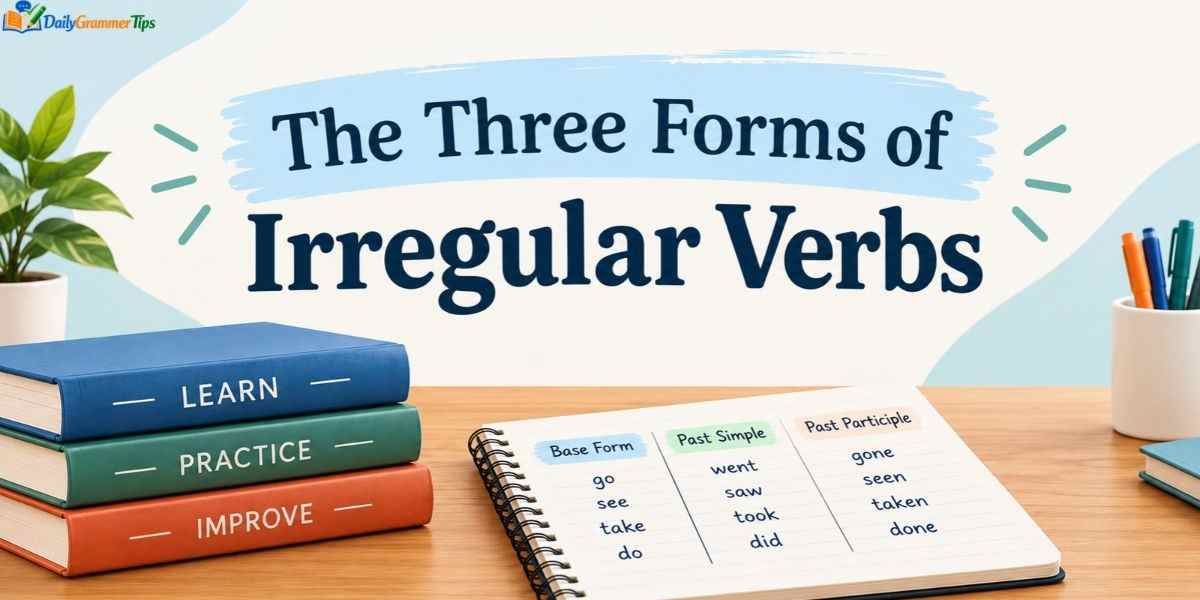
Every verb has a base form, a past simple form, and a past participle. For irregular verbs, these forms may all differ, partly match, or be identical. Examples include write, wrote, written, and cut, cut, cut.
Knowing all three forms matters because the past participle is used in perfect tenses and passive sentences. Studying irregular verbs as small families of three forms is smarter than learning only the past simple. This habit saves time later.
Verbs with Three Different Forms
Some irregular verbs use a different word for each form. Examples include begin, began, begun, drink, drank, drunk, and speak, spoke, spoken. These feel hardest because nothing repeats.
A practical tip is to say each set aloud in a rhythm, like a short chant. Repetition helps memory more than silent reading. Over time, even the toughest forms become familiar sounds.
Verbs with the Same Past and Participle
Many irregular verbs have identical second and third forms, which reduces your workload. Examples include buy, bought, bought, bring, brought, brought, and teach, taught, taught. You only need to remember two shapes instead of three.
Other examples are sit, sat, sat and find, found, found. Because these forms repeat, they are among the easier ones to recall. Start here if you want quick progress.
Verbs That Never Change
A small group stays the same in all three forms. Examples include cut, put, set, hit, hurt, and shut. They are simple to remember, but learners sometimes forget that context shows the tense.
For instance, “I put the book here yesterday” is past simple, while “I put it here every day” is present. Since the form is identical, time words become important clues. These irregular verbs reward careful reading.
Also Read………..Present Simple Tense: Rules, Formula, and Examples
Vowel Changes in the Past Simple
Some irregular verbs change only the vowel inside the word, such as sing, sang, sung and swim, swam, swum. The consonants stay stable, which gives a helpful visual pattern.
Another family follows an i, a, u shift, as in ring, rang, rung and drink, drank, drunk. Noticing these shifts makes memorization faster. Pattern spotting is a strong strategy for studying verbs of any kind.
Verbs Ending in ought and aught
A well known group ends in ought or aught in the past simple. Examples include buy, bought, think, thought, bring, brought, catch, caught, and teach, taught. These sound similar, which helps your ear.
Because the spelling is tricky, practice writing them, not just saying them. Many irregular verbs in this family are also very common in daily speech.
Verbs Ending in en in the Participle
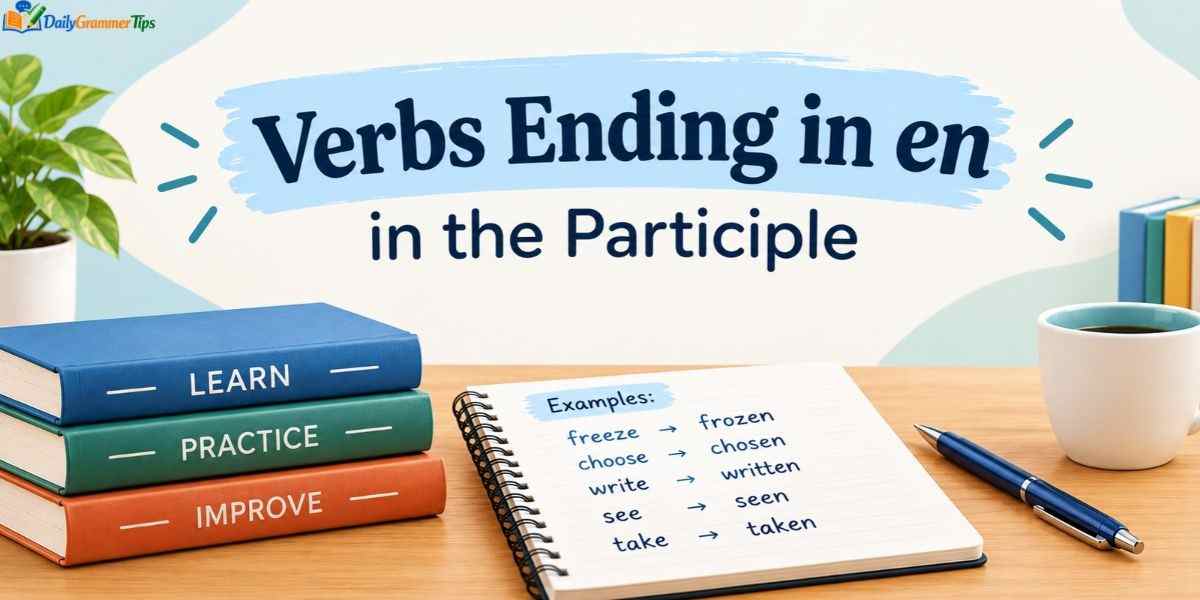
Many irregular verbs form the past participle with en, such as break, broke, broken, choose, chose, chosen, and steal, stole, stolen. The past simple often changes the vowel first. Then en is added for the participle.
Recognizing this ending helps with perfect tenses, as in “I have broken my phone.” It also helps you spot the participle quickly in reading. This pattern covers a large part of the list.
The Verb Be and Other Special Cases
The verb be is the most irregular verb in English, with the forms am, is, are, was, were, and been. It does not follow any pattern shared with other verbs. Learners should memorize it first.
Other special cases include have, had, had and do, did, done. These verbs also work as auxiliaries, so they appear in nearly every sentence. Mastering them gives you a strong base for all other forms.
Common Irregular Verbs for Daily Life
Everyday routines use a core set of irregular verbs. Examples include get, got, eat, ate, drive, drove, sleep, slept, and meet, met. Practice them in sentences about your own day.
For example, “I woke up early, ate breakfast, and drove to work.” Personal sentences stick in memory because they have meaning. Ten daily verbs learned well are better than fifty learned badly.
Verbs with Two Accepted Past Forms
A few verbs have both regular and irregular past forms, such as learn, learned or learnt, and burn, burned or burnt. Both are correct, although usage differs between American and British English. Dream, spill, and smell follow the same idea.
When you write for an international audience, choose one style and stay consistent. Dictionaries show which form is more common in each region. This flexibility makes irregular verbs more interesting than difficult.
Common Mistakes with Irregular Verbs
The most frequent error is adding ed to an irregular verb, such as goed, buyed, or teached. This happens when learners apply the regular rule too widely. It is a natural stage, but it should be corrected early.
Another mistake is mixing the past simple and the past participle, as in “I have went” or “I seen him.” Check whether the sentence needs the second or third form. Careful review of irregular verbs prevents both errors.
Tips to Memorize Irregular Verbs
Study in small groups of five or six verbs, organized by pattern. Write each set on a card with an example sentence. Review them daily for a few minutes rather than once a week for an hour.
Spaced repetition apps and quizzes make this easier. Saying forms aloud strengthens both memory and pronunciation. Consistent habits beat long, tiring sessions.
Pronunciation of Past Forms
Many irregular verbs sound different from what their spelling suggests. Read is pronounced “reed” in the base form but “red” in the past. Similarly, bought, caught, and taught rhyme with each other.
Listening to native speakers helps you connect spelling and sound. Repeat after audio and record yourself to check accuracy. Good pronunciation makes your use of past forms sound natural.
Practice Exercises for Irregular Verbs
Write the correct past simple form of the verb in brackets.
- Last night we (see) a great film.
- She (write) me a long letter.
- He (buy) a new car last month.
- They (eat) dinner at eight.
- I (forget) my keys this morning.
The answers are saw, wrote, bought, ate, and forgot. If you made a mistake, review its pattern and try again. Regular practice with irregular verbs works better than rereading rules.
Learning Strategies That Really Work

Stories, songs, and games make forms stick. Write a short story using ten verbs, or play a matching game with base and past cards. Fun activities lower stress and improve recall.
Teachers can group verbs by pattern and test them in short quizzes. Learners can track progress in a notebook. Small wins keep motivation high.
Frequently Asked Questions
What are irregular verbs?
Irregular verbs are verbs that do not form the past simple with ed, such as go, went, gone. Each one must be learned separately.
How many irregular verbs are there in English?
There are roughly 200, but only about 100 are common in everyday use. Learning the most frequent ones first gives the biggest benefit.
What is the easiest way to learn them?
Group them by pattern, such as ought and aught endings or vowel changes. Then practice each group with short daily reviews and example sentences.
What is the difference between the past simple and the past participle?
The past simple describes a finished action, as in “I wrote.” The past participle is used with have or be, as in “I have written.”
Can irregular verbs have two past forms?
Yes, a few verbs such as learn and burn accept both learned or learnt and burned or burnt. Usage depends on the region and style.
Conclusion
Irregular verbs may look chaotic, but they follow patterns that you can learn step by step. Group them by sound, spelling, and meaning, and practice with real sentences. Progress will come faster than expected.
Keep reviewing, keep speaking, and keep noticing forms in everything you read. With steady effort, you will use past forms accurately and naturally, and the whole topic will feel simple.
