

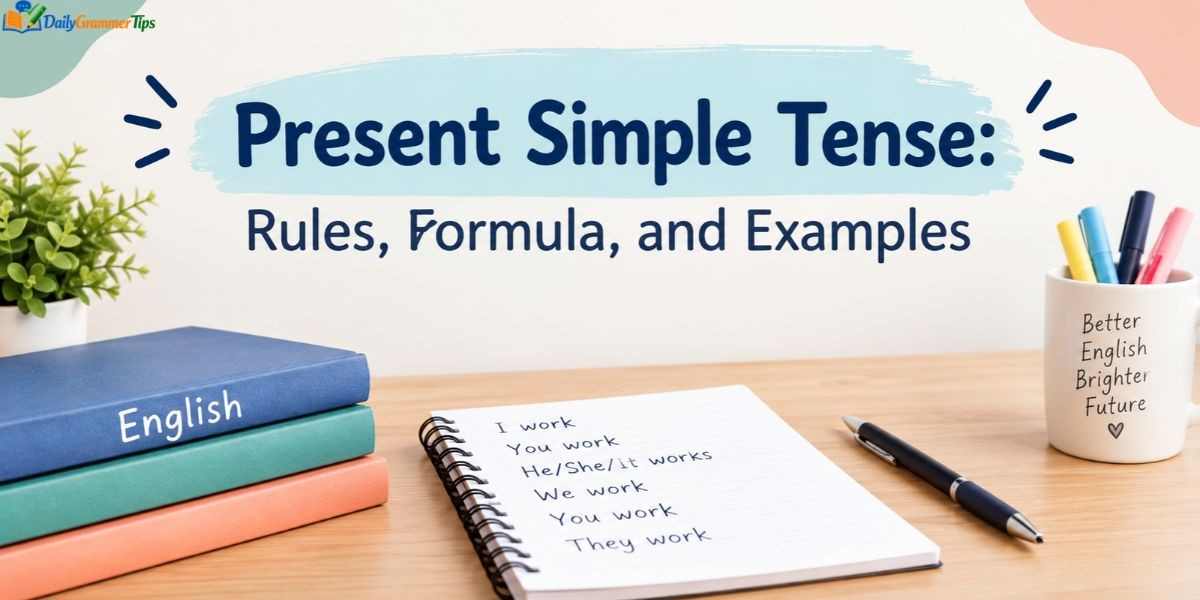
The present simple is one of the first tenses English learners study. It describes habits, facts, and routines. You use it every day, often without noticing. Learn a few clear patterns, and you can build thousands of correct sentences. This guide explains each pattern with short, practical examples.
You will see how to form positive sentences, negatives, and questions. You will also learn the spelling rules for verbs like study and watch. Each section stays short and focused. By the end, you will understand the present simple grammar and use it with confidence.
Also Called the Simple Present
Grammar books use two names for this tense. Some call it the present simple, and others call it the simple present. Both names describe the same form. The word simple means the verb needs no helper in positive sentences. You only change the verb for he, she, and it.
Teachers and textbooks use both names, so you will meet them often. Test makers and dictionaries do the same. In this article, both labels mean one tense. This tense forms the base of all other English tenses. Learn the pattern once, and you can recognize it in any lesson, exercise, or conversation.
What Is the Simple Present Tense?
The simple present tense describes actions that happen regularly or facts that stay true. It does not focus on one moment right now. Instead, it covers habits, schedules, and general truths. English speakers use the present simple constantly in daily conversation, so it deserves your full attention.
This tense also signals that a situation feels permanent or typical. I live in Madrid. He works as an engineer. Compare these with temporary actions, which usually take the continuous form. The simple present gives the broad picture, while other tenses zoom in on a single moment.
The simple present tense is used:
We use the simple present tense for habits and routines. I drink tea every morning. We also use it for permanent facts. The sun rises in the east. Schedules count too. The train leaves at nine. These three uses cover most everyday sentences.
Speakers also use it for states, feelings, and opinions. She loves music. They know the answer. Verbs like love, know, and want rarely take the continuous form. The present simple suits them perfectly. Time words such as always, usually, and never often appear in these sentences.
Examples
Here are clear present simple examples for each use. My brother plays football on Sundays. Water boils at one hundred degrees. The shop opens at eight. I like spicy food. Each sentence uses the base verb, and the third person singular adds an s. Notice how short and direct they sound.
Compare these pairs. Maria works in a bank. My parents work in a bank. The first sentence adds s because Maria means she. The second sentence keeps the base verb because parents means they. Read each pair aloud to hear the difference. Small changes like this make big differences.
More Examples of the Simple Present Tense
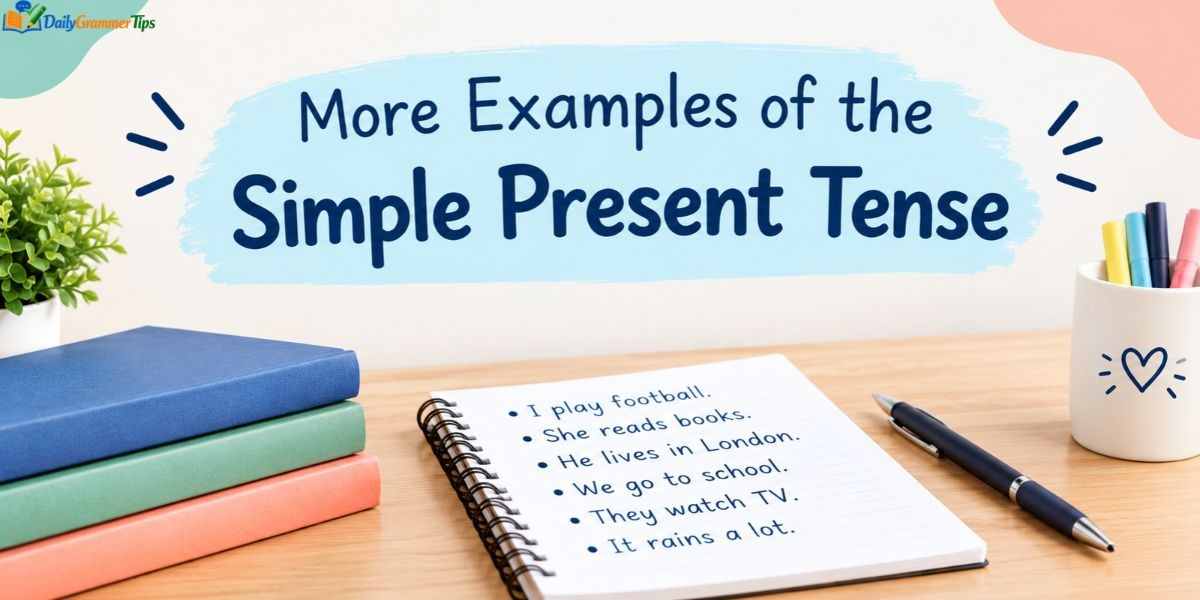
Habits give the clearest present simple examples. She walks to work every day. We eat dinner at seven. He never drinks coffee after noon. Frequency words such as always, often, sometimes, and rarely fit naturally here. They tell the listener how regularly the action happens. Most of them sit before the main verb.
Facts and general truths follow the same pattern. Cats sleep for many hours. The earth goes around the sun. Ice melts in warm air. Opinions and feelings also fit. I think it is a great idea. Tom hates waiting. Mix these types in your own writing for natural variety.
Do you know how to make the present simple?
Making the present simple is easier than most learners expect. You need only two patterns. One pattern covers the verb be. The other pattern covers every other verb. Learn both, and you can form any sentence in this tense. The next two sections explain them step by step.
Both patterns share one big idea. The subject decides the verb form. I, you, we, and they take the base verb. He, she, and it take the s form. Be has its own forms, so memorize am, is, and are early. Once you know these, you can describe almost anything.
Simple present tense with ‘be’
The verb be has three present forms. Use am with I, is with he, she, and it, and are with you, we, and they. I am a student. She is tired. They are late. Be works alone, so it needs no helper verb for negatives or questions.
Short forms sound natural in speech. I’m ready. He’s at home. We’re friends. Use them in informal writing and conversation. Choose the full forms in formal writing. Be also describes jobs, ages, places, and feelings. My sister is a nurse. The books are on the table.
Learn more………Gerunds and Infinitives: A Complete Guide for English Learners
Present simple tense with other verbs
Other verbs use the base form for I, you, we, and they. I work. You work. We work. They work. For he, she, and it, add s. He works. She works. It works. This one change is the heart of the present simple tense formula.
Think of the formula as subject plus base verb, with s for third person singular. Anna plays the piano. The children play outside. The dog barks at night. Keep the verb simple, and avoid adding extra helpers in positive sentences. Extra helpers appear only in negatives and questions.
Forming the Simple Present Tense
Forming the simple present tense follows a small set of rules. Start with the subject, then add the correct verb form. Add helper verbs only for negatives and questions. The next sections show a full example and explain the key notes on the third person singular. These present simple rules take little time to learn.
Each sentence needs a subject and a verb. Add time words to give context. Every morning, I check my email. On weekends, she visits her grandmother. Place frequency words before the main verb but after be. He always arrives early. She is often tired. This placement keeps your sentences natural.
Forming the simple present tense: to think
Take the verb think as a model. I think. You think. He thinks. She thinks. It thinks. We think. You think. They think. Only the third person singular changes. The other forms stay the same as the base verb. This pattern works for most English verbs.
Try the same model with other verbs. I eat, she eats. You read, he reads. We sleep, it sleeps. Write each verb in all eight forms to build memory. A table in your notebook helps. Say each line aloud, because speaking locks the pattern into your mind.
Notes on the simple present, third person singular
Third person singular means he, she, it, or any single noun. Add s to most verbs. He runs. She sings. Add es after verbs ending in s, sh, ch, x, or z. He watches. She fixes. Verbs ending in o often take es too. He goes. She does.
Have becomes has in the third person singular. She has two brothers. This irregular form is very common. Plural subjects keep the base verb. The students study hard. Singular subjects add s. The student studies hard. Many learners forget this s, so check every sentence.
The Negative Version
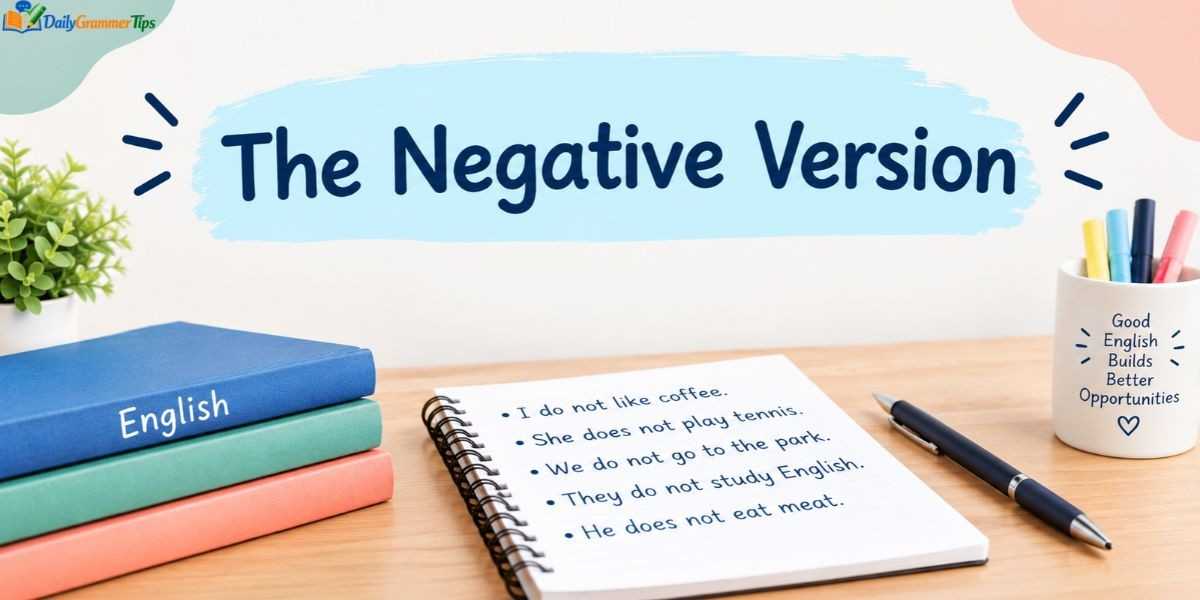
Negative sentences in the present simple use a helper verb. Add do not or does not before the base verb. Use does not for he, she, and it. Use do not for all other subjects. The main verb returns to its base form, so the s disappears.
Negatives often appear in advice, rules, and opinions. We don’t allow phones in class. It doesn’t matter. I don’t agree. Short forms sound friendly in speech. Full forms sound firm in formal writing. Choose the form that fits your audience and your purpose. Both forms are correct.
Negative sentences with be
Add not after am, is, or are. I am not ready. She is not at home. They are not angry. Short forms are common. She isn’t here. They aren’t busy. With I, speakers say I’m not. Be needs no helper, so it keeps its own form.
Never add do or does with be. Write She is not a teacher, not She does not be a teacher. This rule saves you from a common mistake. Use not with be in every negative sentence. The structure stays simple and short, which makes it easy to remember.
Negative sentences with do and does
Use do not or don’t with I, you, we, and they. I do not like cold tea. They don’t live here. Use does not or doesn’t with he, she, and it. He does not eat meat. She doesn’t drive. The main verb always stays in its base form.
Many learners write He doesn’t likes pizza. That sentence has an error, because does already carries the s. Write He doesn’t like pizza. Remember this simple check: after does or doesn’t, the verb has no s. Practice with ten sentences, and the habit will stick.
The Question Version
Questions also use helper verbs. Put do or does before the subject, then add the base verb. Use does with he, she, and it. Use do with the other subjects. The helper moves to the front, and the main verb loses its s. Be questions work differently.
Questions drive conversation. Ask about habits, facts, and preferences. Do you live near here? Does the museum open on Mondays? What time does the film start? Tag questions and polite requests also use this tense. You like coffee, don’t you? Listen for these patterns in real conversations.
Questions with be
Move be before the subject. You are ready becomes Are you ready? She is at home becomes Is she at home? Be questions never need do or does. Short answers follow the same pattern. Yes, I am. No, she isn’t. Keep the answer short and natural.
Question words go first. Where is the station? Why are they late? How old is your brother? Notice that be still comes before the subject. This order stays the same in every be question. Practice by turning ten statements into questions, and your speed will grow quickly.
Questions with do and does
Start with do or does, then add the subject and the base verb. Do you like tea? Does she work here? Do they play tennis? Does carries the third person s, so the main verb stays plain. Answer with short forms. Yes, I do. No, he doesn’t.
Add question words in front. What do you eat for breakfast? Where does he live? When do they arrive? Keep the order: question word, helper, subject, base verb. Wrong word order is a frequent mistake. Say each sentence aloud, and the correct order will start to feel natural.
The Spelling Rules
Spelling changes happen only in the third person singular. Most verbs simply add s. A few groups need extra letters. Learn these small rules, and you will avoid the most common writing errors. The sections below cover each group with short examples. These present simple spelling rules matter in exams.
Pronunciation of the ending also follows a pattern. The final s sounds like s after p, t, k, and f. It sounds like z after most other sounds. The es ending sounds like iz after s, sh, ch, x, and z. Listen to native speakers and repeat the endings aloud to train your ear.
Adding s or es
Add s to most verbs. work becomes works. play becomes plays. read becomes reads. Add es to verbs ending in s, ss, sh, ch, x, or z. pass becomes passes. wash becomes washes. teach becomes teaches. fix becomes fixes. Add es to go and do, which gives goes and does.
The extra e keeps the word easy to say. Without it, you would struggle to pronounce words like washs or fixs. Listen for the extra syllable in watches and passes. Pronunciation and spelling work together here. Read each word aloud, and you will remember which verbs take es.
Verbs ending in y
When a verb ends in a consonant plus y, change y to i and add es. study becomes studies. carry becomes carries. cry becomes cries. When a vowel comes before y, just add s. play becomes plays. enjoy becomes enjoys. buy becomes buys. Check the letter before y first.
This rule explains why She studys is wrong and She studies is right. A present simple word like carries or tries looks different from its base form. Spot the pattern, and you will spell these verbs correctly in emails, essays, and exams. Keep a short list of examples near your desk.
Infographic for the Simple Present Tense
Picture a one page summary of the present simple tense. The top line shows the positive pattern: subject plus base verb, with s for he, she, and it. The middle line shows the negative pattern: do not or does not plus the base verb. The bottom line shows the question pattern.
The question pattern uses do or does plus subject plus base verb. Add a row for be, with am, is, and are. Add a row of time words, such as always, usually, often, and never. Draw this chart by hand, because the act of drawing helps memory. Keep it on your wall as a quick reminder.
Interactive Verb Conjugation Tables
A conjugation table lists every form of a verb in one place. For the verb eat, you would see I eat, you eat, he eats, she eats, it eats, we eat, you eat, and they eat. A present simple table shows the pattern at a glance. Online tools let you test any verb.
Build your own table for five verbs you use daily. Include the positive, negative, and question forms. For example, write I do not eat, he does not eat, and does she eat. Compare the rows, and you will notice that only the third person singular changes. Review the table weekly to keep the forms fresh.
The Other Present Tenses
English has four present tenses, and the present simple is the foundation. The others add helper verbs and focus on different ideas. Learning the simple present first makes the rest easier. The next two sections compare it with its closest neighbors. Every learner benefits from this order.
Present continuous
The present continuous describes actions happening now or around now. Form it with am, is, or are plus the verb with ing. I am reading a book. Compare it with I read every night. The first sentence shows a current action. The second shows a habit.
Use the present continuous for temporary situations and plans. She is staying with friends this week. We are meeting at six. Use the simple present for permanent facts and fixed timetables. Choosing between them depends on whether the action is temporary or regular. Practice by describing your day with both tenses.
Present perfect and present perfect continuous
The present perfect links the past to now. Form it with have or has plus the past participle. I have finished my homework. She has lived here for years. It shows results or experiences that matter today. The simple present, by contrast, shows routines and facts without any link to a past moment.
The present perfect continuous stresses duration. Form it with have been or has been plus the verb with ing. They have been waiting for an hour. Learn the present simple first. Then add the others one by one. A solid base makes every new tense easier to master.
Resources for Learning English
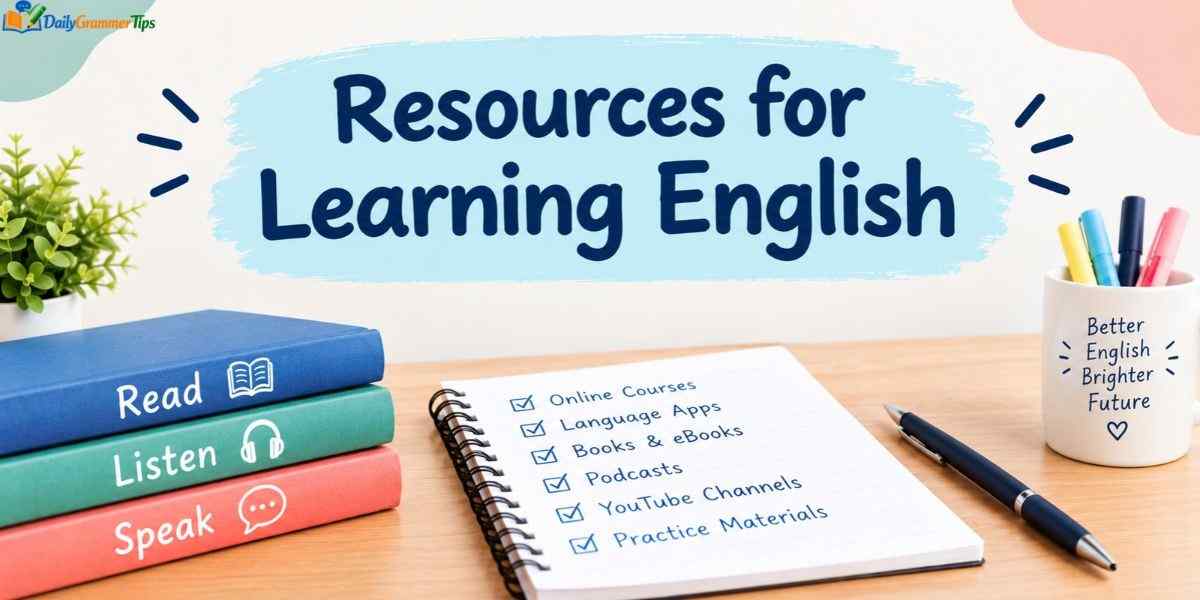
Good resources speed up your progress. Grammar books explain each tense with clear rules. Exercise sheets give you daily practice. Many learners also use a present simple tense pdf, because it prints easily and works offline. Choose materials that include answers, so you can check your work.
Present simple exercises work best in short daily sessions. Fill in the blanks, correct the mistakes, and write your own sentences. Listen to songs and podcasts, then note every verb in the simple present. Speak with a partner whenever you can. Regular practice beats long, rare study sessions.
FAQs
What is the present simple tense?
It describes habits, routines, facts, and schedules. It uses the base verb and adds s for he, she, and it.
How do you form the present simple?
Use the subject plus the base verb, such as “I work.” Add s or es for third person singular, as in “she works.”
How do you make negatives and questions in the present simple?
Use do or does before the base verb, as in “She does not drive” and “Does she drive?” With be, add not or move be before the subject.
When do you add s or es to the verb?
Add s for he, she, and it, and es after s, sh, ch, x, z, and o. For a consonant plus y, change y to i and add es, as in “studies.”
What time words go with the present simple?
Words like always, usually, often, sometimes, and never show how regularly something happens. Place them before the main verb but after be.
Conclusion
The present simple is the tense you reach for every day, whether you talk about your habits, share a fact, or check a timetable. You now know the core pattern: use the base verb, add s or es for he, she, and it, and bring in do or does for negatives and questions. Keep the spelling rules close, and you will avoid the most common mistakes.
Practice makes this tense feel natural. Write a few sentences about your daily routine, turn them into questions, and say them out loud. Small, regular sessions will build your confidence faster than long, rare ones. Start today, and you will soon use the present simple without thinking about it.
