

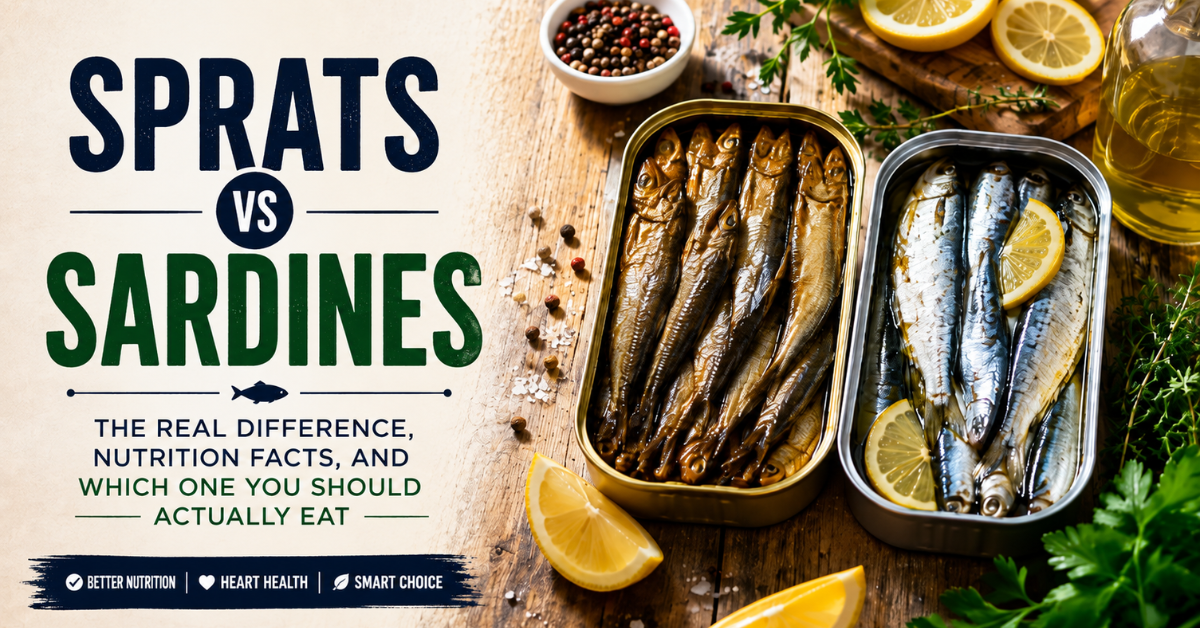
Walking down the canned fish aisle, most people freeze for a second when they spot both sprats and sardines sitting side by side. The tins look almost identical, but Sprats vs Sardines actually comes down to real differences in taste, texture, and nutrition once you look closer, and knowing those differences makes shopping a lot easier.
This guide breaks down everything you need, from protein and omega-3 content to mercury levels and daily eating habits, so you can decide which fish fits your plate best. Whether you lean toward the bold, smoky bite of sprats or the milder, everyday flavor of sardines, understanding Sprats vs Sardines helps you eat smarter without any guesswork.
What Are Sprats and Sardines, Really?
The mix up starts because neither word points to one single fish, and understanding that gap is the real starting point of Sprats vs Sardines.
Sprats in Plain Terms
Sprats belong to the Sprattus genus, a specific branch of the herring family. The European sprat is the most common example, and it thrives in cold water regions like the North Sea and the Baltic Sea.
A few things make sprats easy to spot once you know what to look for:
- They run smaller and thinner than most sardines
- They usually show up smoked or canned
- They carry a rich, almost intense flavor
- They are often packed whole, bones and all
Smoked sprats hold a special place in Eastern European kitchens, where a tiny fish with a deep smoky bite on a slice of bread counts as comfort food.
Sardines Explained Simply
Sardines work more like an umbrella term than a single species. Depending on the region, the name can cover pilchards, young herring, or other small oily fish grouped together for the market.
Here is what usually holds true for sardines:
- They tend to be a bit larger and meatier than sprats
- They are commonly canned in oil, water, or sauce
- They carry a milder, cleaner taste
- They show up on shelves almost everywhere in the world
So the short version of Sprats vs Sardines comes down to this: sardines act as a broad commercial label, while sprats point to one specific type of fish.
Read Also: IMK Meaning in Text: What It Really Means and How to Use It Naturally
Sprats vs Sardines: Quick Comparison Table
| Feature | Sprats | Sardines |
| Size | Smaller, slimmer | Larger, thicker |
| Flavor | Bold, smoky | Mild, briny |
| Texture | Soft, delicate | Firm, meaty |
| Species | Specific genus | Several species |
| Common form | Smoked or canned | Mostly canned in oil, water, or sauce |
| Reach | Mostly regional | Sold worldwide |
Nutrition Breakdown: Which One Comes Out Ahead?
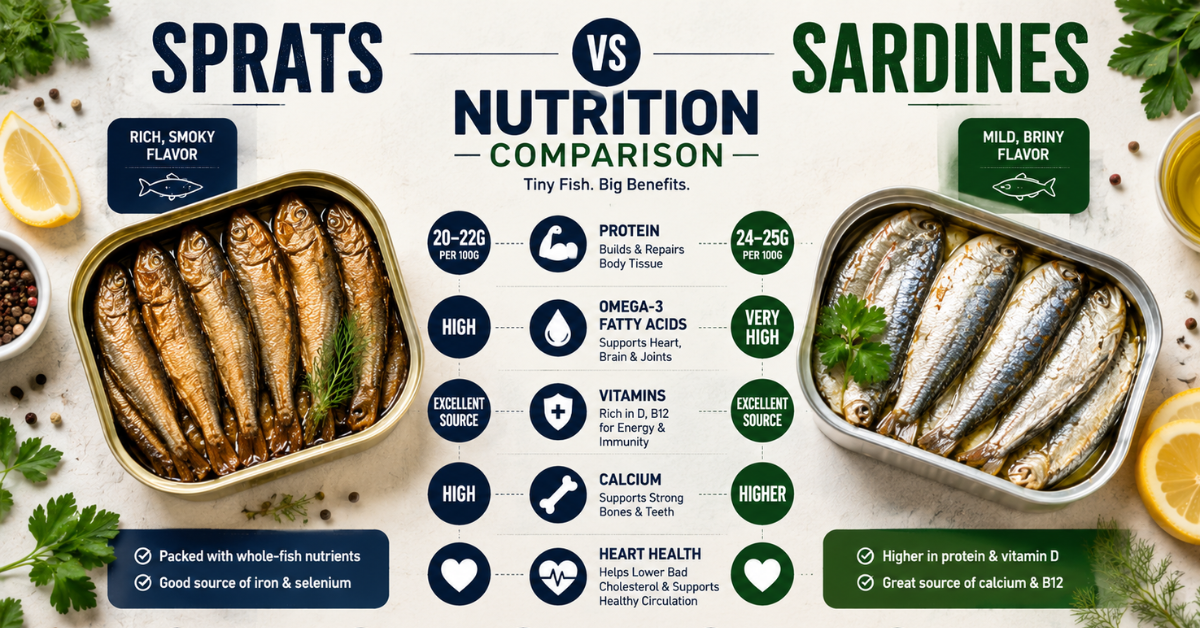
Both fish deliver an impressive amount of nutrition for their size, though a few small gaps separate them in the Sprats vs Sardines nutrition breakdown.
Calories, Protein, and Healthy Fats
Per 100 grams, the numbers land close together:
| Nutrient | Sprats | Sardines |
| Calories | About 180 to 200 | About 200 to 220 |
| Protein content | About 20 to 22g | About 24 to 25g |
| Omega-3 fatty acids | High | Very high |
Sardines edge ahead slightly on protein content, which matters if muscle repair is part of your goal. Both fish still bring plenty of omega-3 fatty acids to the table, supporting heart health and brain health along the way. Sprats often feel lighter simply because a serving tends to be smaller.
Vitamins and Minerals Worth Knowing
Since both fish are usually eaten whole, bones and skin included, you get far more than plain fillet meat. That whole fish approach boosts nutrient density in a way most other seafood cannot match.
Expect a solid dose of:
- Vitamin D, which supports bone strength and immunity
- Vitamin B12, which fuels energy and nerve function
- Calcium, mostly from the soft, edible bones
- Iron, which helps your blood carry oxygen
So Which One Wins Nutritionally?
Honestly, it is close. Sardines offer a slightly higher protein content and a well rounded nutrient profile, while sprats deliver nearly the same benefits with a stronger flavor punch. Either way, both rank among the healthiest seafood choices you can eat on a regular basis.
Mercury Levels and Safety
Small fish generally mean small mercury levels, and that rule holds true here.
Why That Matters
Mercury builds up through bioaccumulation, a process where larger fish absorb mercury from every smaller fish they eat over a long lifespan. Sprats and sardines avoid that buildup because they:
- Live relatively short lives
- Feed on plankton rather than other fish
- Stay small their whole life
Practical Safety Advice
Most adults can eat either fish two to four times a week without any real concern, and some people manage more frequent portions without issue. That makes both options a solid fit for pregnant individuals eating in moderation, fitness focused eaters, and anyone following a heart healthy meal plan.
Sprats vs Sardines Taste: What You Notice First
Nutrition numbers matter, but taste is usually what decides which tin ends up in the cart again. This is where Sprats vs Sardines taste comparisons really start to matter.
Sprats Taste Profile
Sprats bring a strong, smoky flavor that lingers well after the last bite. Expect a slightly salty edge and a soft, delicate texture that almost melts on the tongue. Many people compare the taste to smoked meats or barbecue.
Sardines Taste Profile
Sardines lean mild and briny, with a firm, meaty bite that holds its shape. The aftertaste stays clean and light, and the flavor blends easily into other dishes instead of taking over.
Which Taste Do People Prefer?
Newcomers to canned fish usually reach for sardines first because the mild flavor feels approachable. Anyone who already loves bold, smoky food tends to lean toward sprats instead. Picture it like coffee: sardines play the role of a smooth latte, while sprats hit like a strong espresso.
How They Are Typically Prepared and Eaten
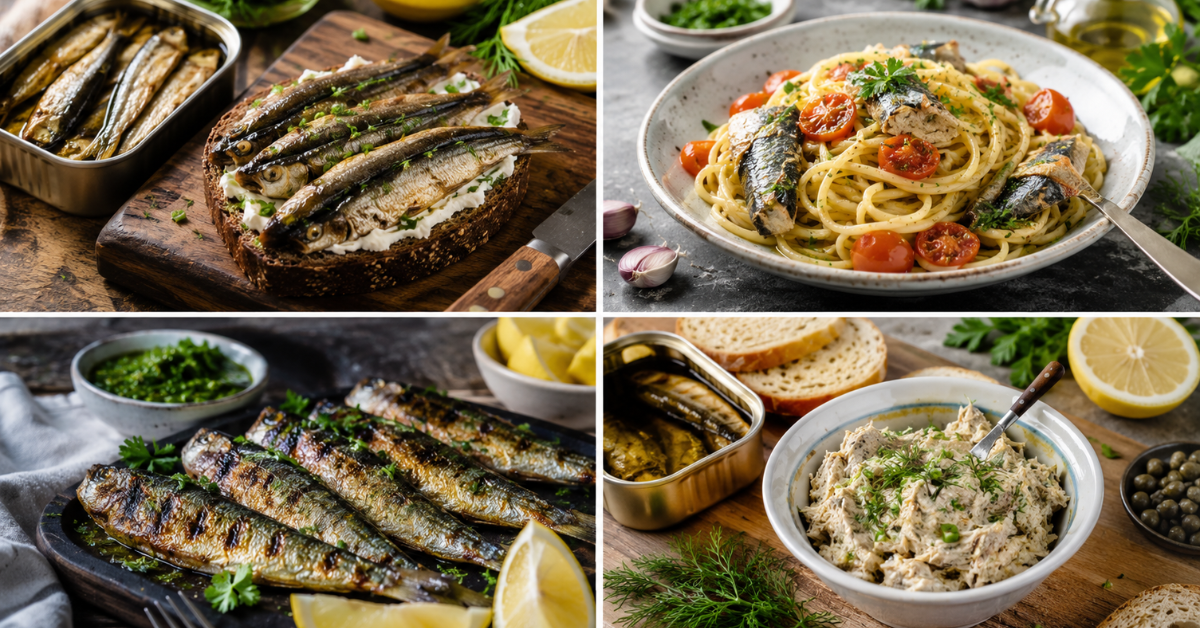
Sprats usually show up smoked and spread on toast or mixed into a quick pâté, while sardines fit almost anywhere, straight from the tin, tossed into pasta, or grilled fresh with herbs. Either way, both fish turn a simple meal into something satisfying with very little effort.
Popular Ways to Eat Sprats
Sprats fit best into simple, rustic dishes:
- Smoked sprats on toast with a little butter
- Blended into fish spreads or a quick fish pâté
- Served alongside pickles and dark rye bread
A fast idea worth trying: mash smoked sprats with cream cheese, a splash of lemon juice, and cracked black pepper, then spread it on crackers.
Popular Ways to Eat Sardines
Sardines adapt to almost any meal:
- Eaten straight from the tin with a squeeze of lemon
- Tossed into salads or pasta
- Grilled fresh with herbs
Try tossing canned sardines into pasta with garlic, olive oil, and chili flakes for a quick, satisfying dinner.
Price and Availability
Budget and access often decide the Sprats vs Sardines debate more than flavor preference does.
Sardines
- Found in nearly every grocery store
- Sold in a wide range of flavors and packaging styles
- Priced in the mid range for canned fish
Sprats
- Harder to find in Western supermarkets
- More common across European markets
- Usually cheaper when you do find them
Sustainability and Environmental Impact
Both fish score well for anyone thinking about their footprint at the seafood counter, which adds one more layer to the Sprats vs Sardines decision.
Why They Hold Up Well
- Fast reproduction rates keep populations strong
- Large existing populations reduce overfishing risk
- Fishing methods used for both species tend to have a light environmental impact
Which Comes Out Ahead?
Sprats hold a slight edge in certain regions thanks to local fishing practices, but sardines remain one of the most sustainable seafood choices available worldwide. Neither one should raise concern for an eco conscious shopper.
Sprats vs Sardines: Full Comparison Table
| Feature | Sprats | Sardines |
| Flavor | Strong, smoky | Mild, balanced |
| Texture | Soft | Firm |
| Protein content | Moderate | Slightly higher |
| Omega-3 fatty acids | High | Very high |
| Mercury levels | Very low | Very low |
| Versatility | Moderate | High |
| Availability | Limited | Widely available |
Which One Should You Choose?
If you want a mild, everyday fish that’s easy to cook with, sardines are the better pick. Go with sprats instead when you’re craving a bolder, smokier bite for an occasional treat.
Pick Sprats If You Want
- A bold, smoky flavor
- A cheaper option when you can find one
- A more traditional or gourmet eating experience
Pick Sardines If You Want
- A mild, beginner friendly taste
- Something easy to find nearby
- More flexibility in how you cook it
A Quick Real World Example
Ali, a fitness enthusiast looking for an affordable protein source, started with sprats and loved the flavor at first, but found the intensity too much for daily meals. He switched to sardines and found them far easier to eat consistently. Sardines ended up becoming his everyday protein pick, while sprats stayed in the rotation as an occasional treat.
Common Myths About Sprats and Sardines

A lot of confusion around sprats and sardines comes from myths people repeat without checking, not actual facts. Clearing up these common misconceptions makes it much easier to shop and eat with confidence.
“They Are the Same Fish”
Not accurate. Sardines describe a broad category, while sprats point to one specific fish within the herring family.
“Sardines Are Always Healthier”
Not really true either. Once you compare nutrition breakdown numbers side by side, the two fish sit very close together.
“Canned Fish Isn’t Healthy”
This one is simply false. Canned sprats and canned sardines both hold onto most of their original nutrients, including the omega-3 fatty acids and minerals that make them worth eating in the first place.
Sprats vs Sardines Nutrition
Once you set the flavor debate aside, Sprats vs Sardines nutrition turns out to be surprisingly close on paper. Both fish carry a strong protein content, a healthy dose of omega-3 fatty acids, and a solid supply of vitamin D and vitamin B12, so neither one leaves you shortchanged on nutrient density.
The gap only shows up in small amounts. Sardines usually pull ahead by a few grams of protein per serving, while sprats keep pace almost everywhere else. If your goal is a heart healthy meal plan, either tin earns a spot in your weekly rotation.
Sprats vs Sardines Taste
Taste is where most people finally pick a side. Sprats bring a bold, smoky flavor with a soft texture that many describe as rich and intense, while sardines settle into a milder, briny profile with a firmer bite that feels easier to eat every day.
Neither taste is objectively better, it simply depends on what your palate is used to. Someone new to canned fish tends to enjoy the gentler sardine flavor first, while a fan of smoked or cured food usually reaches for sprats without a second thought.
Sprats vs Sardines Omega-3
Both fish sit near the top of the list when it comes to omega-3 fatty acids, and that is one reason doctors keep recommending small oily fish over larger species. Sardines edge slightly ahead with a very high omega-3 count, while sprats still deliver a high amount that supports heart health and brain health just as effectively.
Because both fish are eaten whole, the fat content stays intact instead of being trimmed away like it would be with a filleted cut. That means every spoonful works harder for your body, whether you reach for a tin of sprats or a tin of sardines.
Sprats vs Sardines Protein
Protein content is one area where sardines usually take a small lead. A 100 gram serving of sardines often lands around 24 to 25 grams of protein, while sprats sit slightly lower at roughly 20 to 22 grams.
That difference is small enough that it rarely changes a real world decision. Anyone building a fitness focused diet can lean on either fish for muscle repair and steady energy, and pairing them with vegetables or whole grains rounds out the meal nicely.
Sprats vs Sardines vs Anchovies
Bring anchovies into the picture and the comparison gets a bit more interesting. Anchovies pack an even stronger, saltier flavor than sprats, largely because they are often cured or packed in salt before canning, while sprats and sardines usually stay milder by comparison.
Nutritionally, all three fish share the same herring family traits, including low mercury levels and a strong omega-3 profile. The real difference comes down to intensity, with anchovies leading the pack, sprats following close behind, and sardines offering the gentlest option of the three.
Sprats vs Sardines Nutrition Facts 100g
Looking at raw numbers per 100 grams makes the comparison easier to picture. Sprats generally carry around 180 to 200 calories, 20 to 22 grams of protein, and a high level of omega-3 fatty acids, while sardines run slightly higher at 200 to 220 calories with 24 to 25 grams of protein.
Both fish also supply meaningful amounts of calcium and iron once you factor in the soft, edible bones. That single serving size ends up covering a noticeable chunk of your daily nutrient needs, regardless of which tin you choose.
Sprats vs Sardines Mercury

Mercury levels rarely worry anyone who sticks to small oily fish, and sprats and sardines both fall into that safe category. Since neither fish lives long or feeds on other fish, bioaccumulation never has enough time to build mercury up to concerning levels.
That safety profile makes both options practical for regular meals, including two to four servings a week for most adults. Even pregnant individuals can typically enjoy either fish in moderation, though checking with a doctor is always a smart step.
Sprats vs Sardines for Dogs
Pet owners often wonder if the same rules apply outside the kitchen, and the good news is that both fish can work as an occasional treat for dogs. Sprats and sardines both offer omega-3 fatty acids that support a dog’s skin, coat, and joint health, much like they do for humans.
The one thing to watch is added salt or seasoning, since many canned versions are packed in oil, brine, or sauce meant for people, not pets. Plain, unsalted, boneless options in water tend to be the safest choice if you plan to share a bite with your dog.
Frequently Asked Questions
Which is healthier, sardines or sprats?
Sardines pull slightly ahead with more protein, but sprats stay close with the same omega-3 punch. Honestly, either fish makes a smart pick.
Do sprats taste like sardines?
Not quite. Sprats hit with a bolder, smokier bite, while sardines taste milder and more balanced on the palate.
Why can’t you eat sardines every day?
Sardines carry purines and sodium, so daily eating can strain your kidneys or spike blood pressure over time. Most doctors suggest a few servings a week instead.
What fish is healthier than sardines?
Wild salmon often edges out sardines thanks to its higher omega-3 content and lower sodium levels. Mackerel also gives sardines tough competition on the nutrition front.
What are the top 3 healthiest fish?
Salmon, sardines, and mackerel usually top most lists for their omega-3 richness and low mercury levels. All three pack serious nutrition into a small serving.
Conclusion:
Sprats vs Sardines both earn their spot on a healthy plate, and picking between them really comes down to taste and how often you eat them. Sardines carry a bit more protein and stay gentler on your body when eaten regularly, while sprats bring a bolder, smokier flavor that works better as an occasional favorite than a daily habit.
At the end of the day, Sprats vs Sardines doesn’t have one clear winner, since both rank among the healthiest choices you can make. Each one brings something slightly different to the table, whether that’s a milder taste, a higher protein count, or simply more variety in your meals. Mixing them into your weekly routine, alongside fish like salmon or mackerel, gives you the full range of benefits without leaning too hard on any single option.
