

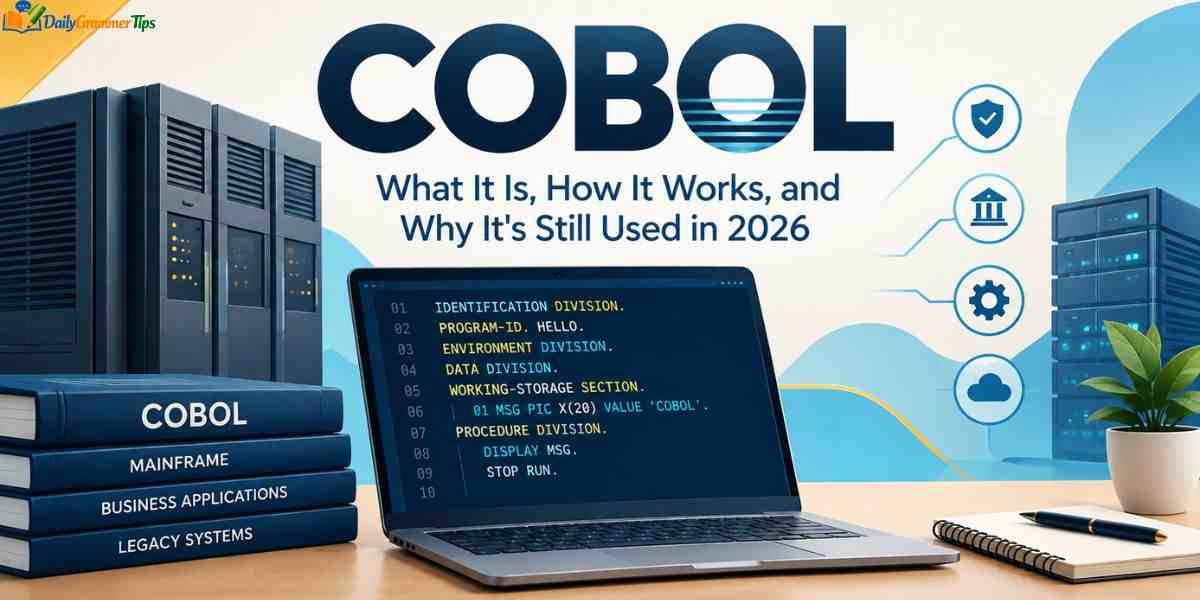
COBOL is one of the oldest programming languages still active in the business world today. Built more than six decades ago, it continues to power banks, insurance companies, and government systems. Many people wonder why a language this old refuses to disappear.
This article explains what COBOL is, how it works, and why so many organizations still rely on it. It also covers syntax, real companies using this technology, salary expectations, and common questions developers ask about it.
What Is COBOL? (Definition and Meaning)
COBOL stands for Common Business Oriented Language. It is a high level programming language built for business, finance, and administrative tasks. It uses English like words, which makes it easier to read than many other languages.
The language was designed to handle large volumes of data such as payroll records, transactions, and account details. It remains one of the most widely used languages in mainframe computing even today.
Full Form and Meaning
The full form explains its main purpose clearly. It was built to solve everyday business problems through structured, readable code that even non programmers can follow without much training.
Why the Name Matters
This language was never meant to be a general purpose tool. Its name reflects a clear focus on business logic, which is why it still fits payroll, banking, and record keeping tasks so naturally after all these years.
How It Differs From Other Languages
Unlike math heavy languages built for scientific computing, this one was shaped around plain business needs. Its verbose style trades short code for clarity, so anyone reading it can usually follow the logic step by step.
A Quick Definition Summary
In simple terms, it is a structured, readable language for processing business data. It was not built for websites, games, or mobile apps. Instead, it focuses entirely on accurate, repeatable data handling at scale.
Common Misconceptions People Have
Some assume this is only historical trivia with no modern use. In reality, it still processes live transactions right now, often behind apps and dashboards that look completely modern on the surface.
Where the Term Appears in Job Ads
Recruiters often list this skill alongside related terms such as mainframe, CICS, and JCL. Spotting these combined keywords can help job seekers quickly identify genuine legacy system opportunities in listings.
History of COBOL: Origin and Grace Hopper’s Role
This language was created in 1959 through a joint effort called CODASYL. Government and business representatives wanted one common language for computers, since each machine used its own system before it existed.
Grace Hopper played a key role in shaping this project through her earlier work on a language called FLOW MATIC. Her ideas about readable, English style code became the foundation of modern business programming.
Key Milestones in COBOL History
Several major versions arrived over the decades, each adding new capabilities while keeping the original structure intact for existing programs.
| Year | Milestone |
| 1959 | Original standard created by CODASYL |
| 1968 | First ANSI standardization |
| 1985 | Structured programming features added |
| 2002 | Object oriented features introduced |
| 2023 | Latest standard improves modern interoperability |
The Department of Defense Connection
The United States Department of Defense backed this initiative because it operated computers from many different manufacturers. A shared business language reduced training costs and made systems easier to maintain across departments.
Why It Outlived Many Rivals
Several competing business languages appeared around the same era. Most faded away, yet this one survived because early adopters, especially banks and government offices, built massive systems on top of it early on.
Lessons From Its Long History
The lasting popularity of this language shows how much businesses value stability over novelty. Once critical systems were built, few organizations had a strong reason to start over with something newer and unproven.
Not Built Overnight
Standardizing a shared business language took years of debate among competing vendors. Each manufacturer wanted its own approach included, and the final result reflected careful compromise rather than a single company’s vision.
Documenting the Original Committee
A dedicated committee of engineers and government representatives spent months reviewing early proposals. Their meeting notes and design decisions are still referenced today by historians studying early computing standards.
How the Name Became Standard
Early proposals used several different working titles before settling on the final name. Once adopted officially, the name spread quickly through documentation, training material, and vendor marketing across the industry.
How Does COBOL Work?

Every program follows a fixed structure made of four divisions. These are Identification, Environment, Data, and Procedure. Each division has a clear purpose inside a working program.
This structure keeps code organized, even in large systems with millions of lines. It also makes debugging easier since each part of the logic sits in its own clearly labeled section.
The Four COBOL Divisions
Each division plays a distinct role in how a program runs, from naming the project to executing the final logic.
| Division | Purpose |
| Identification | Names the program and its author |
| Environment | Defines system and file settings |
| Data | Declares variables and data storage |
| Procedure | Contains the actual program logic |
Why This Structure Still Works
Decades later, this division based approach still helps large teams manage complex programs. New developers can locate specific logic quickly, even without reading the entire codebase from start to finish.
Sections and Paragraphs Inside Divisions
Within each division, code is further broken into sections and paragraphs. This layered organization mirrors how a book is split into chapters and pages, making large systems far easier to navigate.
How Data Flows Through a Program
Data typically enters through a file, gets processed inside the procedure division, and then writes back out to another file or database. This clear flow makes large batch jobs predictable and easier to test.
Comparing It to Modern Frameworks
Modern frameworks often hide structure behind configuration files and folders. This older approach keeps everything visible inside the code itself, which some developers find easier to trust during audits.
Testing and Debugging Approaches
Testing usually happens through dedicated mainframe tools built specifically for this environment. Debuggers let developers step through logic line by line, which helps catch problems before code ever reaches production systems.
Real World Program Size
Some enterprise programs span thousands or even millions of lines across many linked files. Managing programs at this scale requires strict discipline around naming, documentation, and version control practices.
Key Features of COBOL
This language was built with readability and stability in mind. Its syntax resembles plain English, which allows business users to understand logic without deep technical training beforehand.
It also supports strong file handling, precise decimal calculations, and structured programming through divisions. These features explain why it still performs reliably in critical financial systems.
Main Features at a Glance
| Feature | Benefit |
| English like syntax | Easy to read and maintain |
| Strong file handling | Manages large data volumes |
| Decimal precision | Accurate financial calculations |
| Structured divisions | Organized, modular code |
Object Oriented Additions
Since 2002, later versions have included object oriented features. This addition allows developers to use classes and objects, making the language more flexible for modern integration projects.
Portability Across Platforms
One lesser known feature is portability. Programs written decades ago can often run on modern hardware with only minor adjustments, since the language was designed to work across many operating systems from the start.
Built In Reliability Checks
Many compilers include strict checks that catch errors before a program ever runs in production. This early detection reduces costly mistakes in systems that manage real money and sensitive records.
Built for Long Term Maintenance
Unlike quick prototypes, programs here are written expecting decades of future maintenance. That long term mindset shapes almost every design choice, from naming conventions to how errors are reported.
Compatibility With Legacy Databases
Many older systems still rely on hierarchical or indexed file structures rather than modern relational databases. Strong support for these formats is one reason migration projects often take longer than expected.
Handling Massive Batch Jobs Overnight
Scheduled overnight jobs can process enormous volumes of records without any human supervision. This unattended reliability remains one of the strongest reasons large institutions continue trusting these systems for daily operations.
COBOL Syntax Explained

The syntax follows strict rules. Every sentence must end with a period, and every division must appear in a fixed order. Missing punctuation can cause the entire program to fail.
Statements use simple verbs such as MOVE, ADD, DISPLAY, and COMPUTE. This verb based structure keeps the syntax predictable and easy to follow once the basic pattern is understood.
Basic COBOL Syntax Rules
- Every sentence must end with a period
- Divisions must follow a fixed order
- Variable names should be descriptive and clear
- Indentation improves readability, though it is not always mandatory
Common Verbs Used in Programs
| Verb | Function |
| MOVE | Transfers data between variables |
| ADD | Performs addition operations |
| DISPLAY | Shows output on the screen |
| COMPUTE | Handles arithmetic calculations |
The Picture Clause
A unique part of this syntax is the picture clause, written as PIC. It defines how many digits or characters a variable can hold, which helps prevent data errors during large scale processing.
Comments and Readability Aids
Programmers can add comments to explain complex logic without affecting how the program runs. These notes help future developers understand decisions made years earlier, which matters greatly in long lived systems.
Formatting Requirements Worth Knowing
Older versions relied on strict column positions, where certain code had to start in specific columns. Modern compilers relaxed many of these rules, though some legacy programs still follow the original format.
Error Messages and Compiler Feedback
Compilers usually point directly to the line and division where a mistake occurred. This clear feedback helps developers fix issues quickly, even in massive programs containing thousands of individual lines.
Reserved Words and Keywords
Certain words are reserved for specific functions and cannot be used as variable names. Learning this reserved list early helps beginners avoid confusing compiler errors during their first few practice programs.
COBOL Code Examples (Hello World and Basic Programs)
A simple program can display text on the screen using just a few lines. The classic example is printing “Hello, World!” which introduces beginners to the basic structure quickly.
IDENTIFICATION DIVISION.
PROGRAM-ID. HELLOWORLD.
PROCEDURE DIVISION.
DISPLAY “Hello, World!”.
Reading the Example
This short program shows how the language separates identification from actual logic, even in a simple task. The PROCEDURE DIVISION holds the instruction that produces visible output on screen.
A Slightly Larger Example
Adding two numbers requires a few more lines, including variable declarations in the DATA DIVISION. This extra structure is normal, since clarity matters more than brevity in business focused programming.
Why Examples Look Longer Than Expected
Compared to modern scripting languages, even basic tasks take more lines here. This is intentional, since the original goal was readability for business staff rather than compact code for programmers alone.
Practicing With Free Compilers
Beginners can practice using free, open source compilers without installing a full mainframe environment. This makes it much easier to experiment with small programs before tackling larger, real world systems.
Moving Beyond Hello World
After basic examples, learners usually try small file handling programs, such as reading a list of names and printing them in order. These simple exercises build confidence before tackling real business logic.
Common Beginner Mistakes
New learners often forget the required period at the end of a sentence, causing the whole program to fail. Misaligned divisions and missing spaces are also frequent early mistakes worth watching for.
Version Differences in Compilers
Different compilers sometimes support slightly different features or syntax extensions. Sticking to standard, portable syntax when learning helps avoid confusion later when working across different company environments.
What Is COBOL Used For?

This language is mainly used for business and financial applications. Common uses include payroll processing, banking transactions, inventory systems, and insurance claim handling across many industries.
Government agencies also depend on it for tax processing, benefits administration, and record keeping. These systems often handle sensitive data at a massive scale every single day.
Common Applications by Industry
| Industry | Use Case |
| Banking | Transaction processing |
| Insurance | Claims and policy management |
| Government | Tax and benefits systems |
| Retail | Inventory and billing |
Batch Processing Strength
One area where this language excels is batch processing. Running scheduled jobs overnight, such as calculating interest or updating account balances, remains a core strength of these older systems.
Behind the Scenes, Not Front End
Most people never see this code directly. It usually runs quietly in the background, processing data that later appears through modern websites, mobile apps, or customer facing dashboards.
Handling High Transaction Volumes
Large institutions process millions of records every hour without failure. This reliability under heavy load is one reason so many high volume systems still depend on this older but proven approach.
Supporting Everyday Life Without Notice
Withdrawing cash, filing taxes, or renewing an insurance policy often triggers this code somewhere in the background. Most people benefit from it daily without ever knowing it exists.
Learn more………API vs SDK: Key Differences, Examples & When to Use Each
Report Generation as a Core Task
Generating detailed financial and operational reports remains a common task for these systems. Businesses rely on accurate, scheduled reports to track performance, spot errors, and support regulatory reporting requirements.
Interfacing With Modern Databases
Many legacy programs now connect to modern relational databases through added middleware layers. This allows older logic to keep running while newer applications read and write to the same shared data.
Who Still Uses COBOL Today?
Banks, insurance companies, and government departments remain the biggest users of this language. Many of these organizations built their core systems decades ago and never fully replaced them.
Healthcare providers and airlines also rely on it for record management and booking systems. Replacing these systems is risky, so most companies choose to maintain rather than rebuild them.
Sectors With Heavy Reliance
- Banking and financial services
- Insurance and claims processing
- Government and public sector agencies
- Healthcare record management
- Airline reservation systems
Small Businesses Rarely Use It
Smaller companies typically avoid this language today, since modern frameworks are faster to build and cheaper to maintain. Its use is concentrated almost entirely within large, established institutions with legacy infrastructure.
A Global, Not Just American, Story
This is not only a United States trend. Banks and government agencies across Europe, Asia, and Latin America also run large systems built on this same technology, often for identical reasons.
Universities Still Teaching It
A number of universities and colleges still offer courses covering this language, often in partnership with major vendors. These programs aim to prepare graduates for real mainframe maintenance roles after graduation.
Utility and Telecom Companies
Beyond banking and government, utility providers and telecom companies also run large billing and account systems built on this technology. These industries share the same need for accuracy at massive scale.
Nonprofit and Educational Institutions
Some large universities and nonprofit organizations still manage payroll or grant tracking through similar legacy systems. Limited budgets often make gradual maintenance more practical than a costly full replacement project.
Top Companies Still Using COBOL
Several large organizations continue running this language in their core operations. These include major banks, insurance providers, and technology firms that manage sensitive financial data daily.
Well known names linked with this legacy technology include IBM, JPMorgan Chase, Fidelity Investments, and various government agencies such as the IRS. Their systems process millions of transactions daily.
Companies Known for Using COBOL
- IBM
- JPMorgan Chase
- Fidelity Investments
- USAA
- Internal Revenue Service (IRS)
Why These Companies Stay Loyal
These organizations rely on decades old logic that has been tested repeatedly under real conditions. Rewriting it introduces risk, so most prefer gradual modernization over a complete system replacement.
The Hidden Cost of Switching
Beyond money, switching away from proven code risks service outages for millions of customers. This operational risk, more than nostalgia, explains why so many enterprises stay loyal to their original systems.
What Smaller Firms Can Learn
Even companies that never touch this technology can learn from these examples. Stability and careful risk management often matter more than chasing the newest trend in software development.
Beyond the Familiar Names
Many smaller regional banks, insurance cooperatives, and utility providers also run similar legacy systems quietly. They rarely make headlines, yet they represent a large share of everyday usage worldwide.
Airlines and Logistics Firms
Reservation systems and cargo tracking platforms at major airlines often trace back to decades old code. Logistics companies rely on similar systems to manage scheduling and inventory across huge global networks.
Learning From Public Case Studies
Several banks and agencies have published case studies describing their modernization journeys. These public examples offer valuable, practical lessons for other organizations planning similar long term transition projects.
Is COBOL Still Used in 2026?
Yes, this language is still used in 2026. Despite predictions of its decline, it continues running behind the scenes in banking, insurance, and government infrastructure worldwide.
Many companies have chosen to modernize rather than replace their existing systems. This means old code often works alongside newer technologies instead of disappearing completely from production.
Signs It Is Still Active
Job postings, developer forums, and enterprise reports all confirm continued reliance on this legacy code. Surveys from major vendors show billions of lines still running in daily transactions across the globe.
Why Predictions of Its Death Were Wrong
Analysts have predicted the end of this language for over thirty years. Each time, the cost and risk of replacement proved higher than expected, keeping old systems alive far longer than anyone planned.
What the Next Decade Might Look Like
Most experts expect gradual integration rather than sudden disappearance. Legacy logic will likely keep running quietly, wrapped inside newer interfaces that hide its age from everyday users.
Surveys Confirm Continued Growth
Recent industry surveys report growing, not shrinking, code volumes in production. Many organizations report adding new logic to existing systems rather than shrinking their reliance on this older approach.
Media Coverage Versus Reality
News stories sometimes describe this technology as nearly extinct, which does not match actual usage data. Reports from major vendors consistently show steady or increasing reliance across critical industries worldwide.
Cloud Providers Now Offer Support
Major cloud platforms have started offering dedicated services for running legacy mainframe workloads. This growing support signals continued long term relevance rather than an approaching end for these systems.
Why COBOL Is Still Relevant Today
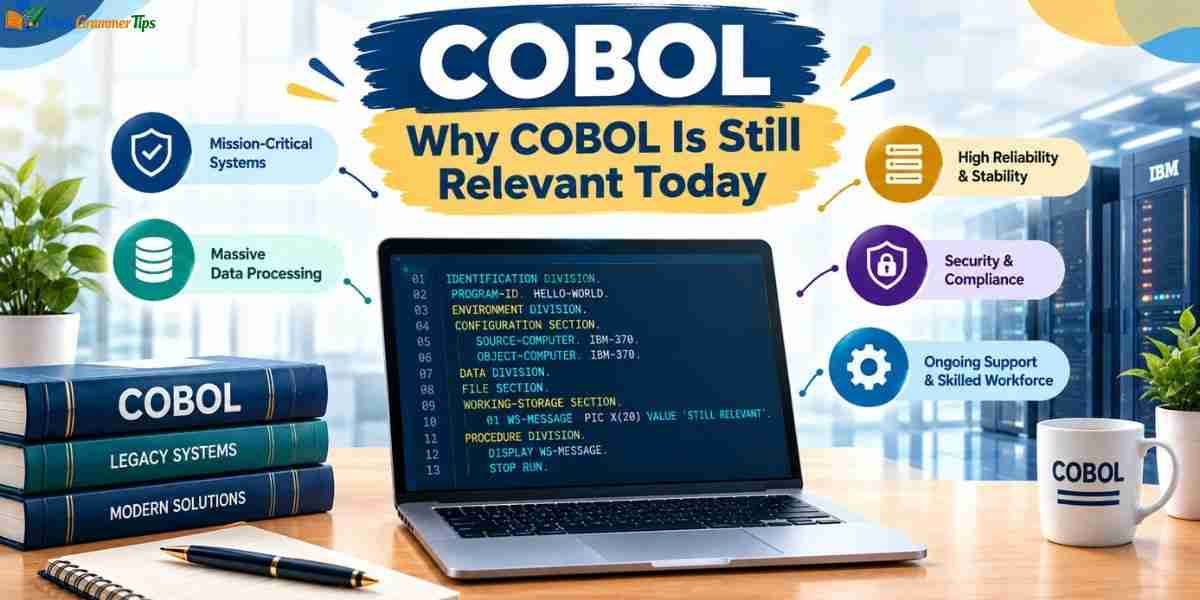
This language remains relevant because rewriting old systems is expensive and risky. A single mistake in critical banking or government software could cause major financial or operational damage.
It also offers proven stability. Systems built decades ago still run with minimal downtime, which gives businesses little incentive to replace infrastructure that already works well.
The Cost of Replacement
Full system rewrites often take years and cost millions of dollars. Many rewrite projects fail entirely, which pushes organizations back toward maintaining their original, proven codebase instead.
Regulatory and Compliance Pressure
Financial institutions face strict regulations around data accuracy and uptime. Existing systems already meet these standards, so regulators rarely push for replacement unless a system becomes truly unmanageable.
Talent Investment Already Made
Companies have spent decades training staff on these systems. That accumulated knowledge is valuable, and losing it through a rushed replacement project would erase years of institutional experience.
Trust Built Over Decades
Executives often trust what has already proven itself under real pressure, including holidays, economic crises, and unexpected surges in demand. That earned trust is difficult for any new system to match quickly.
Avoiding Single Points of Failure
Large institutions often prefer gradual change over sudden replacement, since a failed migration could disrupt millions of customers at once. Careful, incremental updates reduce that risk significantly compared to a full rewrite.
Comparing Long Term and Short Term Thinking
Short term cost savings from a quick rewrite rarely outweigh long term risks in critical infrastructure. Executives who plan decades ahead often choose stability over the appeal of newer, unproven technology.
IBM and COBOL: The Mainframe Connection
IBM played a major role in popularizing this language by supporting it as a primary option for mainframe computers. This partnership helped it spread across large enterprises worldwide quickly.
Today, IBM continues offering compilers, development tools, and training programs. This ongoing support keeps the language usable on modern mainframe and cloud environments alike.
IBM Tools Supporting the Language
- IBM COBOL Compiler Family
- Mainframe modernization services
- Developer training and certification programs
IBM Z and Modern Mainframes
Modern IBM Z systems still run this legacy code, often alongside newer applications. This hybrid approach lets companies keep trusted logic while adding fresh features through connected modern services.
Training the Next Generation
IBM has trained large numbers of developers through fellowships and academic partnerships. These programs aim to prevent a future skills shortage as older mainframe experts retire from the workforce.
Competing Vendors Also Support It
IBM is not alone in this space. Other vendors offer their own compilers, development environments, and modernization tools, giving companies more than one path toward supporting these systems long term.
Partnership With Universities
Beyond corporate training, IBM regularly partners with universities to include mainframe topics in computer science curriculums. These partnerships help ensure a steady pipeline of new talent for the industry ahead.
Is COBOL Difficult to Learn?
This language is often considered easier to learn than many modern alternatives because of its English like syntax. Beginners can usually read and understand basic code without prior programming experience.
The real challenge lies in mastering the mainframe environment around it, not the language itself. Learning file systems, job control, and legacy tools usually takes more time than the syntax.
Typical Learning Timeline
| Stage | Estimated Time |
| Basic syntax | Two to three weeks |
| Practical programs | One to two months |
| Full mainframe environment | Two to three months |
Resources for Beginners
Free tutorials, open source compilers like GnuCOBOL, and university courses have made learning more accessible. Many training programs now specifically target modernization and legacy support careers.
Skills That Help Speed Up Learning
Anyone with prior programming experience, even in unrelated languages, usually picks up the basics faster. Understanding logic, loops, and data types transfers well regardless of which syntax was learned first.
Common Myths About Difficulty
Some believe this language requires memorizing thousands of obscure rules. In reality, a small set of core verbs and divisions covers most everyday tasks, making the learning curve far gentler than expected.
Best Ways to Practice
Writing small, practical programs works better than only reading theory. Recreating simple business tasks, such as calculating totals or formatting reports, helps learners understand real world use cases quickly.
Benefits and Advantages of COBOL
This language offers strong stability, making it ideal for systems that must run continuously without failure. It also handles large scale data processing efficiently, even after decades of use.
Another advantage is its readability. Business teams can often understand program logic without needing a programmer to explain every line of code involved.
Top Advantages
- High stability and reliability
- Efficient large scale data processing
- Easy to read and maintain
- Strong support for financial calculations
Long Term Cost Efficiency
Because these systems rarely fail, ongoing maintenance costs stay lower than expected. Businesses save money by avoiding frequent outages, emergency fixes, or costly downtime that newer, less tested systems sometimes face.
Proven Track Record
Few technologies can claim over sixty years of continuous, real world use. That track record gives decision makers confidence that critical systems will keep working exactly as expected tomorrow.
Predictable Performance Under Load
Even during peak periods, such as tax season or holiday shopping, these systems tend to perform consistently. Predictability under stress is a major reason large institutions still trust this approach.
Lower Security Risk From Familiarity
Because these systems have run for decades, most vulnerabilities have already been discovered and patched. This long history of scrutiny gives security teams more confidence than brand new, untested platforms often provide.
Consistency Across Global Offices
Large multinational companies value having one consistent, well understood system across every regional office. This consistency simplifies training, audits, and support compared to managing many different regional platforms separately.
Balancing Innovation With Stability
Leadership teams often feel pressure to modernize quickly to appear competitive. Balancing that pressure against the real operational risks of change requires careful planning rather than reacting to short term trends.
Challenges and Disadvantages of COBOL
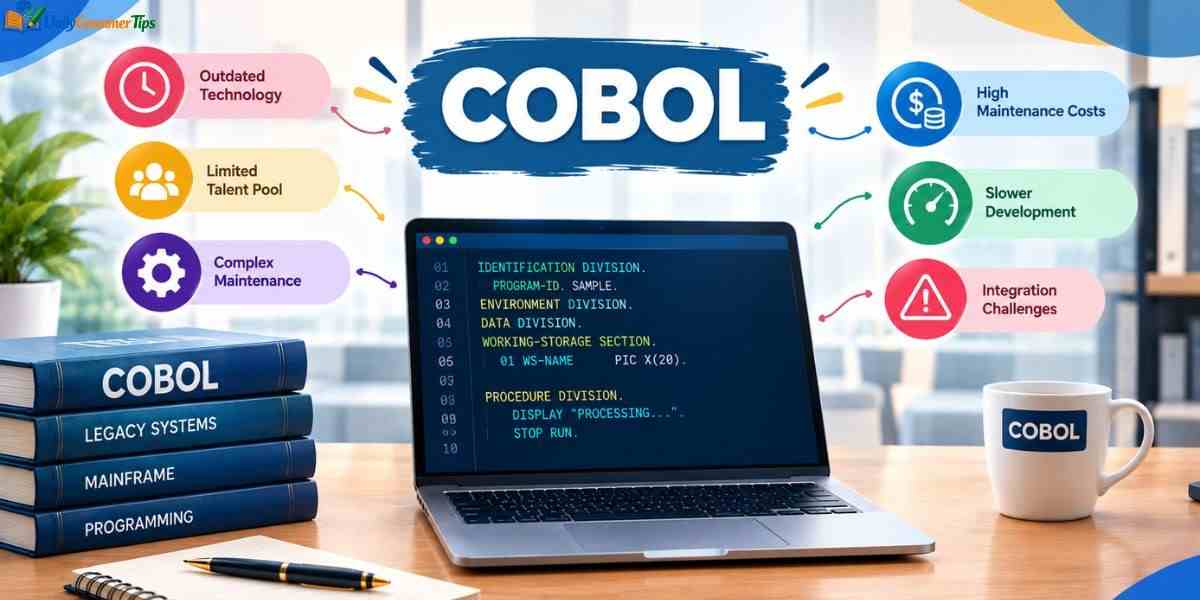
This language faces a shrinking workforce, since most experienced developers are approaching retirement age. Fewer new programmers are learning it compared to popular modern alternatives.
Existing systems are also often poorly documented. This makes updates and modernization projects slow, expensive, and risky for companies that depend on this legacy code.
Main Challenges
- Aging developer workforce
- Limited documentation on old systems
- High cost of full modernization
- Fewer training resources than modern languages
Integration Difficulties
Connecting old programs to modern APIs and mobile apps can be technically difficult. Extra middleware is often required, adding complexity to projects that would be simpler with a fully modern stack.
Perception Problems Among Students
Many computer science students see this field as unexciting compared to artificial intelligence or app development. This perception gap makes recruiting new talent harder, even when salaries remain competitive.
The Knowledge Transfer Problem
When experienced staff retire without documenting their knowledge, valuable context disappears. Companies increasingly invest in mentorship programs specifically to capture this expertise before it is lost for good.
Vendor Lock In Concerns
Some organizations worry about depending too heavily on a single compiler vendor for critical systems. Diversifying tools and keeping documentation current helps reduce this risk over the long term.
COBOL Jobs: Career Scope and Opportunities
Jobs involving this language remain in demand despite its age. Many banks and government agencies actively search for professionals who can maintain existing legacy systems long term.
Mainframe developer roles that require this specific skill are especially valuable, since fewer candidates apply for these positions compared to popular modern languages like Python.
Where Jobs Are Most Common
- Banking and financial institutions
- Government contractors and agencies
- Insurance companies
- Large enterprise IT departments
Typical Job Titles
Common roles include mainframe developer, systems analyst, application maintenance engineer, and legacy systems consultant. Many postings also mention CICS, JCL, or DB2 as related required skills.
Remote Work Possibilities
Some legacy maintenance work can now be done remotely, especially when companies use secure cloud connections to their mainframes. This flexibility has slowly started attracting a wider pool of candidates.
Government Contract Opportunities
Public sector agencies frequently post long term contracts for legacy system support. These roles often come with strong job security, since government modernization projects tend to move slowly and carefully.
Freelance and Contract Work
Independent consultants with this expertise are often hired for short term migration or support projects. Companies frequently prefer contractors for specialized tasks rather than hiring full time staff permanently.
Building a Standout Resume
Highlighting specific mainframe tools, project scale, and measurable results helps candidates stand out. Employers value proof of hands on experience far more than general familiarity with legacy programming concepts.
Growing Into Leadership Roles
Experienced specialists sometimes move into leadership positions overseeing modernization strategy rather than writing code daily. These senior roles often combine technical knowledge with project management and vendor coordination skills.
COBOL Salary Guide (2026)
Developers with this skill often earn competitive salaries due to limited supply and steady demand. Experience level and mainframe expertise usually influence the final pay range offered.
Below is a general overview of estimated salaries based on role and experience level in this field.
| Role | Estimated Annual Salary |
| Junior Developer | $65,000 to $80,000 |
| Experienced Developer | $85,000 to $110,000 |
| Senior Mainframe Developer | $100,000 to $130,000 |
Factors That Affect Pay
Location, industry, and mainframe certifications all influence salary outcomes. Developers working for large banks or federal agencies often earn more than those in smaller, regional companies.
Negotiating Leverage for Specialists
Because so few professionals hold this specific skill set, experienced specialists often have strong negotiating leverage. Employers frequently offer signing bonuses or retention incentives to keep experienced staff in place.
Comparing Pay to Other Legacy Skills
Compared to other aging technologies, pay in this field tends to stay competitive rather than decline. Steady institutional demand keeps salaries stable even as overall interest in learning it slowly falls.
Regional Salary Differences
Salaries tend to be higher in major financial hubs where banks and large enterprises are concentrated. Smaller cities and rural regions typically offer lower pay, though remote work is slowly narrowing that gap.
What Developers Say About COBOL (Community Insights)
Online developer communities often describe this language as boring but extremely stable. Many programmers admit they avoided learning it, yet later found steady, well paying work through related projects.
Some developers argue that jobs in this field offer security precisely because so few people want to learn the language. Others see it as a stepping stone into mainframe careers.
Common Community Opinions
- Considered outdated but highly stable
- Seen as a reliable career backup option
- Viewed as tedious compared to modern syntax
- Respected for its role in critical infrastructure
The Younger Developer Perspective
Younger developers sometimes discover this field by accident, often through a first mainframe job. Many report being surprised by steady demand and salaries once they gain even basic experience.
Common Advice Shared Online
Experienced professionals often advise newcomers to pair this skill with SQL, JCL, and basic mainframe operations. Combining these related skills tends to open far more job opportunities than the language alone.
Humor Around an Old Technology
Developer forums often joke about this language outliving every trend that was supposed to replace it. Behind the humor, many admit genuine respect for how well these old systems continue performing.
Advice for Career Switchers
Professionals switching from other technical fields often ask whether starting late is a disadvantage. Community members generally respond that steady demand and structured logic make this a welcoming path for switchers.
Comparing Online Opinions Fairly
Opinions online range from strong enthusiasm to mild frustration, often depending on personal experience. Reading a wide mix of perspectives gives newcomers a more balanced, realistic picture before committing to this path.
COBOL Modernization: Should You Learn It in 2026?
Modernization is a major focus for companies today. Many organizations are integrating their legacy systems with cloud platforms instead of rewriting everything from scratch.
Learning this language in 2026 can still be a smart career move, especially for those interested in mainframe systems, banking software, or long term government contracts.
Modernization Approaches Companies Use
- Wrapping old code with modern APIs
- Migrating systems to cloud based mainframes
- Gradual rewrites of smaller modules
- Full replacement, though rarely chosen due to risk
Should Beginners Start Here?
For students interested in enterprise systems, starting with this language can offer a unique advantage. Fewer graduates compete for these roles, which often leads to faster job offers after training.
Balancing Old and New Skills
The strongest candidates usually combine legacy knowledge with modern tools such as cloud platforms or automation scripts. This mix makes them valuable during long modernization projects that blend both worlds.
Signs a Company Is Ready to Modernize

Rising maintenance costs, retiring staff, and difficulty finding support are common warning signs. Companies showing these signals often begin planning gradual modernization long before any system actually fails.
Common Modernization Mistakes to Avoid
Rushing a full rewrite without proper testing is one of the most frequent mistakes. Successful projects usually move gradually, validating each change carefully before touching the next piece of critical logic.
Measuring Success After Modernization
Companies typically track uptime, transaction speed, and error rates before and after any change. Clear metrics help teams prove that a modernization effort actually improved performance rather than adding new risk.
Frequently Asked Questions
Is COBOL still used today?
Yes, COBOL still runs core banking, insurance, and government systems worldwide. Many companies modernize it instead of replacing it completely.
Is COBOL better than Python?
COBOL and Python serve different purposes. COBOL suits legacy business systems, while Python fits modern app development and data science.
Is COBOL a coding language?
Yes, COBOL is a high level programming language designed specifically for business and administrative applications.
Is COBOL a hard language to learn?
COBOL is generally easy to read due to its English like syntax. The harder part is learning the surrounding mainframe environment.
What replaced COBOL?
No single language fully replaced COBOL. Companies now use Java, Python, or C# alongside it rather than removing it entirely.
Conclusion
COBOL continues to prove that reliable, well built software can outlast newer trends. Despite its age, it still powers essential systems across banking, insurance, and government sectors worldwide.
You are exploring COBOL for career opportunities or simply curious about legacy technology, understanding it gives valuable insight into how modern business infrastructure was originally built.
