


Taking a vacation gives people a chance to relax, explore new places, spend time with family, or simply step away from a busy routine. When a friend, coworker, family member, or client returns, saying “I hope you had a great vacation” is a warm and natural way to welcome them back.
Fortunately, there are many other ways to say “I hope you had a great vacation” without changing the basic meaning. You can ask whether someone enjoyed their trip, mention that you hope they had time to relax, or simply welcome them back.
For example, you might say, “I hope you enjoyed your time away,” when talking to a coworker. With a friend, “Hope you had an amazing trip!” sounds more natural and energetic.
I Hope You Had a Great Vacation Meaning
“I hope you had a great vacation” means that you wish someone enjoyed the time they spent away from work, school, or their normal daily responsibilities.
People normally use this expression after someone returns from a vacation or holiday. It shows friendliness and gives the other person an opportunity to talk about their vacation experience.
For example:
“Welcome back! I hope you had a great vacation. Did you get a chance to visit the beach?”
The sentence works because it sounds interested without becoming too personal.
You can use “I hope you had a great vacation” with friends, relatives, coworkers, managers, clients, and other people you know. The expression has a friendly but neutral tone, so it fits many situations.
In British English, people often use “holiday” instead of “vacation.” Therefore, “I hope you had a great holiday” carries essentially the same meaning.
The phrase also helps start a post-vacation conversation. Instead of immediately asking several questions about someone’s travel experience, you can first welcome the person back and allow them to share as much as they want.
Is It Correct to Say “I Hope You Had a Great Vacation”?
Yes, “I hope you had a great vacation” is grammatically correct and sounds natural in everyday English.
The word “had” refers to a vacation that has already ended. That makes the sentence suitable when someone has returned from their trip.
For example:
“I hope you had a great vacation in Spain.”
If the person’s vacation has not started yet, you should instead say:
“I hope you have a great vacation.”
You can also shorten it in casual conversation:
“Hope you had a great vacation!”
Dropping “I” is common in texts, chats, and friendly conversations. However, including the complete phrase “I hope you had a great vacation” may sound slightly more polished in professional communication.
The difference mainly depends on timing:
Before the trip: Hope you have a great vacation.
After the trip: Hope you had a great vacation.
Knowing this small difference helps you choose the most natural vacation message for the situation.
I Hope You Enjoyed Your Vacation
“I hope you enjoyed your vacation” is one of the simplest alternatives to “I hope you had a great vacation.”
It sounds natural, polite, and friendly. You can use it with almost anyone, including coworkers, friends, clients, and relatives.
The word “enjoyed” directly focuses on whether the person had a pleasant vacation experience.
Example:
“Welcome back! I hope you enjoyed your vacation and had plenty of time to relax.”
This phrase works especially well when you do not know many details about the person’s vacation plans.
Hope You Had an Amazing Trip
If you want something warmer and more enthusiastic, say “Hope you had an amazing trip.”
This expression works particularly well with friends, relatives, and coworkers you know well. “Amazing” adds excitement and makes the message feel more energetic than “I hope you had a great vacation.”
Example:
“Hope you had an amazing trip! I can’t wait to hear what you did.”
You can use this after a vacation, road trip, international journey, or weekend getaway.
I Hope You Had a Wonderful Time Away

“I hope you had a wonderful time away” focuses on the person’s break rather than the destination.
It makes a good alternative when you do not know where someone went or what they did during their time off.
Example:
“I hope you had a wonderful time away and came back feeling refreshed.”
The expression sounds warm without becoming overly casual, making it useful in both friendly and professional conversations.
Welcome Back! Hope You Had a Great Time
Sometimes you want to welcome someone back before mentioning their vacation.
In that case, “Welcome back! Hope you had a great time” sounds natural and cheerful.
Example:
“Welcome back! Hope you had a great time. How was the trip?”
This expression works especially well when a coworker returns to the office.
You could also write, “Welcome back, hope you had a great vacation!” when sending a quick message to a colleague or friend.
I Hope Your Vacation Was Relaxing
People often take vacations because they need a break. Saying “I hope your vacation was relaxing” recognizes that need.
Example:
“I hope your vacation was relaxing and gave you some much-needed time away.”
This phrase works particularly well when someone has taken time off after a busy period.
Instead of focusing on sightseeing or activities, it focuses on rest and recovery.
Hope You Enjoyed Your Time Off
“Hope you enjoyed your time off” is an excellent workplace alternative to “I hope you had a great vacation.”
It sounds friendly and professional without asking for personal details.
Example:
“Welcome back, Sarah. Hope you enjoyed your time off.”
This sentence works well for coworkers, employees, managers, and professional contacts.
“Time off” also works when you are unsure whether the person actually traveled anywhere.
I Hope You Had a Memorable Vacation
If someone planned a special trip, you can say “I hope you had a memorable vacation.”
The word “memorable” suggests that you hope the person created happy vacation memories.
Example:
“I hope you had a memorable vacation with your family.”
This expression suits honeymoons, family trips, milestone vacations, and long-awaited journeys particularly well.
Hope Your Trip Was Everything You Wanted
This phrase feels more personal because it connects the message to someone’s expectations.
Example:
“Hope your trip was everything you wanted and more!”
Use it when someone had been excited about their vacation plans before leaving.
It shows that you remembered their enthusiasm and genuinely want to know whether the experience lived up to their expectations.
I Hope You Had a Relaxing Break

“I hope you had a relaxing break” is another useful professional and casual expression.
A vacation does not always involve travel. Someone may stay home, visit family, or simply take a few days away from work.
Example:
“I hope you had a relaxing break and got some time to recharge.”
This makes the expression more flexible than “I hope you had a great vacation.”
Hope You Made Some Great Memories
If you want your vacation wishes to sound warmer, try “Hope you made some great memories.”
Example:
“Hope you made some great memories during your trip!”
This phrase works well for family vacations, romantic getaways, group trips, and special journeys.
It focuses on the emotional value of the experience rather than simply asking whether the vacation was good.
I Hope You Had a Fantastic Holiday
“I hope you had a fantastic holiday” is a natural alternative, especially in places where “holiday” is more commonly used than “vacation.”
It carries almost the same meaning as “I hope you had a great vacation.”
Example:
“I hope you had a fantastic holiday and enjoyed every minute of it.”
You can also use the simpler “I hope you had a great holiday” in both personal and professional conversations.
Hope You Had a Fun and Relaxing Trip
Some vacations involve adventure, while others focus on rest. This phrase covers both possibilities.
Example:
“Hope you had a fun and relaxing trip with the family.”
It makes your vacation greeting sound positive without assuming exactly what someone did.
You can use it in a text, email, workplace chat, or face-to-face conversation.
I Hope You Enjoyed Your Getaway
A “getaway” usually refers to a shorter trip or break from everyday life.
Example:
“I hope you enjoyed your getaway. The pictures looked beautiful!”
This phrase sounds especially natural for weekend trips, romantic breaks, and short vacations.
It offers a slightly more conversational alternative to “I hope you had a great vacation.”
I Hope You Came Back Feeling Refreshed
Sometimes the best part of a vacation is returning with more energy.
“I hope you came back feeling refreshed” focuses on that benefit.
Example:
“Welcome back! I hope you came back feeling refreshed and ready for the week.”
This phrase works particularly well in professional communication because it acknowledges someone’s break without asking personal questions.
Hope You Had Plenty of Time to Relax
If you know someone needed a break, this expression can show genuine consideration.
Example:
“Hope you had plenty of time to relax and enjoy yourself.”
It feels caring and natural while still remaining simple.
Compared with “I hope you had a great vacation,” this version focuses more specifically on relaxation.
I Trust You Had an Enjoyable Vacation

“I trust you had an enjoyable vacation” has a slightly more formal tone.
You may use it in professional emails or conversations with people you do not know very closely.
Example:
“I trust you had an enjoyable vacation and a pleasant journey home.”
Although correct, this expression can sound more formal than everyday alternatives. For a casual conversation, “I hope you had a great vacation” usually sounds more natural.
I Hope Your Holiday Was Wonderful
This warm expression works well when talking with someone who uses “holiday” rather than “vacation.”
Example:
“I hope your holiday was wonderful. It sounds like you visited some beautiful places.”
It works in personal messages and professional conversations.
You can also simply say “I hope you had a great holiday” when you want something familiar and straightforward.
Hope You Had a Lovely Time
“Hope you had a lovely time” sounds warm, friendly, and simple.
You do not even need to mention the vacation because the context makes your meaning clear.
Example:
“Welcome back! Hope you had a lovely time.”
This works particularly well in everyday conversation and short messages.
I Hope You Enjoyed Every Moment of Your Trip
This phrase expresses more enthusiasm than a standard vacation greeting.
Example:
“I hope you enjoyed every moment of your trip. It sounded incredible!”
Use it when someone took a special or long-awaited vacation.
It shows genuine interest while giving them an easy opportunity to talk about their travel experience.
Hope You Had a Well-Deserved Break
When someone has been working hard, “Hope you had a well-deserved break” can feel thoughtful and encouraging.
Example:
“Welcome back! Hope you had a well-deserved break and got some proper rest.”
This is particularly useful for coworkers, employees, managers, students, and friends who have recently had a demanding schedule.
I Hope You Had an Incredible Adventure
Not every vacation involves relaxing by a pool. Some people travel specifically for adventure.
If someone went hiking, backpacking, skiing, exploring, or visiting several destinations, you might say:
“I hope you had an incredible adventure!”
Example:
“I hope you had an incredible adventure. I’d love to hear about your favorite part.”
This expression makes your message sound energetic and enthusiastic.
Hope You Had a Wonderful Trip
“Hope you had a wonderful trip” is simple, natural, and versatile.
Example:
“Hope you had a wonderful trip and a smooth journey back.”
You can use this phrase with friends, relatives, colleagues, clients, or acquaintances.
Because it sounds polite without becoming overly formal, it works in many of the same situations as “I hope you had a great vacation.”
I Hope You Got the Break You Needed

This expression sounds thoughtful because it recognizes why someone may have taken time away.
Example:
“I hope you got the break you needed and had some time for yourself.”
Use it when you know someone had a busy schedule before their vacation.
However, avoid using it when you do not know the person well, because it may sound slightly personal in very formal situations.
Hope Your Vacation Was Full of Great Moments
This warm phrase focuses on positive vacation memories.
Example:
“Hope your vacation was full of great moments and new experiences.”
You can use it after a family holiday, international trip, road trip, or special getaway.
It sounds more expressive than simply saying “I hope you had a great vacation.”
Welcome Back! I Hope You Enjoyed Your Trip
Our final alternative combines a welcoming greeting with a vacation wish.
Example:
“Welcome back! I hope you enjoyed your trip. It’s great to have you back.”
This expression works particularly well in the workplace.
It sounds friendly and professional while making the returning person feel acknowledged.
How to Say “I Hope You Enjoyed Your Vacation”
There are many ways to say “I hope you enjoyed your vacation”, and the best choice depends on your relationship with the person.
For a friend, you can keep things casual:
“Hope you had an awesome trip!”
For a coworker, try:
“Welcome back! I hope you enjoyed your time off.”
For a manager or professional contact, you could say:
“I hope you had a relaxing and enjoyable break.”
For a family member:
“I hope you had a wonderful vacation and made some amazing memories.”
These different vacation expressions communicate the same basic idea, but the tone changes.
If you are unsure which version to choose, “I hope you had a great vacation” remains one of the safest options because it sounds friendly, polite, and natural.
Professional Ways to Say “I Hope You Had a Great Vacation”
Professional communication requires a slightly different tone from conversations with close friends.
You want to acknowledge someone’s time away without sounding intrusive.
Suitable professional vacation phrases include:
- I hope you enjoyed your time away.
- I hope you had a relaxing break.
- Welcome back. I hope you had an enjoyable vacation.
- I trust you had a pleasant holiday.
- I hope your time off was refreshing.
- Welcome back. I hope you enjoyed your vacation.
- I hope you had a restful and enjoyable break.
For example:
“Welcome back, James. I hope you had a great vacation and enjoyed some well-deserved time away.”
This sounds friendly while remaining appropriate for the workplace.
You could also say:
“I hope you enjoyed your time off. It’s good to have you back.”
Professional vacation messages usually work best when they remain short. You do not need to ask where someone went, who traveled with them, or what they did unless they have already shared those details.
Casual Ways to Say “I Hope You Had a Great Vacation”
Friends and close coworkers give you more freedom to sound relaxed and expressive.
Instead of “I hope you had a great vacation,” you might say:
- Hope the trip was amazing!
- Did you have a good time?
- Hope you had a blast!
- How was your getaway?
- Hope you loved every minute!
- Bet you had an awesome time!
- Hope the holiday treated you well!
For example:
“Welcome back! Hope the trip was amazing. Tell me everything!”
This sounds much more conversational than a formal vacation greeting.
Another natural option is:
“Hope you had a great vacation! What was your favorite part?”
The follow-up question helps continue the conversation rather than ending it with a simple greeting.
Polite Ways to Ask About Someone’s Vacation
Sometimes you want to ask about someone’s trip instead of simply offering vacation wishes.
You can say:
“How was your vacation?”
Or:
“Did you enjoy your time away?”
Other polite questions include:
“Did you have a nice trip?”
“How did your vacation go?”
“Did you get a chance to relax?”
“What did you enjoy most about your trip?”
“How was your holiday?”
These questions work well after “I hope you had a great vacation.”
For example:
“I hope you had a great vacation. Did you get a chance to explore much while you were there?”
Avoid asking too many questions immediately. Give the other person space to decide how much they want to share.
I Hope You Had a Great Vacation Message
A vacation message does not need to be long. A few warm words can make someone feel welcomed after returning.
Here are some natural examples:
“Welcome back! I hope you had a great vacation and made some wonderful memories.”
“Hope you enjoyed your vacation and had plenty of time to relax. It’s great to have you back!”
“I hope you had a great vacation with your family. Wishing you an easy and happy return to your normal routine.”
“Welcome back! Hope you had an amazing vacation and enjoyed every moment.”
“I hope you had a great vacation and came home feeling happy, rested, and refreshed.”
The best vacation message depends on your relationship with the recipient.
For friends, you can sound energetic and personal. For coworkers, keep the message friendly but professional.
Hope You Enjoyed Your Vacation Message
If you prefer “hope you enjoyed your vacation”, you can build a complete message around it.
For example:
“Welcome back! Hope you enjoyed your vacation and had a chance to relax. I’d love to hear about your trip when you have time.”
Another friendly version is:
“Hope you enjoyed your vacation and made lots of great memories. It’s wonderful to have you back!”
For work:
“Welcome back. Hope you enjoyed your vacation and had a refreshing break.”
These messages feel natural because they acknowledge someone’s return without making the greeting too complicated.
I Hope You Had a Great Vacation Email
You can use “I hope you had a great vacation” at the beginning of an email when contacting someone who has recently returned.
For example:
Hi Daniel,
I hope you had a great vacation and enjoyed your time away. Welcome back! I wanted to follow up regarding the project we discussed before your break. When you have a chance, please let me know a convenient time to reconnect.
Best,
Michael
This approach works because you acknowledge the person’s vacation before moving into business.
Another version could be:
Hi Emma,
Welcome back! I hope you had a relaxing vacation and returned feeling refreshed. I’m reaching out with a quick update on the project while you were away.
The vacation greeting should usually remain brief in a professional email. The main purpose of the email should still appear quickly.
You can also replace “I hope you had a great vacation” with “I hope you enjoyed your time away” when you want a more neutral professional tone.
Welcome Back, Hope You Had a Great Vacation
“Welcome back, hope you had a great vacation” combines two friendly ideas in one simple greeting.
“Welcome back” acknowledges the person’s return, while the second part shows interest in their vacation experience.
For example:
“Welcome back! Hope you had a great vacation. We missed having you around.”
At work, you might say:
“Welcome back! I hope you had a great vacation and a relaxing break.”
For a friend:
“Welcome back! Hope you had a great vacation. I want to hear all about it!”
This greeting works especially well when you see someone for the first time after their return.
I Hope You Had a Great Holiday
“I hope you had a great holiday” is a natural expression, particularly in British English.
American English speakers generally use “vacation” for personal travel and time away from work. British English speakers often use “holiday.”
Therefore:
“I hope you had a great vacation.”
and
“I hope you had a great holiday.”
can communicate the same idea depending on the speaker and region.
For example:
“I hope you had a great holiday in Italy. How was the weather?”
You can also say:
“Hope you had a wonderful holiday with your family.”
Both expressions sound warm and natural.
Hope You Had a Great Vacation
You do not always need to include “I” at the beginning.
“Hope you had a great vacation” is perfectly natural in informal communication.
People commonly use this shorter form in text messages, workplace chats, social media messages, and everyday conversation.
For example:
“Hey, welcome back! Hope you had a great vacation!”
Or:
“Hope you had a great vacation. How was Hawaii?”
The complete form, “I hope you had a great vacation,” can sound slightly more polished, but both versions communicate the same friendly vacation wish.
Hope You Have a Great Vacation
Timing changes which verb you should use.
If someone has not left yet, say “Hope you have a great vacation.”
For example:
“Have a safe flight and hope you have a great vacation!”
If the person has already returned, say:
“Hope you had a great vacation.”
The difference is simple:
“Have” looks forward to the vacation.
“Had” looks back at the vacation.
You could also say:
“I hope you have a wonderful vacation and enjoy every moment.”
This makes a thoughtful vacation wish before someone leaves.
Have a Nice Vacation Wishes

When someone is about to leave for their trip, you can send a short and cheerful message.
Here are several natural vacation wishes:
“Have a wonderful vacation!”
“Enjoy your trip!”
“Have a relaxing break!”
“Safe travels and have fun!”
“Hope you have a great vacation!”
“Enjoy every moment of your holiday!”
“Have an amazing getaway!”
“Wishing you a safe and memorable trip!”
“Have a fantastic time!”
“Enjoy your well-deserved break!”
For a friend, you might say:
“Hope you have a great vacation! Take lots of pictures and enjoy every minute.”
For a coworker:
“Have a wonderful vacation and enjoy your well-deserved time off.”
A good vacation wish should feel positive without becoming unnecessarily long.
Friendly Vacation Greetings for Someone Returning
When someone comes back, a friendly greeting can help them feel welcomed.
You might say:
“Welcome back! How was your trip?”
“It’s great to see you again. Hope you had a wonderful time!”
“Hope you enjoyed your vacation. Did you have fun?”
“Welcome home! Hope the trip was everything you wanted.”
“I hope you had a great vacation. What was the highlight?”
The final example naturally invites conversation.
Instead of asking several questions, start with a simple greeting and allow the person to decide whether they want to share their vacation memories.
Formal Alternatives to “I Hope You Had a Great Vacation”
Formal communication usually calls for restrained language.
Instead of an energetic phrase such as “Hope you had an awesome trip,” consider:
“I hope you had an enjoyable vacation.”
“I trust you had a pleasant holiday.”
“I hope your time away was restful.”
“I hope you enjoyed a relaxing break.”
“I trust your vacation went well.”
These formal alternatives work in emails, client communication, and conversations with senior colleagues.
However, avoid making the sentence unnecessarily stiff. In many workplaces, “I hope you had a great vacation” already sounds professional enough.
Learn more….Tought vs Taught: What’s the Difference?
Informal Alternatives to “I Hope You Had a Great Vacation”
When speaking with friends or people you know well, you can loosen the language.
Try:
“Hope you had a blast!”
“How was the trip?”
“Hope your getaway was amazing!”
“Did you have an awesome time?”
“Hope you loved the vacation!”
“Looks like you had fun!”
“Hope the trip was unforgettable!”
These casual vacation phrases can make your message feel more personal.
For example:
“Welcome back! Hope you had a blast. What was the best part?”
This naturally moves the conversation forward.
What to Say When Someone Returns From Vacation
When someone returns, start by acknowledging them rather than immediately talking about work or responsibilities.
A simple “Welcome back! I hope you had a great vacation” works in almost every friendly situation.
You can then add a short question:
“How was your trip?”
“Did you have a chance to relax?”
“What was your favorite part?”
“How was the weather?”
“Did everything go according to plan?”
At work, you might keep things shorter:
“Welcome back! I hope you had a great vacation. It’s good to have you back.”
This gives the person a friendly welcome without pressuring them to describe their entire vacation.
Choosing the Right Vacation Phrase
The right phrase depends on three things: your relationship, the setting, and the timing.
For close friends, casual expressions such as “Hope you had an amazing trip!” work perfectly.
For coworkers, “I hope you enjoyed your time off” sounds friendly and professional.
For clients or formal contacts, you might choose “I hope you had an enjoyable vacation.”
Timing also matters.
Before someone leaves, say “Hope you have a great vacation.”
After they return, say “I hope you had a great vacation.”
If you are unsure whether they traveled, “I hope you enjoyed your time off” offers a safe alternative.
Natural communication matters more than choosing complicated words. Pick the phrase that sounds most appropriate for the person you are speaking with.
Why Use Different Vacation Expressions?
Using different expressions helps your English sound more natural.
If you always say “I hope you had a great vacation,” your messages may eventually feel repetitive, especially if you regularly communicate with coworkers or clients.
Alternative phrases also let you express slightly different ideas.
“I hope you had a relaxing vacation” focuses on rest.
“Hope you had an amazing trip” focuses on excitement.
“I hope you made wonderful memories” feels emotional and warm.
“Hope you enjoyed your time off” sounds professional and neutral.
“I hope you came back feeling refreshed” focuses on the positive result of taking a break.
Each expression carries its own tone, even though all of them relate to the same vacation experience.
Common Mistakes to Avoid With Vacation Greetings
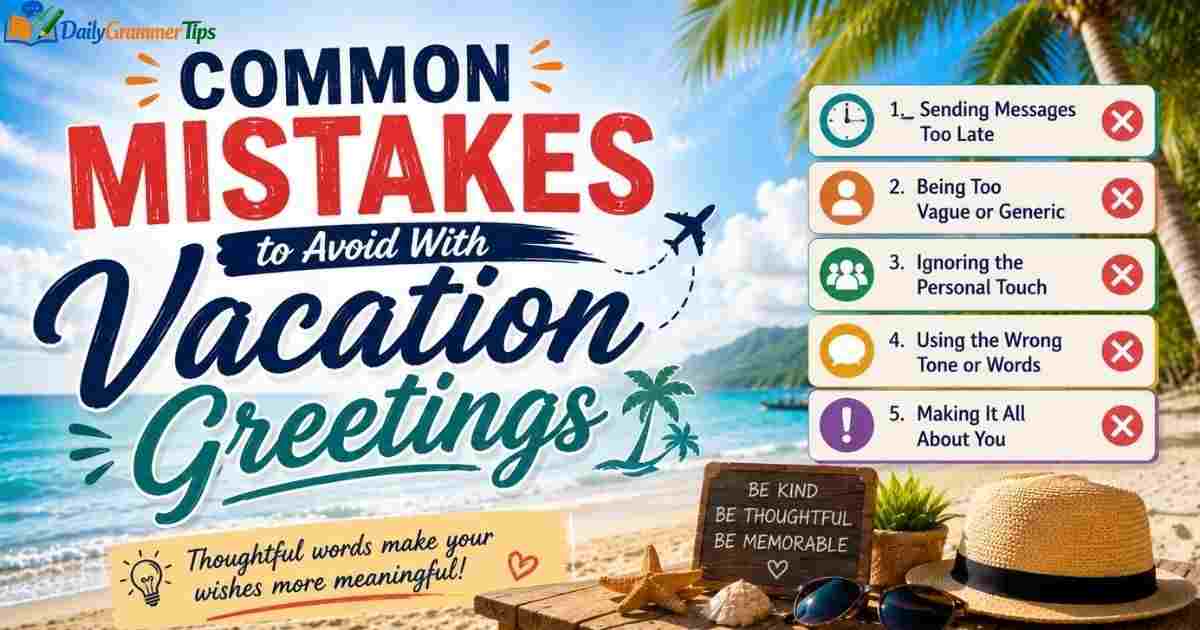
Vacation greetings are simple, but a few small mistakes can make them sound unnatural.
First, pay attention to timing.
Do not say “I hope you had a great vacation” before the person leaves. In that situation, say “I hope you have a great vacation.”
Second, avoid asking overly personal questions unless you know the person well.
A coworker may happily tell you about their destination but may not want to explain every detail of their holiday experience.
Third, match your tone to the relationship.
“Hope you had a blast!” works with friends but may sound too casual in formal professional communication.
Finally, keep your message genuine. A simple “Welcome back! I hope you had a great vacation” often sounds better than an elaborate greeting that does not match your normal speaking style.
Frequently Asked Questions
How do you wish someone a great vacation?
You can say “Hope you have a great vacation,” “Have a wonderful trip,” or “Enjoy your well-deserved break.” Choose a phrase that matches your relationship with the person.
What to say to someone after a vacation?
Say “Welcome back! I hope you had a great vacation” or “Hope you enjoyed your time away.” You can follow it with a friendly question such as “How was your trip?”
How do you say “I hope you had a great vacation”?
You can say “Hope you enjoyed your vacation,” “I hope you had a wonderful trip,” or “Hope you had a relaxing break.” All of these naturally express the same friendly idea.
How to wish someone a well-deserved vacation?
Say “Enjoy your well-deserved break,” “Hope you have a relaxing vacation,” or “You deserve some time off have a wonderful trip!” These phrases recognize the person’s hard work while wishing them a pleasant break.
Can I say “have a wonderful vacation”?
Yes. “Have a wonderful vacation” is grammatically correct and sounds warm and natural. Use it before someone leaves for their trip.
Conclusion
Saying “I hope you had a great vacation” is a simple and thoughtful way to welcome someone back. You can also choose phrases like “Hope you enjoyed your time off” or “Hope you had an amazing trip” depending on the person and situation. The best wording should feel natural, friendly, and appropriate for your relationship.
A good vacation greeting does not need to be long or complicated. Before someone leaves, say “Hope you have a great vacation,” and after they return, say “Hope you had a great vacation.” A sincere message can make someone feel welcomed and help start an easy, friendly conversation.
