


Receipt or Reciept is a common spelling question because the two forms look very similar, but only receipt is correct. A receipt is usually a paper or digital record that confirms a purchase or payment, while “reciept” is a misspelling that often appears in everyday writing.
Many people hesitate when they need to write the word in an email, invoice, payment record, or shopping message. If you have ever stopped to ask yourself which spelling is right, this guide will explain the difference, meaning, pronunciation, examples, and common uses in simple English.
Receipt or Reciept Meaning
The phrase Receipt or Reciept often appears in searches from people who already know the word but are unsure about its spelling and meaning.A receipt is normally a written or digital record showing that money has been paid for something.
For example, a store may give you a receipt after you purchase clothing, food, or another product.
The word can also relate more generally to receiving something. Its meaning depends on the sentence in which it appears.
Why Do People Spell Receipt as Reciept?
The confusion behind Receipt or Reciept mainly comes from the unusual spelling of the word. Many English words do not follow simple spelling patterns, and “receipt” is one of the words that can be difficult to remember.
People may naturally expect the letters to appear as “cie” because that pattern occurs in other English words. However, receipt uses “cei,” making the incorrect form “reciept” an easy mistake to make.
Receipt or Reciept in Everyday English
In everyday English, Receipt or Reciept usually refers to a quick spelling check rather than two different words.You use receipt when talking about proof of purchase or payment. A customer might ask for a paper receipt, while an online store may send a digital receipt by email.
For example:
Please keep your receipt in case you need to return the item.
Here, the receipt provides a record of the transaction.
How to Remember the Correct Spelling
A useful way to remember Receipt or Reciept is to focus on the letter order rather than trying to pronounce every letter.
Think of the word as re + cei + pt. The “cei” sequence can act as a visual reminder that the letters “e” and “i” come in that order after “c.”
Another helpful method is to connect the word with familiar situations such as shopping, payments, invoices, refunds, and purchases. Seeing the correct form regularly makes it easier to remember.
Receipt or Reciept Pronunciation

Although Receipt or Reciept creates a spelling problem, pronunciation is another reason learners may find the word confusing.The word receipt is pronounced without clearly saying the “p” or “t” sounds at the end.
The first part sounds similar to “re-see,” which means the spelling does not perfectly match what someone hears.This is an important reminder that English spelling cannot always be predicted from pronunciation alone.
What Does Receipt Mean in Business?
When discussing Receipt or Reciept in business, the correct word describes an important transaction record.A receipt can show details such as the seller, items purchased, amount paid, date, taxes, and payment method.
Businesses use these records for customer service, bookkeeping, refunds, expense tracking, and financial documentation.Receipts can be printed or stored electronically, depending on how the transaction takes place.
Receipt or Reciept in Accounting and Payments
The difference between Receipt or Reciept becomes especially important in accounting because incorrect spelling can make professional writing look careless.In financial contexts, a receipt may document that a payment has been received.
Businesses can use receipts alongside invoices, payment records, bank statements, and other accounting documents.An invoice generally requests payment, while a receipt normally confirms that payment has been made.
Learn more…..Thiefs or Thieves: Which Spelling Is Correct? Meaning & Grammar Rule
Receipt vs. Invoice: Are They the Same?
When researching Receipt or Reciept, some readers also want to know how a receipt differs from an invoice.
They are related, but they serve different purposes. An invoice is commonly issued to request payment for goods or services. A receipt is generally provided after payment as evidence that the transaction has been completed.
For example, a freelance designer may send an invoice before receiving money and provide a receipt after the client pays.
Receipt or Reciept as Proof of Purchase
Another common reason people search Receipt or Reciept is because they need to understand the role of a receipt after buying something.
A receipt can act as evidence that a purchase took place. Depending on the retailer’s policy, it may be requested when returning an item, exchanging a product, making a warranty claim, or checking a transaction.Digital receipts can serve the same basic purpose as printed ones.
Can Receipt Be Used as a Verb?
The search Receipt or Reciept can also lead to questions about whether “receipt” has uses beyond the common noun.
“Receipt” is primarily known as a noun, but dictionary sources also record a less common verb use related to acknowledging or recording something received. This usage is much less common in everyday conversation than the noun.
Most people will encounter receipt as a noun in shopping, business, finance, and general writing.
What Does “Receipts” Mean in Slang?
The phrase Receipt or Reciept can also be connected with the modern slang use of “receipts.”In informal language, receipts can mean evidence that supports a claim or proves that something happened.
For example, someone may say that they have “the receipts” when they have messages, screenshots, documents, or other evidence.
This informal meaning developed from the traditional idea of a receipt as a record that proves a transaction.
Common Examples Using Receipt

Understanding Receipt or Reciept becomes easier when the correct word is seen in natural sentences.
Here are several examples:
- I saved the receipt after buying the laptop.
- The cashier offered me a printed receipt.
- Please send the receipt to my email.
- We need the receipt to process the return.
- The company keeps digital receipts for its records.
In each example, receipt is the correct spelling.
Common Mistakes With Receipt
The most common mistake in Receipt or Reciept is writing “reciept” instead of “receipt.” This usually happens because the writer remembers the pronunciation but not the exact letter order.
Other mistakes can include leaving out letters, adding unnecessary vowels, or assuming that the word should be spelled exactly as it sounds.The safest approach is to remember the standard form: receipt.
Receipt or Reciept in English
In English, receipt is the correct spelling, while reciept is a common spelling mistake. A receipt is usually a written or digital record that confirms a payment or purchase. You may receive one after buying something in a store, paying a bill, or ordering a product online.
The word can also refer to the act of receiving something, although this use is less common in everyday English. Because the spelling does not closely match its pronunciation, many people write “reciept” by mistake. Remembering the correct form can help you avoid this error in emails, schoolwork, and professional writing.
Receipt or Reciept Meaning
The word receipt usually means a document that shows that money has been paid for a product or service. It may contain information such as the date, items purchased, total amount, taxes, and payment method. Stores can provide printed receipts, while online businesses often send them by email.
Receipt can also describe the act of receiving something. For example, a company may confirm the receipt of a letter, payment, or important document. However, in everyday conversation, people most often use receipt when they mean proof of purchase or payment.
Receipt Pronunciation
The pronunciation of receipt can make its spelling confusing because some letters are silent. The word is pronounced without clearly saying the final p and t. This means the spoken word does not give you an exact guide to its written form.
This difference between spelling and pronunciation explains why some people write “reciept” when they hear the word. English contains many words with silent letters, so it helps to learn the spelling and pronunciation together rather than relying only on sound.
Receipt or Received
Receipt and received are related words, but they have different meanings and grammatical roles. Receipt is normally a noun that refers to a document or the act of receiving something. Received is the past tense and past participle of the verb receive.
For example, you might say, “I received the receipt by email.” In this sentence, received describes the action of getting something, while receipt identifies the document. Keeping this difference in mind makes it easier to use both words correctly.
Receipt of Payment

A receipt of payment is a document that confirms that someone has paid money for a product, service, bill, or other transaction. It can include useful details such as the amount paid, date of payment, transaction number, and name of the person or business receiving the money.
Businesses use payment receipts for financial records and accounting purposes. Customers may also keep them when they need proof of payment, want to request a refund, track expenses, or check details about a previous transaction.
Receipt or Reciept Example
A simple receipt example is the document a shop gives you after you pay for an item. It may show the name of the product, its price, tax, payment method, and the total amount you paid.
You can also use receipt naturally in a sentence. For example, “Please keep your receipt until you are satisfied with your purchase.” Another example is, “The company sent me a receipt after I completed the payment.”
Receipt or Recipe
Receipt and recipe are different words even though their spelling may look somewhat similar. A receipt normally provides evidence of a purchase or payment, while a recipe gives instructions for preparing food or a drink.
For example, a supermarket can give you a receipt after you buy ingredients, while a cookbook can provide a recipe that explains how to use those ingredients. Knowing their meanings helps you avoid confusing these two words.
Receipt Verb
Receipt is mainly used as a noun in modern English, but dictionaries also record a less common verb use. As a verb, it can refer to acknowledging or recording something that has been received. This form appears more often in specialized administrative or financial contexts.
In ordinary conversation, people normally use receive instead. For example, “We received your payment” sounds natural in everyday business communication. A specialized accounting context may use a form such as “the payment was receipted,” but this usage is much less common.
Why Is Reciept Incorrect?
The spelling reciept is incorrect because it places the letters in the wrong order. The standard English spelling is receipt, with the letter sequence cei after the initial “re.” The incorrect version changes this sequence to “cie.”
People often make this mistake because English spelling does not always follow pronunciation. When someone hears receipt, the silent letters can make it difficult to remember where each letter belongs.
How to Remember the Spelling Receipt
One simple way to remember receipt is to focus on the middle letters. The correct spelling contains cei, not cie. Writing the word several times and using it in sentences can also make the spelling easier to remember.
You can connect the word with familiar situations such as shopping, payments, refunds, and online orders. Each time you think about proof of purchase, associate it with the spelling receipt. This small memory connection can help prevent the common “reciept” mistake.
Receipt vs Received: The Main Difference
Receipt and received come from related words, but they do different jobs in a sentence. Receipt usually works as a noun, while received is the past form of the verb receive.
Consider the sentence, “I received a receipt from the store.” Here, received tells us what happened, and receipt tells us what the person got. The two words can appear together, but they cannot normally replace each other.
Receipt in Everyday Life
People use receipts in many ordinary situations. A customer may receive one after buying clothes, groceries, electronics, meals, or other products. Online stores also provide digital receipts after customers complete an order.
Receipts can be useful long after a purchase. A customer may need one to return an item, exchange a product, make a warranty claim, check a charge, or prove that payment was made.
Receipt in Business and Accounting
Businesses rely on receipts to keep accurate financial records. A receipt can help show when money changed hands and provide details about a particular transaction. Companies may store paper receipts, digital receipts, or information from electronic payment systems.
Receipts can also help businesses manage expenses and prepare financial records. Customers may keep them for expense claims or personal budgeting. For this reason, correct use of the word is especially important in business and accounting communication.
Receipt vs Invoice
A receipt and an invoice are related, but they do not normally serve the same purpose. An invoice usually tells a customer how much they need to pay for goods or services. A receipt generally confirms that payment has already been made.
For example, a freelancer may send an invoice before receiving money from a client. After the client pays, the freelancer may provide a receipt as confirmation of the payment. Understanding this difference can help you use both terms correctly.
Common Sentences With Receipt
The word receipt appears in many simple English sentences. Seeing it in context can make its meaning and spelling easier to understand.
Here are some natural examples:
- I kept the receipt after buying the phone.
- The cashier gave me a printed receipt.
- Please send the receipt to my email.
- You may need the receipt to return the item.
- I received a digital receipt after placing my order.
- The business keeps receipts for its financial records.
Each sentence uses receipt correctly because the word refers to a payment record or something that has been received in a formal sense.
Common Spelling Mistakes With Receipt
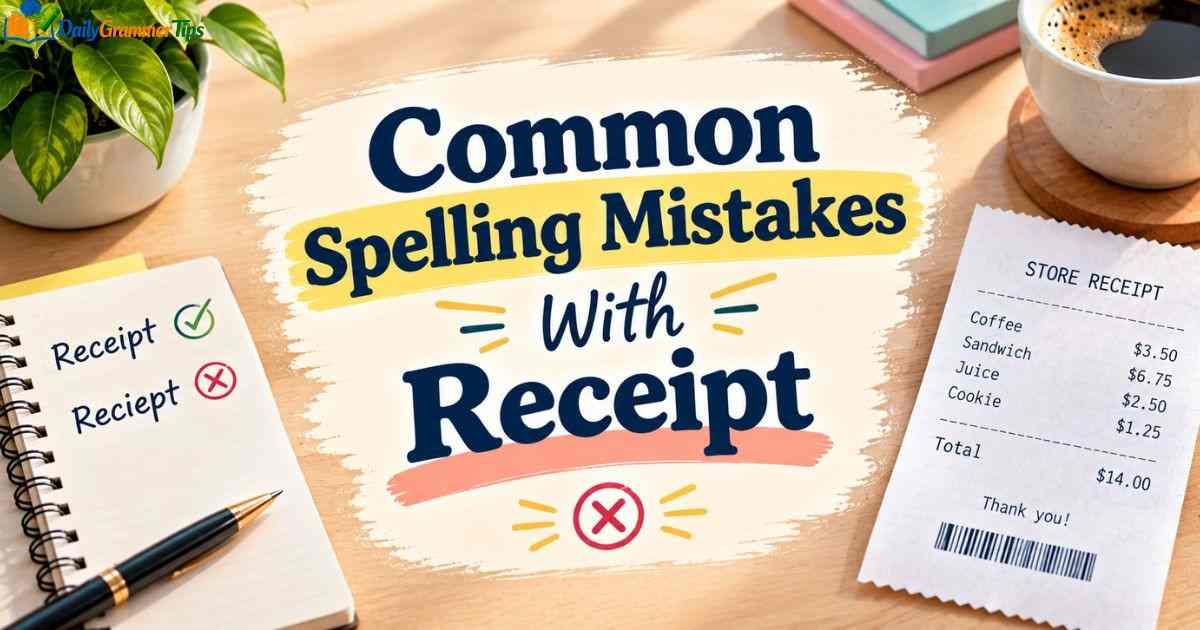
The most common mistake is writing reciept instead of receipt. Some people may also leave out one of the letters because the pronunciation does not clearly reveal the complete spelling.
The best way to avoid these mistakes is to remember the exact letter order. When writing the word, check that you have written receipt rather than changing the position of the “e” and “i.”
Frequently Asked Questions
How to write a payment receipt?
Include the payer’s name, payment amount, date, payment method, transaction details, and the name of the person or business receiving the payment.
What is the meaning of receipt?
A receipt is a written or digital record that confirms someone has received money, goods, or another item.
Is my invoice a receipt?
No. An invoice usually requests payment, while a receipt confirms that the payment has been made.
What is a receipt copy?
A receipt copy is another version of the original receipt. You can use it for your records, accounting, returns, or proof of payment.
What is a receipt for payment?
A payment receipt confirms that a person or business has paid a specific amount for goods, services, or another transaction.
Conclusion
The confusion around Receipt or Reciept is easy to clear up once you remember the correct letter order. “Receipt” is the standard spelling, and you can use it when talking about a purchase record, payment confirmation, business transaction, refund, or proof of payment. Learning the word in real sentences also makes the spelling easier to remember.
You receive a paper receipt from a shop or a digital receipt after an online order, the purpose stays much the same. Keep the correct spelling in mind whenever you write about invoices, payments, transactions, or purchases, and you will avoid the common mistake of writing “reciept.”
