

Many people assume Turkish and Arabic are closely related because they share some similar words and have a long historical connection. This common misunderstanding often leads to questions like is Turkish related to Arabic, are Turkish and Arabic similar, and is Turkish Arabic. While the two languages have influenced each other over the centuries, they belong to completely different language families and follow different grammatical systems.
At first glance, the similarities can be confusing. During the Ottoman Empire, thousands of Arabic loanwords in Turkish became part of everyday speech, and Ottoman Turkish was written using the Arabic script. These historical connections make many learners believe the languages are the same or closely connected. However, shared vocabulary does not mean shared grammar, pronunciation, or linguistic origins.
In this guide, we’ll explore Turkish and Arabic in detail and answer common questions such as is Turkish related to Arabic and Turkish vs Arabic. You’ll discover the key differences between the Turkish language and the Arabic language, understand why they share certain words, and learn how history shaped their relationship without making them the same language.
Two Different Systems, Not One Family
Turkish and Arabic belong to completely different language families, even though they have shared centuries of cultural and historical contact. Many people ask if Turkish is related to Arabic, is Turkish Arabic, or are Turkish and Arabic similar because they notice familiar words in both languages. However, Turkish is a Turkic language, while Arabic is a Semitic language, meaning they developed from different origins and follow different linguistic rules.A closer Turkish vs Arabic comparison shows that the similarities are mostly found in loanwords rather than grammar.
Modern Turkish uses an agglutinative language system built with Turkish suffixes, whereas Arabic grammar depends on the root and pattern system. So, if you are wondering if Turkish is similar to Arabic, the answer is that they may share some vocabulary due to history, but their structure, grammar, and language family are entirely different.
Many people also wonder, is Turkish Arabic because of the large number of Arabic-origin words found in the language. The answer is no. Modern Turkish is not an Arabic language and has its own unique grammar, sentence structure, and vocabulary system. While Turkish and Arabic share some historical connections through loanwords, Turkish remains a Turkic language with a completely different linguistic foundation.
Contact, Not Inheritance: How Words Traveled
The connection between Turkish and Arabic comes from centuries of historical contact, not from a common origin. Many people ask if Turkish is related to Arabic because both languages share many familiar words. In reality, Turkish is a Turkic language, while Arabic is a Semitic language, so they belong to different language families despite their long history together.
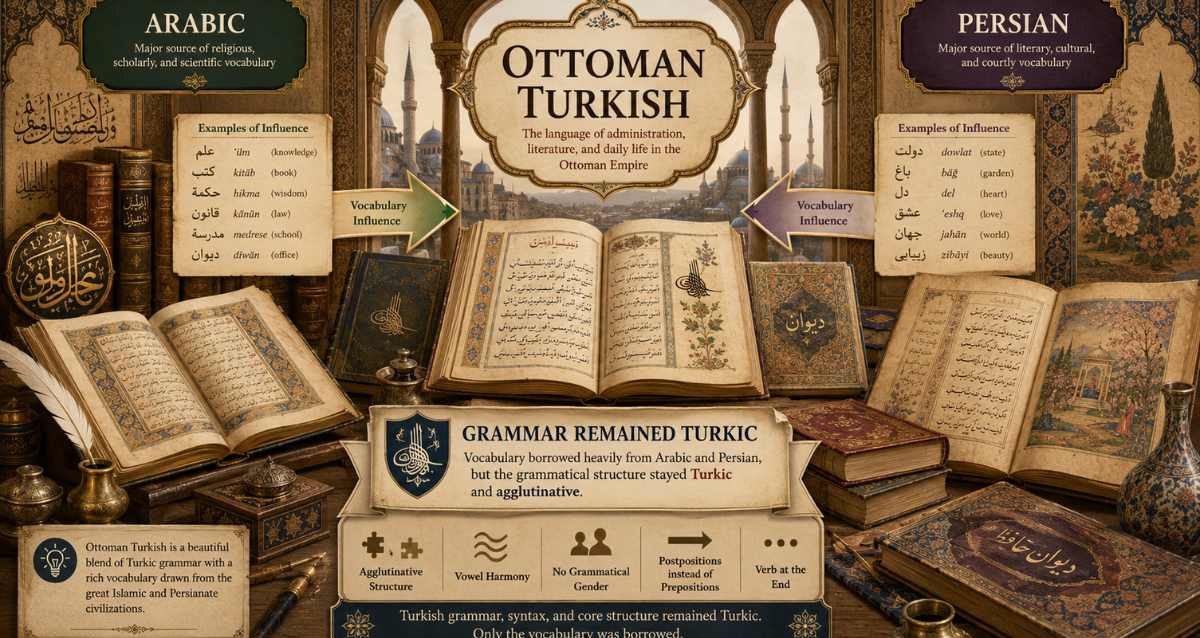
During the Ottoman Empire, thousands of Arabic words entered the Turkish language through religion, education, literature, and government. This process is called lexical borrowing or language borrowing. In any Turkish vs Arabic comparison, it becomes clear that these borrowed words adopted Turkish grammar, Turkish suffixes, and Turkish pronunciation, while the overall structure of Modern Turkish remained completely Turkic.
Many learners ask, is Turkish and Arabic similar, especially when they notice common words in both languages. The similarity, however, is mostly limited to vocabulary that was borrowed over centuries of contact. These shared words do not mean the two languages are closely related. Turkish and Arabic have different grammar, sentence structure, and pronunciation, making them distinct languages despite their historical and cultural connections.
The connection between Turkish and Arabic developed through centuries of cultural, religious, and political contact rather than a shared language family. Many people searching for is Turkish related to Arabic, are Turkish and Arabic similar, or Turkish vs Arabic language often assume the two languages have the same origins. In reality, the Turkish language belongs to the Turkic language family, while the Arabic language is part of the Semitic language family. Their similarities come from language borrowing and historical interaction, not from common ancestry.
During the Ottoman Empire, thousands of Arabic loanwords in Turkish entered the language through religion, education, law, and administration. This process of lexical borrowing enriched Turkish vocabulary, but the structure of the language remained unchanged. Modern Turkish continued to follow Turkish grammar rules, Turkish suffixes, vowel harmony, and Turkish morphology, while the borrowed Arabic words adapted to Turkish pronunciation. This explains why Turkish has Arabic words without making Turkish an Arabic language or changing its unique linguistic identity.
Persian as a Parallel Influence
Besides Arabic, Persian influence also played a major role in shaping the Turkish language, especially during the Ottoman Empire. While Arabic mainly contributed religious and scholarly terms, Persian introduced many literary, artistic, and everyday expressions. This is one reason Turkish and Arabic may seem connected, but Persian also had a significant impact on the development of Ottoman Turkish.
Many common Turkish words related to poetry, culture, architecture, and daily life have Persian origins rather than Arabic ones. Even with these borrowed words, the core of Modern Turkish remained a Turkic language with its own grammar and Turkish suffixes. A Turkish vs Arabic comparison becomes clearer when we also consider the role of Persian, as it shows that Turkish borrowed vocabulary from multiple languages while preserving its unique linguistic structure.
The One Real Exception: Persian Syntax in Elite Ottoman Prose
Although Turkish and Arabic have very different grammatical systems, there was one limited exception during the Ottoman Empire. In elite literature and official documents, Ottoman Turkish adopted certain elements of Persian influence, particularly the Persian izafet construction. This grammatical pattern appeared in formal writing and poetry, but it never became part of everyday Turkish grammar. This is why Turkish linguistic history is more complex than a simple Turkish vs Arabic comparison.
Some learners ask is Turkish similar to Arabic because Ottoman texts contain many Arabic words and Persian expressions written in the Arabic script. However, these features reflected the writing style of educated scholars rather than the spoken Turkish language. Even when borrowed words and Persian syntax appeared together, Turkish morphology, Turkish suffixes, and vowel harmony continued to define the language’s core structure, keeping Modern Turkish firmly within the Turkic language family.
Today, this Persian-style syntax is rarely used outside historical texts and academic studies of Ottoman Turkish. After the Alphabet Reform and language modernization, Modern Turkish vocabulary became simpler while preserving its original grammatical system. This historical exception does not change the fact that Turkish and Arabic belong to different language families, and understanding this distinction helps Turkish learners better appreciate the unique evolution of the Turkish language and its rich cultural heritage.
Script and Perception
The writing system of Turkish and Arabic has often led people to believe the two languages are closely related.
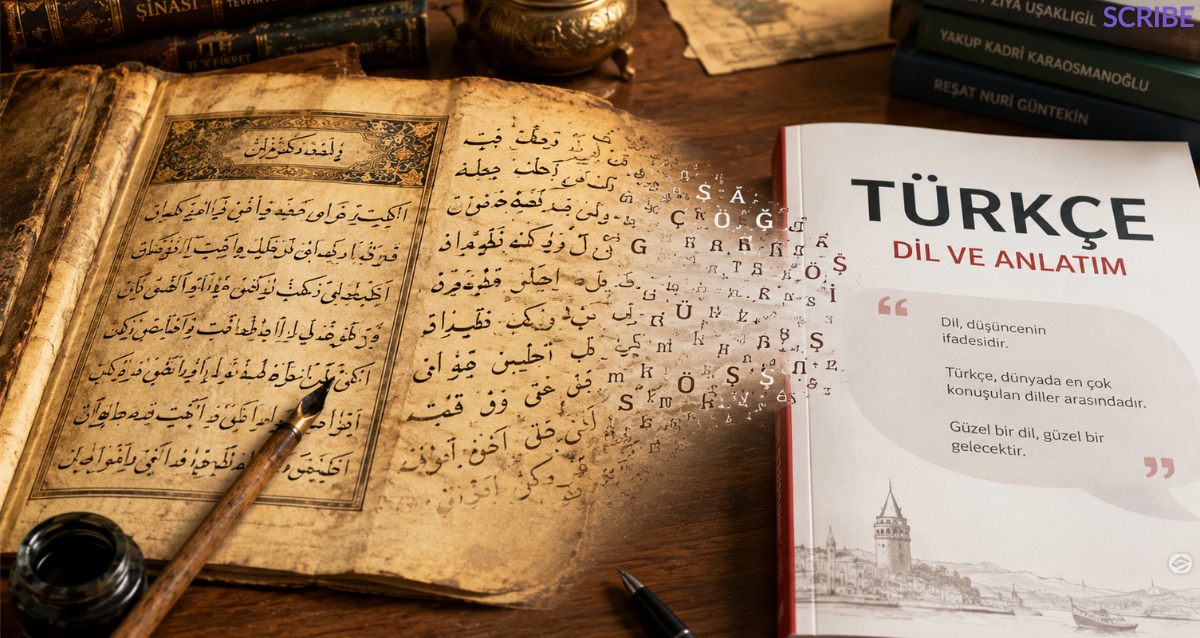
Before 1928, Ottoman Turkish was written using a modified Arabic script, which created the impression that the Turkish language and Arabic language belonged to the same language family. In reality, the script was only a writing system and did not change the grammar or structure of the language. This historical connection is one reason many people still ask, is Turkish related to Arabic or compare Turkish vs Arabic.
After the Alphabet Reform, Modern Turkish adopted a Latin alphabet that better represented Turkish pronunciation and vowel harmony. Although the writing system changed, the language itself remained a Turkic language with its own Turkish grammar and Turkish vocabulary. This change made reading and learning Turkish much easier while preserving the unique identity of Turkish and Arabic as two separate languages.
When Familiar Words Mislead
Many learners believe Turkish and Arabic are closely related because they recognize similar words in both languages. This often leads to the question, are Turkish and Arabic similar or is Turkish similar to Arabic. While the two languages share many loanwords due to centuries of historical contact, these similarities are mostly limited to vocabulary. Their grammar, pronunciation, and sentence structure remain very different.
- Misafir comes from the Arabic word musāfir (traveler), but in Turkish it means guest.
- Kitap comes from the Arabic word kitāb (book), yet it follows Turkish grammar and takes Turkish suffixes like kitaplar (books).
- Tabii originally referred to something natural in Arabic, but in Modern Turkish it commonly means “of course.”
- Şahıs still means person, although everyday Turkish usually prefers kişi or insan.
- Acele comes from Arabic but is widely used in Turkish expressions such as acele etme (“don’t rush”), following normal Turkish grammar rules.
These examples show that shared Arabic words do not make the Turkish language part of the Arabic language family. In a Turkish vs Arabic comparison, borrowed vocabulary may appear familiar, but the words have adapted to Turkish pronunciation, Turkish morphology, and Modern Turkish usage. This is why recognizing similar words does not mean the two languages function in the same way.
Sound Systems That Do Not Overlap
The sound systems of Turkish and Arabic are very different, even though the two languages share some historical vocabulary. The Arabic language includes several deep throat and emphatic sounds that do not exist in the Turkish language. In contrast, Modern Turkish is known for its clear vowel system, vowel harmony, and consistent pronunciation. This difference is one of the main reasons Turkish vs Arabic sounds completely different to native speakers.
When Arabic words entered the Turkish language, they were adapted to match Turkish phonology and Turkish pronunciation. Many borrowed words changed their sound patterns so they could follow Turkish grammar and Turkish suffixes more naturally. Although Turkish and Arabic share some vocabulary through lexical borrowing, their pronunciation rules, phonetics, and overall sound systems remain entirely separate, reflecting their different linguistic origins.
Grammar on Different Foundations
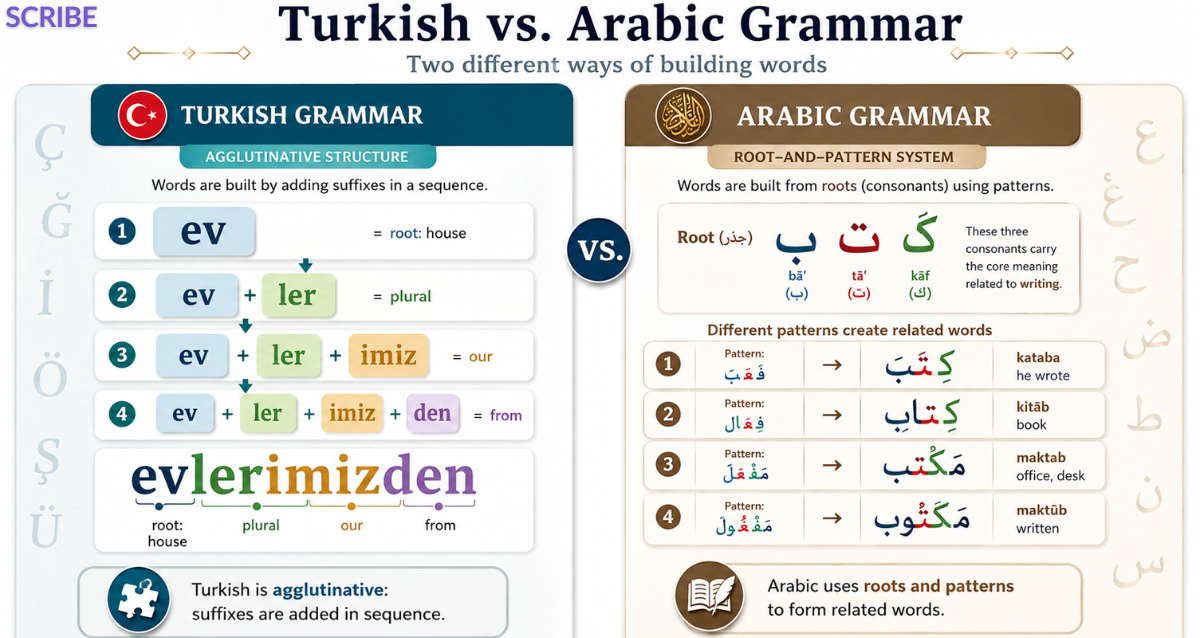
The grammar of Turkish and Arabic is built on completely different linguistic foundations. The Turkish language is an agglutinative language, which means it forms words by adding Turkish suffixes to a root. In contrast, the Arabic language follows a root and pattern system, where different vowel patterns create new meanings from the same root. This fundamental difference explains why Turkish vs Arabic is a comparison between two unique language systems rather than two closely related languages.
Many learners ask is Turkish related to Arabic or is Turkish similar to Arabic because they notice shared vocabulary. However, knowing Arabic grammar does not make it easier to understand Turkish grammar, and vice versa. Modern Turkish follows its own Turkish grammar rules, vowel harmony, and Turkish morphology, while Arabic relies on different grammatical patterns. Although Turkish and Arabic share many loanwords, their sentence structure, word formation, and overall language structure remain entirely different.
What Learners Gain from Letting the Comparison Go
Understanding the differences between Turkish and Arabic makes learning Turkish faster and more effective.
Many beginners spend too much time comparing Turkish and Arabic, expecting the two languages to follow similar rules. However, once learners understand that the Turkish language is a Turkic language with its own Turkish grammar, Turkish suffixes, and vowel harmony, learning becomes much easier. Instead of relying on familiar Arabic words, they can focus on how Modern Turkish naturally builds words and sentences.
A clear Turkish vs Arabic comparison helps learners avoid common mistakes and develop a better understanding of the language. Although Arabic loanwords in Turkish are part of its rich history, they do not define the language itself. By learning Turkish grammar rules, Turkish vocabulary, and Turkish pronunciation on their own terms, students gain confidence and make faster progress. This approach also provides a deeper appreciation of Turkish history, Turkish culture, and the unique evolution of the language.
In the end, Turkish and Arabic share a remarkable history, but they remain two distinct languages with different structures and identities. Understanding this difference allows learners to study Turkish more confidently and appreciate its unique linguistic heritage.
Turkish and Arabic Similar Words
Many people believe Turkish and Arabic are closely related because they share many similar words. This often leads to questions like are Turkish and Arabic similar, is Turkish similar to Arabic, or is Turkish related to Arabic. In reality, these similarities exist because of Arabic loanwords in Turkish, which entered the language through centuries of cultural and historical contact during the Ottoman Empire. While many Turkish words have Arabic origins, they now follow Turkish grammar, Turkish pronunciation, and Turkish suffixes.
Some common examples include kitap (book), kalem (pen), misafir (guest), şükür (thanks), and acele (hurry), all of which came from the Arabic language but have adapted to Modern Turkish. These borrowed words are part of the Turkish vocabulary, yet they do not make Turkish an Arabic language. A proper Turkish vs Arabic comparison shows that the two languages may share vocabulary, but their grammar, sentence structure, and language family remain completely different.
IS Turkish and Arabic Similar?
At first glance, Turkish and Arabic may seem similar because they share many words with Arabic origins. This is why many learners ask, is Turkish and Arabic similar or are Turkish and Arabic similar. However, these similarities are mostly limited to vocabulary that entered Turkish through language borrowing during the Ottoman Empire. The Turkish language belongs to the Turkic language family, while the Arabic language is part of the Semitic language family.
A closer Turkish vs Arabic comparison shows that the two languages have completely different grammar, pronunciation, and sentence structure. Modern Turkish uses an agglutinative language system with Turkish suffixes and vowel harmony, while Arabic grammar is based on the root and pattern system. So, although Turkish and Arabic share some loanwords, they are not similar enough to be considered related languages.
Difference Between Turkish and Arabic Language
The difference between Turkish and Arabic language begins with their origins. The Turkish language belongs to the Turkic language family, while the Arabic language is part of the Semitic language family. Many people compare Turkish and Arabic because they share some historical vocabulary, but the two languages developed independently and follow completely different linguistic systems. This is why the answer to Turkish related to Arabic is no.
Another major difference is the way each language is built. Modern Turkish is an agglutinative language that forms words by adding Turkish suffixes to a root, whereas Arabic grammar uses the root and pattern system to create different words. A Turkish vs Arabic comparison also shows differences in pronunciation, sentence structure, and writing history. Although Arabic loanwords in Turkish are common due to the Ottoman Empire, these borrowed words follow Turkish grammar, Turkish pronunciation, and Turkish vocabulary, making Turkish and Arabic two distinct languages.
Turkish Language
The Turkish language is the official language of Turkey and is spoken by more than 85 million people worldwide. It belongs to the Turkic language family and has a unique grammatical structure that is very different from the Arabic language. Many people ask is Turkish Arabic or is Turkish related to Arabic, but Turkish developed independently and follows its own linguistic rules.
One of the defining features of the Turkish language is its agglutinative language structure, where words are formed by adding Turkish suffixes to a root. Modern Turkish also follows vowel harmony, making pronunciation and grammar highly consistent. Although Turkish and Arabic share many loanwords because of historical contact during the Ottoman Empire, the language itself remains distinct in its grammar, pronunciation, and overall language structure.
Turkish Alphabet
The Turkish alphabet is based on the Latin alphabet and consists of 29 letters. It was officially introduced in 1928 as part of the Alphabet Reform, replacing the older Arabic script that was used during the Ottoman Empire. Although Turkish and Arabic once shared the same writing system, this did not mean they belonged to the same language family.
The modern Turkish writing system was designed to match Turkish pronunciation and vowel harmony, making it much easier to read and learn. Unlike the Arabic alphabet, the Turkish alphabet represents sounds more directly, helping both native speakers and Turkish learners pronounce words correctly. This change played a major role in the development of Modern Turkish while preserving its unique grammar and linguistic identity.
English to Turkish
English to Turkish translation is becoming increasingly popular among travelers, students, and professionals who want to communicate effectively in Turkey. The Turkish language follows different grammar rules than English, so a direct word-for-word translation is not always accurate. Understanding Turkish grammar, Turkish vocabulary, and Turkish pronunciation helps produce more natural and meaningful translations.
Whether you are translating everyday conversations, business documents, or educational content, learning English to Turkish can improve your communication skills. Since Modern Turkish uses the Turkish alphabet based on the Latin alphabet, English speakers often find reading easier than expected. With regular practice and the right learning resources, beginners can quickly build confidence in speaking and understanding Turkish.
Is Turkish Similar to Persian?
Many people ask if Turkish is similar to Persian because the two languages shared a long history during the Ottoman Empire and influenced each other culturally. While Turkish and Persian share many borrowed words, they are not closely related languages. The Turkish language belongs to the Turkic language family, whereas Persian (Farsi) is part of the Indo-Iranian branch of the Indo-European language family.
A Turkish vs Persian comparison shows that they differ in grammar, pronunciation, and word formation. Modern Turkish uses an agglutinative language system with Turkish suffixes, while Persian follows a different grammatical structure. Although Persian influence added many literary and cultural words to Turkish vocabulary, the core grammar and language structure of Turkish remained uniquely Turkic.
What Language Is Turkish Similar To?
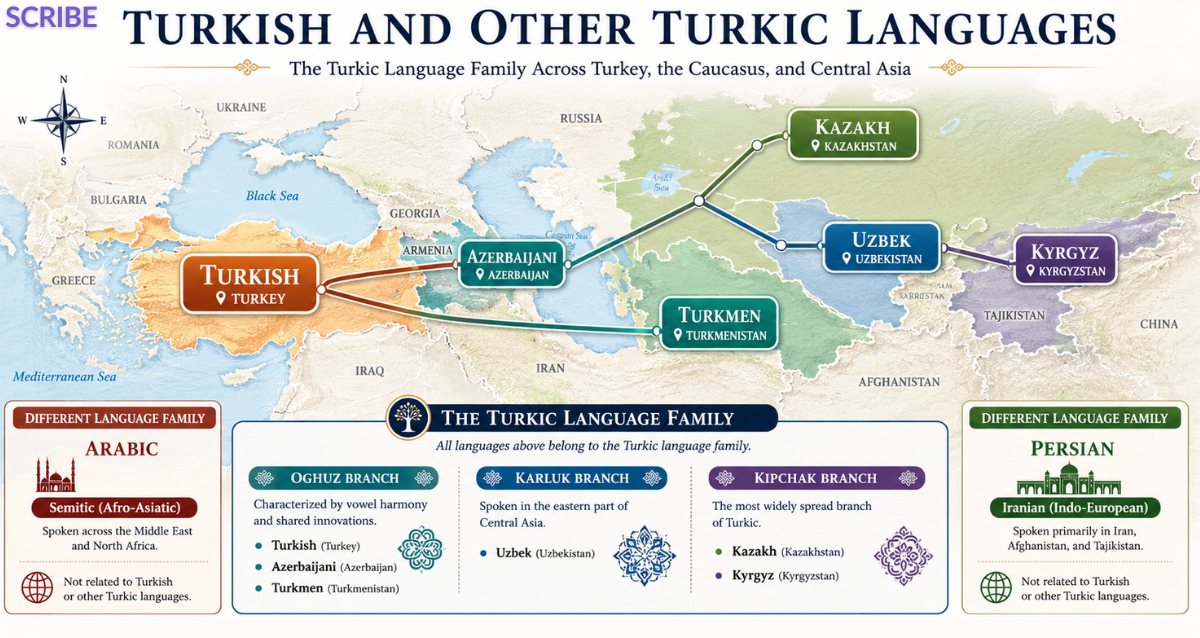
The Turkish language is most similar to other Turkic languages, including Azerbaijani, Turkmen, Kazakh, Uzbek, and Kyrgyz. These languages belong to the same Turkic language family and share many grammatical features, vocabulary, and sentence structures. Because of these similarities, speakers of Azerbaijani and Turkish can often understand each other to a large extent.
Many people compare Turkish and Arabic or ask is Turkish related to Arabic, but Turkish is not closely related to the Arabic language. While Arabic loanwords in Turkish are common due to historical contact during the Ottoman Empire, the grammar and language structure remain completely different. If you are wondering what language is Turkish similar to, the closest match is Azerbaijani, followed by other Turkic languages rather than Arabic or Persian.
Frequently Asked Questions.
Is Turkish Hard to Learn?
Turkish is considered moderately difficult for English speakers because its grammar is different, but its pronunciation is consistent., many learners find Turkish easier to read and speak than expected.
Are Turkish and Arabic Similar?
Turkish and Arabic are different languages with separate grammar, vocabulary, and language families.Although Turkish includes some , the two languages are not mutually understandable.
How Do We Say “Hi” in Turkey?
The most common way to say “hi” in Turkey is “Merhaba,” which is suitable for both formal and casual situations.Friends also often greet each other with “Selam,” a more informal way to say hello.
Does Turkey Speak Turkish or Arabic?
The official language of Turkey is Turkish, and it is spoken by the vast majority of the population.
Arabic is spoken only by some minority communities and is not an official language.
What Language Is Turkish Closest To?
Turkish is most closely related to Azerbaijani and Turkmen because they belong to the Turkic language family.
Speakers of these languages often share similar vocabulary, grammar, and pronunciation.
Conclusion
Turkish and Arabic have shared centuries of cultural, religious, and historical interaction, but they are not part of the same language family. The Turkish language belongs to the Turkic language family, while the Arabic language is a Semitic language with a completely different grammatical system. Although Arabic loanwords in Turkish have influenced Modern Turkish vocabulary, the language continues to follow its own Turkish grammar, Turkish suffixes, vowel harmony, and unique linguistic structure. This is why the answer to Turkish related to Arabic is no, despite their historical connections.
If you are comparing Turkish vs Arabic, understanding the difference between shared vocabulary and shared linguistic origins is essential. Whether you are a language enthusiast, traveler, or Turkish learner, recognizing how Turkish and Arabic differ in grammar, pronunciation, writing systems, and history will make learning much easier. By focusing on the unique features of the Turkish language, you can better appreciate its rich history, fascinating culture, and distinct identity within the Turkic languages.
