


A percent off calculator simply tells you how much money comes off an original price once a certain discount percentage is applied, and then shows you the final price you actually pay. It takes the guesswork out of shopping by doing the math instantly, so you always know your true cost before checkout. In this case, 30% off $9.99 → $6.99, which means you save $3.00 on the original price and walk away paying just $6.99.
To work it out yourself, take the original price of $9.99, multiply it by 30, then divide that result by 100. That gives you a discount amount of $3. Once you subtract this figure from the original price of $9.99, you land on a final price of $6.99. That is your sale price, plain and simple.
30 Percent Off 50 Dollars Calculator
A 30 percent off 50 dollars calculator follows the exact same discount percentage formula used throughout this page. Multiply the original price of $50 by 30, divide by 100, and you get a discount amount of $15. Subtract that from $50 and your final price comes to $35.
This example shows how the same percent off calculator logic scales up or down depending on the original price you enter. Whether you are working with $9.99 or $50, the underlying sale price formula never changes.
Try It Yourself With The Percent Off Calculator
This percent off calculator lets you plug in any numbers you want and instantly see the results. Whether you are checking a single item or comparing several deals, the discount calculator adjusts automatically based on what you enter.
What you can enter:
Original price — type in the price before any discount is applied.
Discount percentage — enter any number between 0 and 100 to see how the price changes.
Second discount — tick this box if you want to apply a stackable double discount that kicks in after the first one.
What the calculator gives back:
Discount amount — this is exactly how much money you are saving.
Final price — this is what you will actually pay after the price reduction.
You will also see a savings breakdown showing that you save 30% while paying the remaining 70%, giving you a clear visual of the split between what stays in your pocket and what goes toward the purchase.
Read Also: Best 2020 Mixed Conditionals Exercises [101 Online Tests] – Grammarism
Breaking Down The Math Step By Step
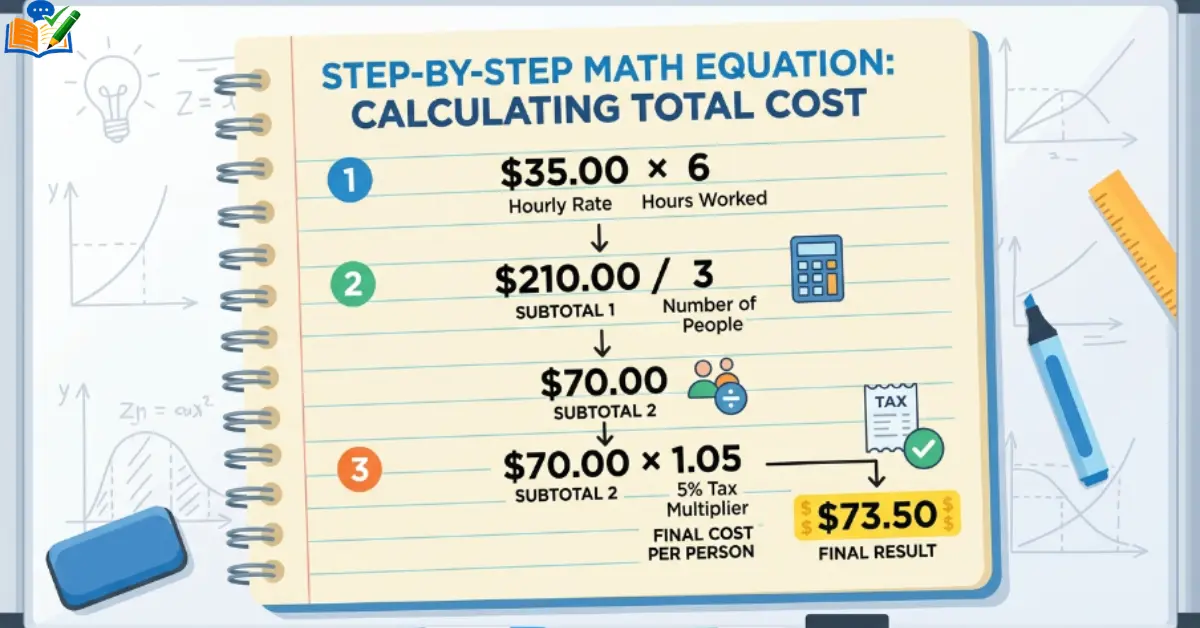
Turning $9.99 into $6.99 through a 30 percent discount is not complicated once you know the formula. Here is exactly how the sale price calculator arrives at that number.
Formula one: finding the amount saved
Amount Saved equals Original Price multiplied by Discount Percent, divided by 100.
Using our numbers: $9.99 multiplied by 30, divided by 100, equals $3 saved.
Formula two: finding the sale price
Sale Price equals Original Price minus Amount Saved.
Using our numbers: $9.99 minus $3 equals a final price of $6.99.
A quicker one step formula
You can also skip straight to the sale price by multiplying the original price by the leftover percentage you are actually paying. Since you are saving 30%, that means you are paying 70%, or 0.7 as a decimal.
Sale Price equals Original Price multiplied by (1 minus Discount Percent divided by 100).
Applying it here: $9.99 multiplied by (1 minus 0.3) equals $9.99 multiplied by 0.7, which equals $6.99.
Doing It In Your Head
Here is a real world trick for everyday shopping. Since 30% as a decimal is just 0.3, you can multiply $9.99 by 0.3 to get roughly $3 in savings. Then subtract that from $9.99 and you are left with $6.99. No calculator needed once you get comfortable with this percentage off formula, and it works for markdown price checks at nearly any retail discount or store sale.
Related Searches People Also Check
Shoppers comparing quick discount math often look up related terms like 30% off of 99, 30% of 9.99, 30% off of 6.99, and 30% off of 9.99 to double check their totals before buying. These variations all point back to the same core price reduction logic covered above, whether you are calculating a coupon discount, a clearance price, or a promotional price drop during a seasonal sale.
Why Use A Discount Calculator Instead Of Doing It By Hand
A discount calculator removes the guesswork from price after discount math, especially when you are dealing with awkward numbers or a double discount stacked on top of a store sale. Retailers frequently combine a base markdown with an extra coupon discount, and working out the compounded price drop manually can lead to mistakes. A reliable deal calculator handles both the discount rate and any secondary reduction in seconds, so you always know your true out of pocket cost.
This same logic extends beyond simple retail discount scenarios. Once you understand the discount percentage formula, you can apply it to markup vs discount comparisons, figure out promotional price changes ahead of a sale, or even estimate savings before checking a sales tax calculator or VAT calculator for the final total at checkout.
How To Calculate Percent Off
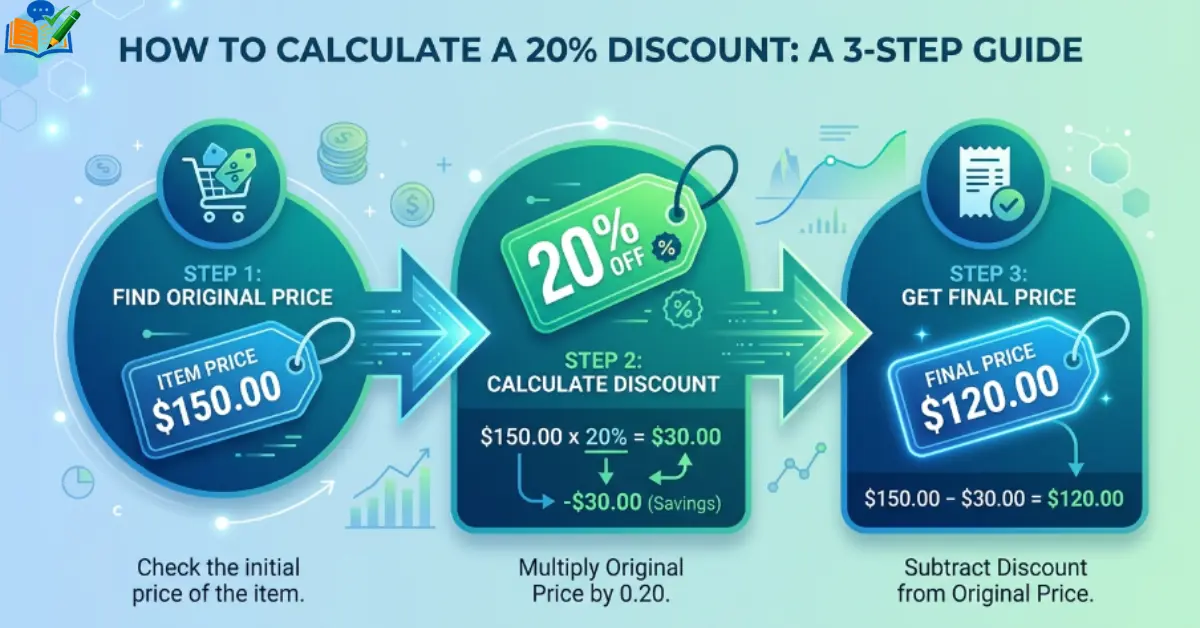
Every percent off calculator relies on the same core formula, and once you understand it, you can apply it to any original price you come across. Start by multiplying the original price by the discount percentage, then divide that number by 100 to find your discount amount. Subtract that discount amount from the original price and you land on your final price, which is exactly how a discount calculator produces its results behind the scenes.
This method works whether you are checking a small everyday purchase or a larger ticket item. Knowing this percentage discount formula by heart means you never have to guess at checkout, and it puts you in control of every sale price calculator you use going forward.
30 Off 9.99 Dollars
When you take 30 off 9.99 dollars, you are really asking the same question this whole page answers: 30% off $9.99 → $6.99. Multiply $9.99 by 30 and divide by 100 to get a discount amount of $3, then subtract that $3 from the original price to land on a final price of $6.99.
This kind of quick math comes in handy for everyday shopping trips, especially when a store sale or coupon discount is applied at the register. Once you see the pattern, applying it to any similar price becomes second nature.
How To Calculate 10 Percent Off A Price
Calculating 10 percent off a price uses the same steps as any other percentage off formula, just with a smaller discount rate. Multiply the original price by 10, divide by 100, and that gives you the discount amount. Subtract that figure from the original price to reach your final price.
Because 10 percent is such a round number, many shoppers do this calculation mentally by simply moving the decimal point one place to the left. It is one of the fastest ways to estimate a price reduction without reaching for a discount calculator at all.
25% Off Of 50 Dollars

Working out 25% off of 50 dollars follows the same basic formulas covered earlier on this page. Multiply $50 by 25, divide by 100, and you get a discount amount of $12.50. Subtract that from the original price of $50 and your final price lands at $37.50.
This kind of calculation is common during a clearance price event or seasonal store sale, where multiple percentage discounts might be advertised side by side. Understanding the formula lets you compare deals quickly without relying on guesswork.
30 Off 25
For 30 off 25, the original price is $25 and the discount percentage is 30. Multiply $25 by 30, divide by 100, and the discount amount comes to $7.50. Subtract that from $25 and the final price you pay is $17.50.
This example reinforces how flexible the percentage off formula really is. No matter what original price you plug in, the same two step process gets you to an accurate sale price every time.
How To Calculate 20 Percent Off
To calculate 20 percent off any price, multiply the original price by 20 and divide the result by 100 to find the discount amount. Then subtract that discount amount from the original price to arrive at the final price you will actually pay.
Many retailers use 20 percent as a standard promotional price cut during sales events, so getting comfortable with this formula pays off across a wide range of everyday purchases. It is a discount rate you will likely encounter again and again.
30 Off 10
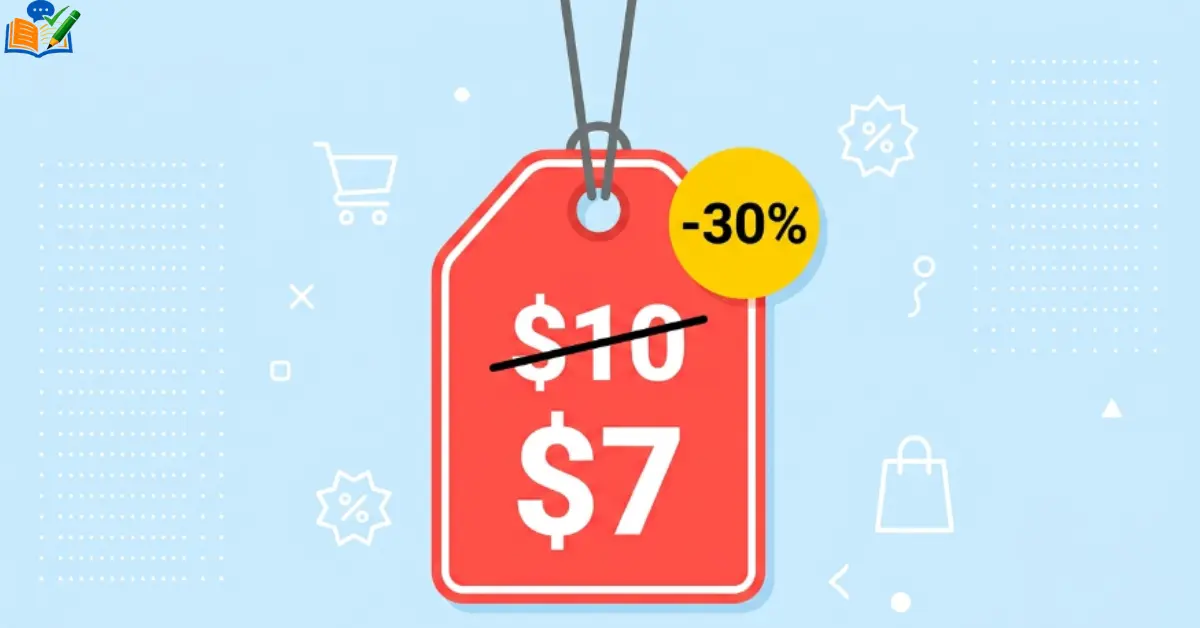
When you apply 30 off 10, you start with an original price of $10 and a discount percentage of 30. Multiply $10 by 30, divide by 100, and the discount amount works out to $3. Subtract that $3 from $10 and the final price comes to $7.
Small examples like this one make it easy to practice the formula before applying it to larger or more complicated purchases, whether you are checking a single item or comparing a double discount across a full shopping cart.
More Discount Calculators To Explore
10% off calculator
15% off calculator
20% off calculator
25% off calculator
40% off calculator
50% off calculator
60% off calculator
70% off calculator
75% off calculator
Frequently Asked Questions
What is 30% off of $10?
A 30% discount on $10 saves you $3, so you end up paying a final price of $7.
How do I calculate 30% off?
Multiply the original price by 30, divide that number by 100 to get your discount amount, then subtract it from the original price to reach your final price.
What is 30% off of 30 dollars?
Taking 30% off $30 saves you $9, which brings your final price down to $21.
What is 30 percent off $9?
A 30 percent discount on $9 works out to $2.70 in savings, leaving you with a final price of $6.30.
What is 30% of 5 dollars?
30% of $5 comes to $1.50, since you simply multiply $5 by 0.3 to get that figure.
Conclusion
At the end of the day, working out 30% off $9.99 → $6.99 comes down to two simple steps: find your discount amount, then subtract it from the original price. Once you understand this formula, you can apply it to any item, any store sale, or any coupon discount you come across, without ever second guessing the math at checkout.
Whether you rely on a percent off calculator for speed or prefer doing the sale price formula by hand, the goal stays the same, knowing exactly what you are paying before you commit to a purchase. That confidence turns every shopping trip into a smarter, more informed decision.
