

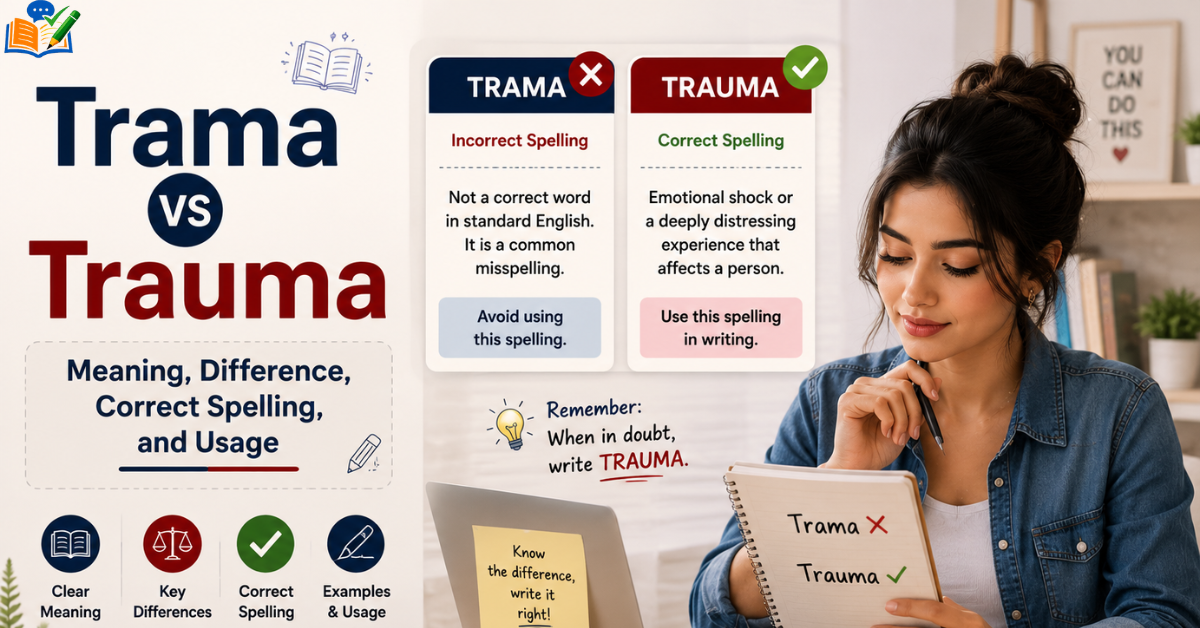
Many English words look almost identical but have completely different meanings. One common example is “trama vs trauma.” People often type “trama” when they actually mean “trauma,” especially while writing quickly on social media, messaging apps, or online platforms. This small spelling mistake can change the meaning of a sentence and make communication unclear.
The confusion happens because both words contain almost the same letters. The only difference is the missing “u” in “trama.” However, in standard English, trauma is the correct word when talking about emotional pain, psychological distress, or physical injury.
Understanding the difference between trama and trauma helps you improve your writing, avoid spelling mistakes, and communicate more professionally. In this guide, we will explain the meaning of both words, why people confuse them, examples, and the correct way to use them.
Trama vs Trauma: What Is the Difference?
The main difference between trama and trauma is simple:
- Trauma is the correct English word.
- Trama is usually a spelling mistake when someone intends to write “trauma.”
In English writing, especially when discussing mental health, medicine, or personal experiences, you should always use trauma.
The word trauma refers to a serious emotional, psychological, or physical injury caused by a painful or disturbing event. It is commonly used in healthcare, psychology, therapy, and everyday conversations.
On the other hand, trama is not considered a standard English spelling of trauma. However, it can have meanings in some other languages, which sometimes creates additional confusion.
Read Also: Symptomology vs Symptomatology: What’s the Difference?
What Does Trauma Mean?

Trauma means a deeply distressing experience or injury that affects a person’s physical or emotional well-being.
The word originally comes from a Greek term meaning “wound” or “hurt.” Over time, its meaning expanded from physical injuries to include psychological and emotional suffering.
Trauma can happen because of many different experiences, including:
- Serious accidents
- Natural disasters
- Violence
- Abuse
- Loss of a loved one
- Medical emergencies
- Difficult childhood experiences
- Major life changes
Trauma does not affect everyone in the same way. One person may recover quickly after a stressful event, while another person may experience long-lasting emotional effects.
Types of Trauma
Trauma can generally be divided into different categories depending on how it affects a person.
Emotional Trauma
Emotional trauma refers to psychological pain caused by a disturbing or overwhelming experience.
Examples include:
- Losing someone close
- Experiencing betrayal
- Going through a difficult relationship
- Childhood emotional neglect
- Witnessing a frightening event
Emotional trauma may influence a person’s thoughts, feelings, relationships, and daily behavior.
Example:
Correct:
“She experienced emotional trauma after the accident.”
Incorrect:
“She experienced emotional trama after the accident.”
Physical Trauma
Physical trauma refers to injuries or damage to the body caused by an external force.
Examples include:
- Broken bones
- Head injuries
- Sports injuries
- Car accident injuries
- Surgical injuries
Doctors often use the term trauma when describing serious physical injuries.
Example:
Correct:
“The patient was treated for severe head trauma.”
Incorrect:
“The patient was treated for severe head trama.”
What Is Trama?

In English, “trama” is usually not the correct spelling for trauma.
If you write:
- “childhood trama”
- “emotional trama”
- “physical trama”
you are most likely making a spelling mistake.
However, trama does exist in some other languages. For example, in Spanish and Italian, “trama” can refer to a plot, storyline, or structure of a story.
Example:
- Spanish: “La trama de la película.”
- English meaning: “The plot of the movie.”
This meaning has nothing to do with emotional suffering or physical injury.
Therefore, when writing in English, always choose trauma for injuries or distress.
Why Do People Confuse Trama and Trauma?
There are several reasons why people commonly make this mistake.
1. Missing the Letter “U”
The most common reason is simply forgetting the letter u.
The correct spelling:
Trauma
The incorrect spelling:
Trama
When people type quickly, their brain may recognize the word pattern and skip a letter without noticing.
2. Similar Appearance
The words look almost identical:
- Trauma
- Trama
Because only one letter changes, it is easy to assume both spellings are acceptable.
However, English spelling does not always work this way. A small letter difference can completely change whether a word is correct or incorrect.
3. Fast Typing and Online Communication
Social media, texting, and online conversations encourage quick writing. Because of this, many people make small spelling mistakes.
Autocorrect may also fail to recognize “trama” as an error because it can appear as a valid word in some languages.
Examples of Trauma Used Correctly

Here are some examples to understand the correct usage of trauma.
Example 1:
She worked with a therapist to overcome childhood trauma.
Example 2:
The accident caused serious physical trauma.
Example 3:
Many people experience emotional trauma after major life events.
Example 4:
The doctor specializes in treating trauma patients.
Example 5:
Talking about painful experiences can help people process trauma.
Common Mistakes With Trauma
Many people make similar mistakes when writing this word.
Mistake 1: Removing the “U”
Wrong:
The event caused emotional trama.
Correct:
The event caused emotional trauma.
Mistake 2: Thinking Trama Is an Alternative Spelling
Some people assume “trama” is a shorter version of trauma.
It is not.
Unlike some words that have different spellings in British and American English, trama is not an accepted English variation of trauma.
Mistake 3: Using Trauma Incorrectly
While spelling is important, understanding the meaning is also necessary.
People sometimes use “trauma” casually to describe normal disappointment or frustration.
For example:
- Missing a favorite show is disappointing.
- Losing a job or experiencing abuse may cause trauma.
The word should be used thoughtfully because real trauma can have serious emotional and psychological effects.
How to Remember the Correct Spelling of Trauma
A simple trick can help you remember:
Trauma contains “AU.”
Think of the spelling pattern:
Tr + AU + ma = Trauma
Whenever you are writing about emotional pain, injury, or psychological distress, remember the “AU” combination.
You can also connect it with similar words:
- Cause
- Pause
- Trauma
These words contain a similar vowel pattern.
Trauma in Psychology and Mental Health
In psychology, trauma is an important concept used to describe the impact of deeply distressing experiences.
Mental health professionals often discuss:
- Emotional trauma
- Childhood trauma
- Relationship trauma
- Complex trauma
- Post-traumatic stress disorder (PTSD)
Trauma can affect:
- Emotional responses
- Memory
- Relationships
- Confidence
- Daily activities
Because trauma is connected with sensitive personal experiences, using the correct language is important.
Is Trama Ever Correct in English?

Generally, no.
If you are writing in English and talking about:
- Mental health
- Emotional pain
- Injury
- Medical conditions
then trauma is the correct spelling.
However, if you are discussing another language, literature, or translation, “trama” may have a different meaning.
For example:
- “The trama of a novel” may refer to the storyline in another language.
But this usage is unrelated to the English word trauma.
Why Correct Spelling Matters
Using the correct spelling improves:
- Writing quality
- Professional communication
- Reader understanding
- Online credibility
A spelling mistake may seem small, but incorrect words can distract readers and reduce trust in your content.
This is especially important when writing about serious topics like healthcare, psychology, or personal experiences.
Frequently Asked Questions
Is trama a correct English word?
No, “trama” is generally not considered a correct English spelling when referring to emotional or physical injury. The correct word is “trauma.”
What is the difference between trama and trauma?
The difference is that trauma is the correct English word for emotional, psychological, or physical injury, while trama is usually a spelling mistake.
Why do people write trama instead of trauma?
People often miss the letter “u” while typing quickly, or they confuse the similar appearance of both words.
What does trauma mean?
Trauma refers to a painful experience, emotional distress, psychological injury, or physical harm caused by a serious event.
Can trauma be physical and emotional?
Yes. Trauma can describe both physical injuries and emotional or psychological distress.
Is trama used in other languages?
Yes. In some languages like Spanish and Italian, “trama” can mean a story plot or structure.
Conclusion
The difference between trama vs trauma is simple: trauma is the correct English spelling, while trama is usually a mistake.
Whenever you are describing emotional suffering, psychological distress, or physical injury, always use trauma. The word carries an important meaning in healthcare, psychology, and everyday communication.
Remember the simple rule:
Trama = Usually incorrect in English
Trauma = Correct word for injury or emotional distress
Learning small spelling differences like this helps you write more clearly, professionally, and confidently
