


Many people confuse affect vs effect because these two words sound similar but have different meanings and uses. Choosing the wrong word can change the meaning of a sentence and make your writing unclear. The easiest way to understand the difference is to remember that affect is usually a verb that means to influence something, while effect is usually a noun that refers to the result or outcome of something.
For example, a new policy can affect employees, while the effect of that policy may be improved workplace performance. Although there are some exceptions, this simple rule helps you use these words correctly in most situations. In this article, we will explain the difference between affect and effect, explore their meanings, provide clear examples, and share easy tips to help you avoid common grammar mistakes.
Affect: Definition & Examples
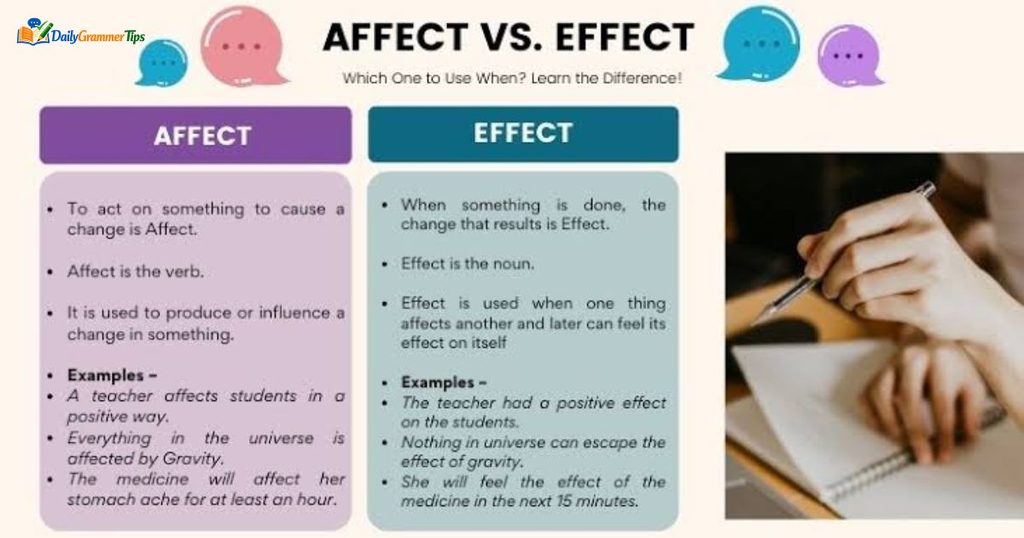
Affect is most commonly used as a verb that means to influence, change, or have an impact on something. It describes an action where one thing causes a change in another.
Examples of affect:
- Lack of sleep can affect your concentration.
- The weather affected our travel plans.
- Stress can affect your physical and mental health.
In rare cases, affect can also be used as a noun in psychology. It refers to a person’s emotional expression or visible mood. However, this usage is less common in everyday writing.
Effect: Definition & Examples
Effect is usually used as a noun and means the result, consequence, or outcome caused by an action or event. It explains what happens after something influences a person, situation, or object.
Examples of effect:
- The new rules had a positive effect on employees.
- The medicine started to show effects after a few hours.
- Social media has a strong effect on communication.
In some situations, effect can also be used as a verb meaning “to bring about” or “to make something happen.” For example, “The team worked hard to effect change.”
Collocations with Affect

Collocations are words that commonly appear together. The word affect is often used with terms related to emotions, behavior, health, and situations.
Common collocations with affect include:
- Affect someone’s life – Technology can affect someone’s life in many ways.
- Affect behavior – Environment can affect children’s behavior.
- Affect performance – Poor planning can affect project performance.
- Affect health – Exercise habits affect overall health.
- Affect the outcome – Small decisions can affect the final outcome.
These combinations help you understand how affect is used naturally in sentences.
Collocations with Effect
The word effect often appears with words that describe results, changes, or consequences.
Common collocations with effect include:
- Have an effect on – The new system had an effect on productivity.
- Positive effect – Regular exercise has a positive effect on health.
- Negative effect – Too much screen time can have a negative effect on sleep.
- Side effect – Some medicines may cause unwanted side effects.
- Immediate effect – The changes had an immediate effect on the results.
Learning these common phrases makes it easier to recognize when to use effect correctly.
Read Also: Signalling or Signaling: Complete Guide, Uses, Examples
Clear Explanations of Confusing English Words
English has many word pairs that look or sound similar but have different meanings. Words like affect and effect, accept and except, compliment and complement, and there, their, and they’re often create confusion for learners.
The best way to avoid mistakes is to understand the role each word plays in a sentence. Ask yourself whether you are talking about an action or influence (usually affect) or a result or outcome (usually effect). With regular practice and examples, confusing word pairs become much easier to use correctly.
Affect as an Action Word

Affect is most commonly used as a verb that means to influence, change, or have an impact on something. It describes an action where one thing causes a difference in another thing. When you see affect in a sentence, it usually answers the question: “What caused a change?”
For example:
- The weather can affect your mood.
- Lack of sleep may affect your concentration.
- Social media can affect how people communicate.
In each sentence, something creates an influence or change. The weather changes your mood, sleep changes your focus, and social media changes communication habits.
A simple way to remember affect is:
Affect = Action = Influence
Most of the time, if you need a verb, affect is the correct choice.
Effect as a Result Word
Effect is usually used as a noun that means the result, outcome, or consequence of an action or event. It describes what happens after something affects a person, object, or situation.
For example:
- The new law had a positive effect on businesses.
- The medicine showed quick effects.
- The storm caused serious effects on the local area.
In these examples, the effect is the result that comes after an event or action.
A simple way to remember effect is:
Effect = End result
When you are talking about the outcome of something, effect is usually the right word.
A Simple Trick to Remember Affect and Effect
Remembering the difference between affect and effect can be easier with a simple trick:
A = Affect = Action
E = Effect = End result
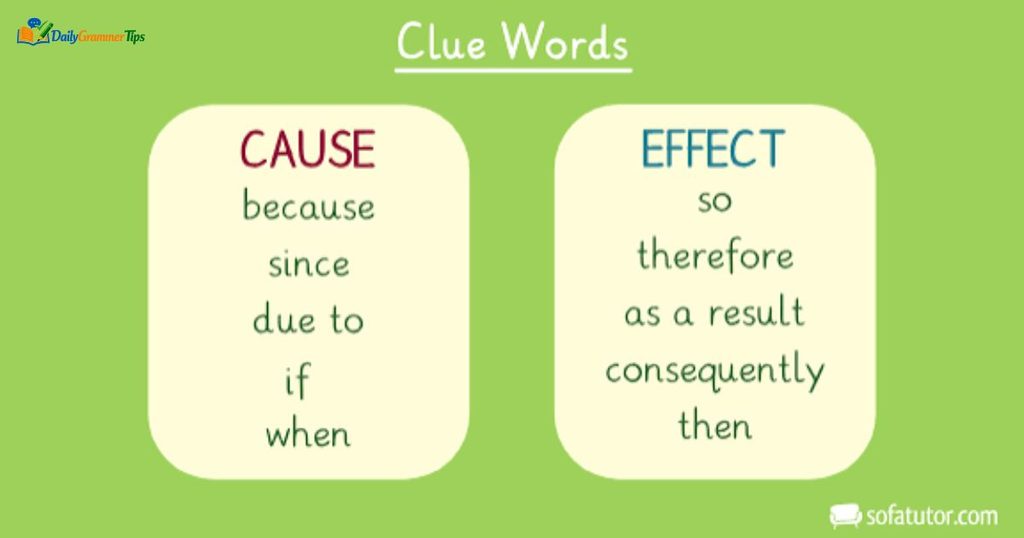
Think of a cause-and-result chain:
Something affects something → It creates an effect
Example:
- Heavy rain affected the game.
- The effect was a delayed match.
The rain caused a change (affect), and the delay was the result (effect).
Another memory trick:
Affect comes before Effect
The action happens first, and the result comes after.
Affect vs Effect Examples in Everyday Sentences
Understanding examples is one of the best ways to learn the difference between affect and effect. These words appear frequently in everyday conversations, workplaces, schools, and writing.
Read more:Optimisation or Optimization: Which is Correct?
Examples of Affect in Different Situations
Here are common examples where affect is used as a verb:
Daily Life Examples
- A bad night’s sleep can affect your energy level.
- Loud noises can affect your ability to focus.
- A positive attitude can affect your relationships.
Work Examples
- New technology can affect the way employees work.
- Market changes may affect company profits.
- Poor communication can affect team performance.
Health Examples
- Stress can affect your physical health.
- Exercise can affect your overall well-being.
- Diet choices can affect your energy.
In all these sentences, affect shows that something is creating a change.
Examples of Effect in Different Situations
Here are examples where effect is used as a noun:
Daily Life Examples
- The new routine had a positive effect on my productivity.
- The movie had a strong emotional effect on viewers.
- The weather changes had little effect on our plans.
Work Examples
- The training program had a noticeable effect on employee skills.
- The decision created unexpected effects for the company.
- The new strategy produced better results and a lasting effect.
Science Examples
- Scientists studied the effects of pollution.
- The experiment showed the effect of temperature changes.
- The medicine’s effects were carefully monitored.
Here, effect represents the result or outcome.
H3: Comparing Affect and Effect Side by Side
| Affect | Effect |
| Usually a verb | Usually a noun |
| Means to influence or change | Means result or outcome |
| Describes an action | Describes a consequence |
| Comes before the result | Comes after the cause |
| Example: Stress can affect sleep | Example: Stress has an effect on sleep |
A simple sentence showing both:
The new schedule affected my routine, and the effect was better time management.
The schedule caused the change (affected), and better management was the result (effect).
When to Use Affect and When to Use Effect?
Choosing between affect and effect depends on the role of the word in the sentence. Ask yourself whether you are describing an action or a result.
Use affect when something influences or changes another thing.
Example:
- The cold weather affected my travel plans.
Use effect when you are talking about the result of that change.
Example:
- The effect of the cold weather was a canceled trip.
How to Identify Affect in a Sentence
To identify affect, check if the word shows an action or influence.
Ask:
“Is something causing a change?”
If yes, affect is likely correct.
Examples:
- The news affected her decision.
- The noise affected my sleep.
- The experience affected his confidence.
Each sentence shows one thing influencing another.
How to Identify Effect in a Sentence
To identify effect, look for a result, outcome, or consequence.
Ask:
“Am I talking about what happened because of something else?”
If yes, use effect.
Examples:
- The effect of the training was improved performance.
- The medicine had side effects.
- The policy created a positive effect.
The word describes what happened after an action.
Common Sentence Patterns for Affect and Effect
Common patterns can help you quickly choose the correct word.
Affect Patterns:
Something + affects + something
Examples:
- Exercise affects your health.
- The decision affects everyone.
- Weather affects traffic.
Effect Patterns:
The effect of + something + is/was + result
Examples:
- The effect of the change was positive.
- The effect of the storm was severe damage.
Something + has/had an effect on + something
Examples:
- The lesson had an effect on students.
- The announcement had a major effect on the company.
Common Mistakes People Make with Affect and Effect
Many writers confuse affect and effect because they sound similar. However, using the wrong word can change the meaning of a sentence.
Using Effect When You Mean Affect
A common mistake is using effect as a verb when you mean influence.
Incorrect:
- The new rules will effect customer behavior.
Correct:
- The new rules will affect customer behavior.
The rules influence customer behavior, so affect is correct.
Using Affect When You Mean Effect
Another mistake is using affect when talking about a result.
Incorrect:
- The effect of the medicine was positive.
Correct:
- The effect of the medicine was positive.
The sentence talks about the result of the medicine, so effect is the correct choice.
Tips to Avoid These Grammar Mistakes
Use these tips to avoid confusing affect and effect:
- Remember Affect = Action and Effect = End result.
- Look at whether the word shows a cause or a consequence.
- Replace the word with “influence” or “result” to check:
- If “influence” works, use affect.
- If “result” works, use effect.
- If “influence” works, use affect.
- Read the complete sentence instead of focusing only on the word.
- Practice using both words in different examples.
With regular practice, choosing between affect and effect becomes quick and natural.
