

Totaling or Totalling means adding separate numbers, amounts, costs, or quantities together to reach a final figure. Both spellings have the same meaning, but “totaling” is commonly used in American English, while British English prefers “totalling.”
The spelling can look confusing, especially when you are writing for a UK or US audience. This guide explains the difference, grammar, pronunciation, sentence usage, and common examples so you can choose the right form with confidence.
What Does Totalling Mean?
Totaling or Totalling means adding different amounts, numbers, or items together to find their combined amount. For example, “expenses totalling £500” means that the expenses add up to £500.
The word is the -ing form of the verb “total.” In British English, Totaling or Totalling follows the spelling pattern in which the final consonant is doubled before adding “-ing.”
What Is the Difference Between Totalling and Totaling?
The main difference between Totaling or Totalling is regional spelling rather than meaning. “Totaling” is commonly used in American English, whereas “totalling” is preferred in British English.
Both forms describe the same action of adding figures or amounts. Therefore, neither spelling changes the meaning of the sentence.
Is Totalling Correct in British English?
Yes, Totaling or Totalling can be discussed in terms of regional spelling, and “totalling” is the standard British form. It is widely used in UK writing when referring to amounts that add up to a particular figure.
For example: “The costs were totalling more than £2,000.” British writers should generally choose “totalling” when following UK spelling conventions.
Is Totaling Correct in American English?
Yes. In American English, Totaling or Totalling follows a different spelling convention, with “totaling” being the usual form.
For example: “The repairs were totaling more than $2,000.” American English generally keeps one “l” before the “-ing” ending.
Totalling vs Totaling: British and American English
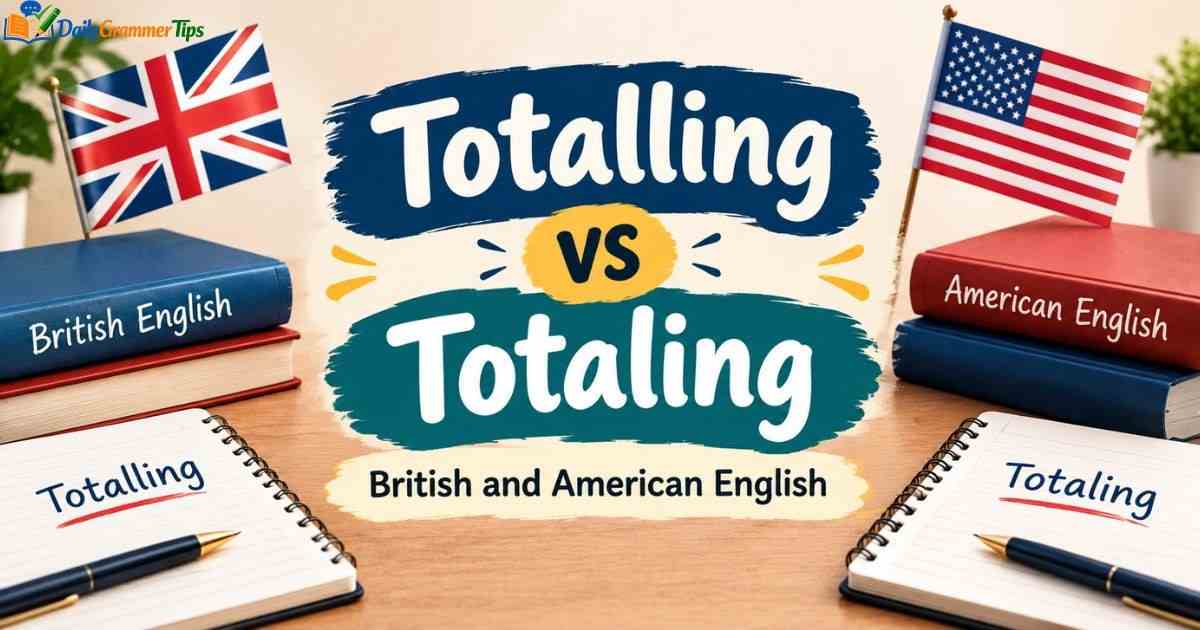
When comparing Totaling or Totalling, the easiest rule is to consider your target audience. British English normally uses “totalling,” while American English generally uses “totaling.”
This difference is similar to other spelling variations between the two forms of English. The important thing is to select one regional style and use it consistently throughout your article or document.
How Do You Use Totalling in a Sentence?
Totaling or Totalling can be used when several amounts are combined to produce a final figure. The British spelling “totalling” is especially common in financial, business, accounting, and statistical writing.
Examples include:
- The invoices were totalling £4,500.
- The donations were totalling more than £10,000.
- Several expenses were totalling the final amount.
The exact sentence structure can vary depending on whether “total” describes an ongoing calculation or the final amount.
Totalling Meaning With Examples
The meaning of Totaling or Totalling is connected with calculating a combined amount. It can describe money, quantities, costs, figures, scores, or other measurable items.
For example:
- “Orders totalling £8,000 were received.”
- “The project involved costs totalling £15,000.”
- “The figures were totalling a much larger amount than expected.”
In each case, “totalling” indicates that separate amounts combine to reach the stated figure.
Learn more……..Thiefs or Thieves: Which Spelling Is Correct?
Why Does Totalling Have Two Ls?
The spelling of Totaling or Totalling depends on regional English conventions. British English normally doubles the final “l” before adding “-ing,” producing “totalling.”
American English generally does not double the “l” in this word, giving “totaling.” This is why the two spellings look different even though they have the same meaning.
Totalled vs Totaled: What Is the Difference?
The past-tense comparison follows the same pattern as Totaling or Totalling. British English normally uses “totalled,” while American English generally uses “totaled.”
For example:
- British: “The costs totalled £5,000.”
- American: “The costs totaled $5,000.”
Both forms describe the same completed action. The difference is simply the spelling convention used by each variety of English.
When Should You Use Totalling or Totaling?
Choosing between Totaling or Totalling should depend on your intended English variety. Use “totalling” for British, Australian, and many other Commonwealth English contexts. Use “totaling” for American English.
If your website targets UK readers, Totaling or Totalling should normally be written as “totalling.” If your audience is primarily in the United States, “totaling” is the more suitable choice.
Totalling vs Totaling: Common Spelling Mistakes to Avoid
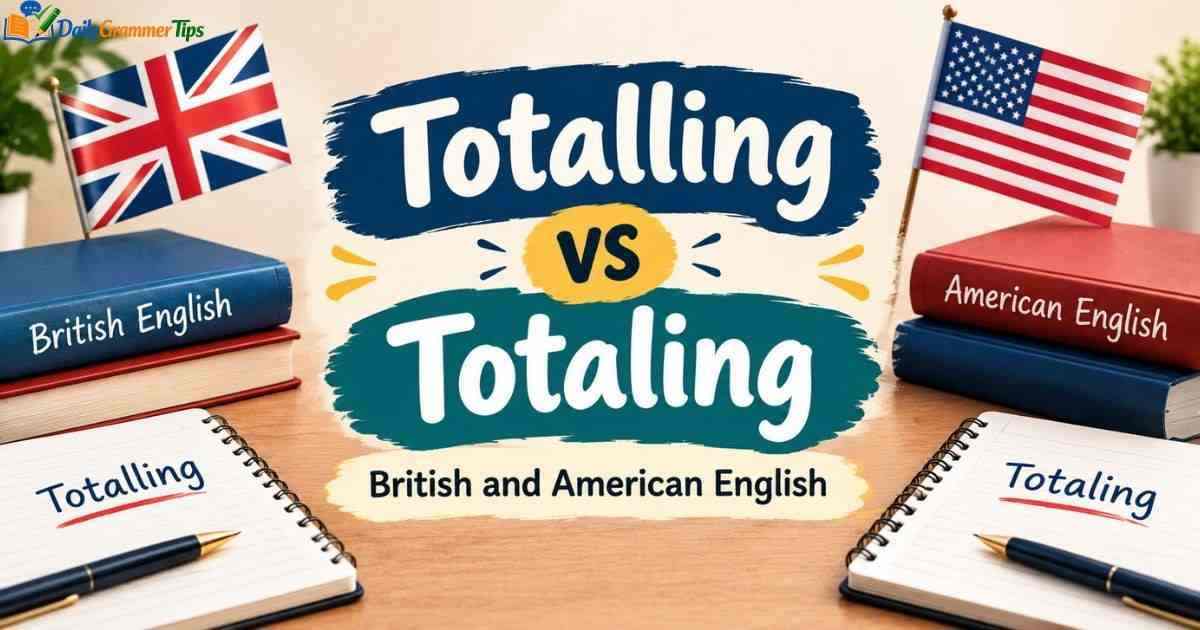
When using Totaling or Totalling, the most common mistake is mixing British and American spelling styles within the same piece of content.
For consistent British English, use “totalling” and “totalled.” For American English, use “totaling” and “totaled.” Remember that Totaling or Totalling does not represent two different meanings; it represents two regional spelling preferences.
The safest approach is to identify your target audience first and maintain the same spelling throughout your writing.
Bilkul. In H2s ko search intent ke mutabiq define karna chahiye, lekin har section mein sirf dictionary-style one-line definition nahi honi chahiye. Neeche content ko useful, natural, non-thin rakha hai aur aapke diye hue sources ke concepts follow kiye hain.
Totaling or Totalling Meaning
Totaling or totalling means adding separate numbers, amounts, costs, or quantities together to reach a final figure. The two spellings have the same meaning, but the preferred form depends on the variety of English being used. “Totaling” is normally used in American English, while “totalling” is preferred in British English.
For example, if several expenses add up to £2,500, you could say that the expenses are “totalling £2,500.” The word can therefore describe both the process of adding figures and the amount reached by that calculation.
Totaling or Totalling Oxford Dictionary
When checking Totaling or totalling in an English dictionary, it is important to distinguish the spelling from the meaning. Major dictionaries recognise the verb “total” and its related forms for describing amounts that are added together or reach a particular figure.
For British English, “totalling” follows the spelling convention of doubling the final l before the “-ing” ending. American English generally uses “totaling” instead. If your writing follows UK conventions, totalling is the appropriate choice.
Totaling or Totalling Synonym
Depending on the sentence, possible synonyms for Totaling or totalling include adding up, summing, amounting to, calculating, counting, and aggregating. However, these alternatives are not always interchangeable because each can carry a slightly different emphasis.
For example, “adding up the costs” focuses on the calculation, while “amounting to £5,000” focuses on the final figure. “Summing” is also common in mathematical contexts, whereas “totalling” works naturally in everyday business and financial writing.
Totaling or Totalling in English
Totaling or totalling is an English verb form used when separate figures or quantities are combined. It commonly appears in sentences about money, expenses, sales, damages, donations, scores, and other measurable amounts.
The spelling changes according to regional English. British English uses totalling, while American English uses totaling. Both forms are grammatically valid, so the choice should match the English style used throughout the rest of your content.
Totaling or Totalling Grammar
In grammar, Totaling or totalling is the present participle and gerund form of the verb total. It can describe an action that is happening, or it can function as part of a phrase referring to a combined amount.
For example, “She is totalling the invoices” uses the word as part of a continuous verb form. In “expenses totalling £3,000,” it helps describe the expenses and shows the amount they reach. The British spelling is totalling, while the American spelling is totaling.
Totaling or Totalling Examples
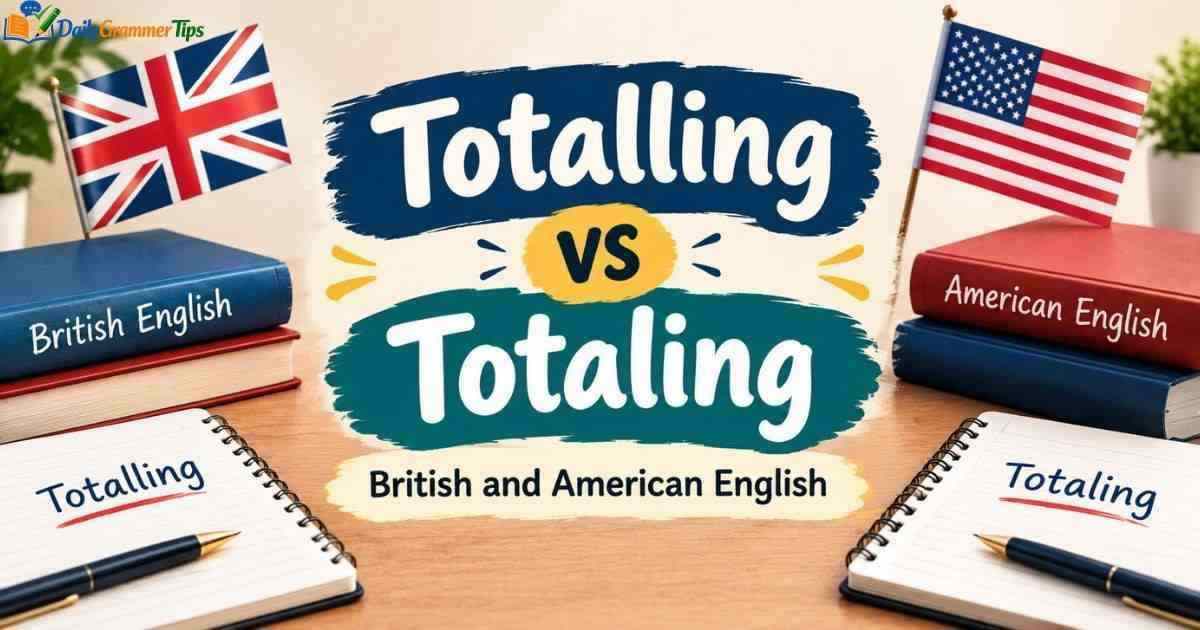
Examples make the difference between Totaling or totalling easier to understand:
- The invoices are totalling £4,000.
- The donations were totalling more than £20,000.
- The repairs cost a total amount that was higher than expected.
- Several expenses were totalling thousands of pounds.
- The project included costs totalling £15,000.
For British English, these sentences would normally use totalling. In American English, the corresponding form would generally be totaling.
Totaling or Totalling Car
When Totaling or totalling is used in relation to a car, it can have a different but related meaning. In particular, “totaling a car” is commonly used in American English to describe damaging a vehicle so severely that it is considered a total loss.
For example, “The accident totaled the car” means the vehicle suffered such extensive damage that repairing it may not be economically worthwhile. In British English, the expression writing a car off is more natural for this situation.
This automotive meaning is different from simply totalling the cost of repairs. “Totalling the repair costs” means adding the individual repair expenses together, while “totaling the car” refers to severe vehicle damage.
Totaling Pronunciation
Totaling or totalling has the same basic pronunciation in British and American English because the spelling difference does not normally change how the word is spoken.
The word has three syllables, with the main stress falling on the first syllable. The pronunciation is closely related to the verb “total,” followed by the “-ing” ending. The spelling totalling therefore has two ls in British English, but the additional letter does not create an extra sound.
Bilkul. Aapke diye hue articles aur existing H2 structure ko dekhte hue, ye 5 additional search-based headings useful rahengi. Main ne inko repetitive nahi rakha aur har section mein distinct information di hai.
Totaling or Totalling as a Verb
Totaling or Totalling works as a verb when you describe the act of adding separate amounts or figures together. For example, “The accountant is totalling the monthly expenses” shows that someone is calculating the combined amount.
The British form uses “totalling,” while American English normally uses “totaling.” The meaning stays the same in both varieties.
Totaling or Totalling as a Noun and Adjective
The word “total” can also work as a noun or adjective, depending on the sentence. As a noun, it refers to the complete amount, such as “the total was £500,” while as an adjective it can describe something complete or entire.
These related uses help explain why Totaling or Totalling appears in financial, mathematical, business, and everyday English. The exact grammatical role depends on how the word functions in the sentence.
Totaling or Totalling in British English
British English normally uses “totalling” with two Ls when forming the -ing version of “total.” This follows the British spelling pattern used in words where the final consonant is doubled before adding “-ing.”
You may see this form in UK business reports, invoices, financial documents, news writing, and everyday sentences about combined amounts.
Totaling or Totalling in American English
American English generally uses “totaling” with one L. It follows the US spelling convention for the verb “total” when adding the “-ing” ending.
For example, an American writer might say, “The expenses are totaling $3,000.” The meaning remains exactly the same as the British form “totalling.”
Totaling or Totalling: Which One Should You Choose?
Choose the spelling that matches your audience and overall writing style. Use “totalling” when following British English conventions and “totaling” when writing in American English.
Neither form is incorrect in its appropriate regional style. The key is consistency, especially when writing articles, reports, website content, or educational material for a specific English-speaking audience.
Frequently Asked Questions
How to use totaling?
Use “totaling” when you mean adding amounts together or reaching a specific figure. American English normally uses this spelling.
What does totalling mean?
“Totalling” means adding numbers or amounts together to reach a final figure. British English normally uses this spelling.
Does totaling have one L or two?
“Totaling” has one L and follows American English spelling. British English uses “totalling” with two Ls.
How do you use totalling in a sentence?
You can use “totalling” to describe a combined amount, such as: “The expenses were totalling £2,000.”
Is totalling or totaling correct?
Both spellings are correct. Use “totalling” for British English and “totaling” for American English.
Conclusion
In everyday writing, Totaling or Totalling refers to adding figures, amounts, or quantities to reach a final sum. Both spellings carry the same meaning, but your choice should match your target audience: “totalling” suits British English, while “totaling” is standard in American English.
For clear and consistent writing, choose one spelling and use it throughout your content. If you write for UK readers, use totalling and totalled; for US readers, use totaling and totaled. This simple distinction keeps your grammar, spelling, and usage consistent.
