

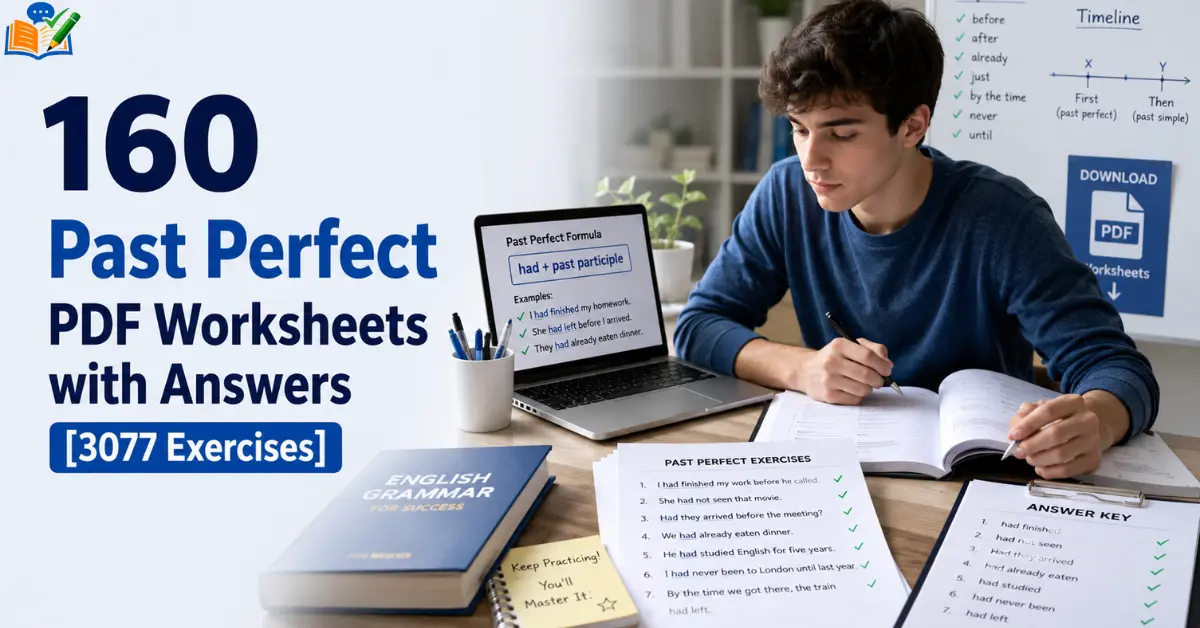
Past Perfect feels tricky at first, yet it follows one simple, steady pattern once you see it in action. This tense marks an action that finished before another action happened in the past, and native speakers use it daily without even thinking about the rule. Getting comfortable with Past Perfect gives you clearer, sharper sentences right away.
Alongside Past Perfect, a few related terms keep showing up, words like pluperfect, past participle, and sequence of tenses. These terms work together, and understanding one usually makes the next one click faster. Learning them as a connected set turns grammar study into something practical instead of a memory drill.
Intermediate (B1) Past Perfect Worksheets: 18 PDFs, 360 Exercises
These sheets ease you into the tense with short, everyday sentences. Expect gap fill questions, simple sentence building, and a good mix of regular and irregular verbs. Each PDF comes with 20 exercises, plus a separate answer sheet you can use to mark your own progress.
Upper Intermediate (B2) Past Perfect Worksheets: 19 PDFs, 380 Exercises
At this stage the sentences get longer and start mixing Past Perfect with Past Simple, so you learn to spot which one a sentence actually needs. These worksheets suit learners who already know the basic form and want to sharpen accuracy before an exam or interview.
Advanced (C1) Past Perfect Worksheets: 18 PDFs, 360 Exercises
These exercises lean on Past Perfect passive voice, reported speech, and multi clause sentences, built for learners preparing for exams or fluent, natural writing. If you can already form the tense without thinking, this level pushes you further.
Read Also: Planning or Planing: Finally Explained—Which Spelling Is Correct?
Mixed Past Perfect Worksheets: 105 PDFs, 2100 Exercises
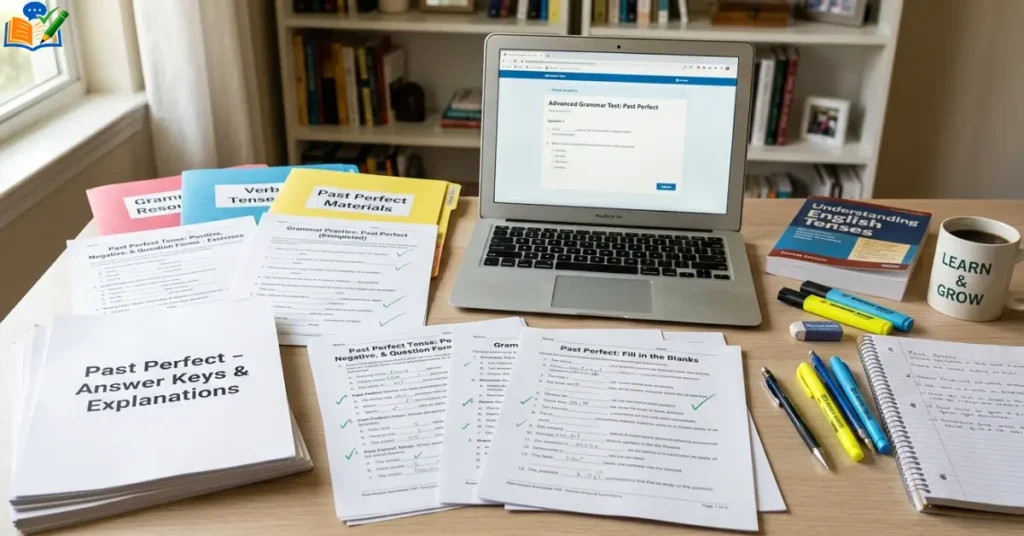
This is the biggest set on the page. Each past perfect tense worksheet here blends positive, negative, and question forms in one sheet, so you get well rounded practice instead of drilling just one pattern. Every download includes both a worksheet PDF and an answers PDF, along with an online preview test you can try before printing anything.
What Is the Past Perfect Tense?
The Past Perfect tense, also known as the pluperfect tense, talks about something that finished before another point in the past. You build it with had plus a past participle, like had finished, had left, or had already eaten dinner.
Once the basic shape feels natural, you can branch into its other forms: Past Perfect positive statements, Past Perfect negative sentences using had not, Past Perfect questions where had moves before the subject, and Past Perfect passive voice for describing something that was done to someone.
A lot of learners mix up Past Perfect vs Past Simple. Past Simple states what happened. Past Perfect states what had already happened before that moment. Words like before, after, already, just, by the time, never, and until are strong clues that Past Perfect belongs in the sentence.
Who These Worksheets Are For
These sheets work well for English learners studying on their own, ESL and EFL students in a classroom, and English teachers building a lesson plan without starting from scratch. Kids’ English worksheets are mixed in with the beginner sets, while the CEFR B1, B2, and C1 levels help learners and teachers pick a sheet that actually matches ability instead of guessing.
Every worksheet is a genuine printable PDF, built for classroom use or quiet self study English resources at home. Fill in the blank exercises, short grammar practice tests, and full answer keys come with each download, so verb tense practice never turns into guesswork. Whichever past perfect tense worksheet you choose, it fits naturally into a wider set of grammar drills for beginners, intermediate, and advanced learners.
Past Perfect Continuous Tense Examples
Past Perfect Continuous tense examples show an action that continued for a while before another past action interrupted it. You build this form with had been plus the ing form of the verb, like had been working, had been waiting, or had been studying. A typical example reads, “She had been cooking for two hours before the guests arrived,” and that sentence shows duration leading up to a clear past moment.
This form pairs naturally with Past Perfect, since both describe something that happened earlier than another past event. The real difference sits in emphasis: Past Perfect Continuous highlights how long an action lasted, while Past Perfect simply confirms that it finished. Once learners see several side by side examples, the pattern clicks fast, and it stops feeling like a separate, confusing tense.
Past Perfect Tense Examples
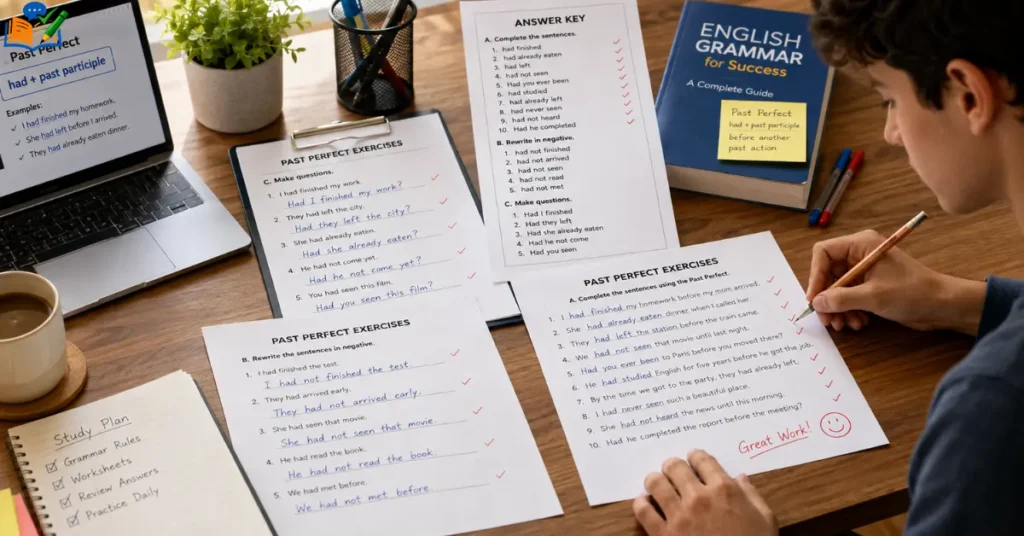
Real Past Perfect tense examples make the rule stick far better than a dry definition ever could. Sentences like “He had left the office before I called him” or “They had already eaten dinner when we arrived” show the tense doing its actual job, marking one action as finished before a second one began. Reading several examples together helps learners notice the pattern instead of memorizing it word for word.
Good examples also cover every form, not just the positive one. A negative example such as “She had not finished her homework” and a question like “Had you visited Lahore before this trip?” round out the picture. Mixing statement types inside one set of examples gives learners a fuller, more natural feel for how this tense actually shows up in everyday speech and writing.
Past Perfect Tense Formula
The Past Perfect tense formula stays simple once you break it down: subject plus had plus the past participle of the main verb. So “I had finished,” “she had spoken,” and “they had left” all follow the exact same pattern. This had plus past participle structure never changes, no matter which subject pronoun sits in front of it.
Negative and question forms only tweak this basic formula slightly. For negatives, you slide “not” right after had, giving you had not or hadn’t finished. For questions, had simply moves in front of the subject, turning “they had arrived” into “had they arrived?” Once a learner locks in this one formula, every sentence in this tense becomes a matter of substitution, not fresh memorization.
Past Perfect Tense Urdu To English
Translating Past Perfect Tense Urdu To English gets much easier once a learner spots the pattern in their own language first. Urdu speakers often express this idea using words like “chuka tha” or “chuki thi” attached to a verb, and that structure maps almost directly onto had plus past participle in English. For example, “Woh ja chuka tha” becomes “He had gone” in English.
This kind of direct mapping helps Urdu speaking learners build confidence quickly, since they are not learning a brand new concept, just a new way to say something they already understand. Practicing translation pairs, Urdu sentence on one side and its English Past Perfect version on the other, trains the brain to switch between the two languages without hesitation during real conversation or writing.
Past Perfect Tense Structure
The Past Perfect tense structure follows one steady pattern across every sentence type. In positive statements, the order runs subject, had, past participle, as in “We had cleaned the house.” In negative statements, “not” slots in right after had, giving you sentences like “We had not cleaned the house” or the shorter hadn’t version people use in daily speech.
Question structure flips the first two words, so had moves ahead of the subject to form “Had we cleaned the house?” This same structure carries over into Past Perfect passive voice too, where the object of the action becomes the subject, as in “The house had been cleaned.” Once a learner sees these three shapes side by side, the whole structure stops feeling complicated.
Past Perfect Keywords
Certain Past Perfect keywords act like signal flags inside a sentence, hinting that this tense belongs there before you even check the grammar. Words such as before, after, already, just, by the time, never, and until show up again and again in Past Perfect sentences, marking the order in which two past actions happened. Spotting these words fast speeds up both reading comprehension and sentence building.
Learning these keywords alongside real practice sentences works far better than memorizing a bare list. Once a learner notices “by the time” or “before” inside a sentence, they instinctively reach for had plus past participle instead of a plain past tense verb. That instinct, built through repeated exposure to these keywords, is exactly what turns grammar rules into natural, working knowledge.
Past Perfect Tense Exercise
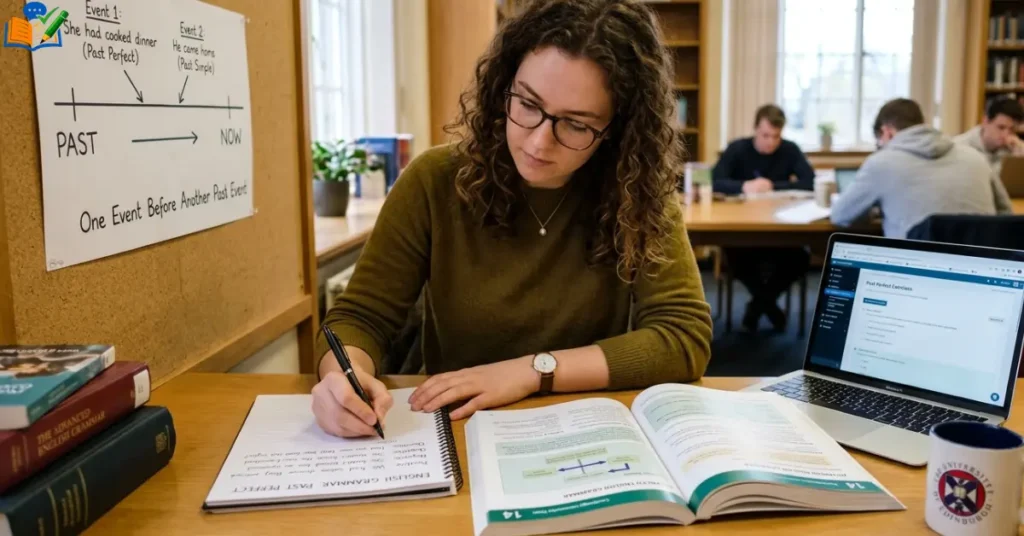
A solid Past Perfect tense exercise does more than test memory, it builds real instinct for the tense through repetition. Good exercises mix Past Perfect positive and affirmative sentences with Past Perfect negative and interrogative questions, so learners practice every form instead of just one. A well built past perfect tense worksheet with answers lets students check their own work right after finishing, which keeps mistakes from turning into bad habits.
Different learners need different levels of challenge, and that is exactly why a range of exercises matters. A younger student searching for a past perfect worksheet for class 6 needs shorter, simpler sentences, while an advanced learner benefits from mixed tense passages that force real decision making. Working through a fresh past perfect tense exercise regularly, rather than cramming once, is what actually locks the grammar in.
Past Perfect Tense in Urdu
Explaining the Past Perfect Tense in Urdu helps learners connect an English grammar rule to something they already say naturally every day. In Urdu, this idea often comes through phrases ending in “chuka tha,” “chuki thi,” or “chuke thay,” depending on gender and number, and each one lines up with had plus past participle in English. This shared logic makes the tense feel less foreign right from the first lesson.
Teachers who explain grammar this way usually see faster progress, since students are translating a familiar thought pattern rather than learning an entirely new rule from scratch. Pairing Urdu explanations with a past perfect tense worksheet gives students both the theory and the hands on practice they need, and that combination tends to stick far longer than theory taught on its own.
Frequently Asked Questions
What is a past perfect example?
“She had finished her homework before dinner” is a clear Past Perfect example, since finishing homework happened first.
What are 20 examples of the past perfect tense with answers?
You’ll find 20 fresh Past Perfect examples with answers inside the worksheets above, each one checked against its own answer key.
When did we use past perfect?
We use Past Perfect when we talk about an action that finished before another action or time point in the past.
What are the rules of past perfect?
Just add had before the past participle for every subject, then adjust with not for negatives or move had forward for questions.
How to use past perfect correctly?
Spot the earlier of two past actions, put had plus its past participle on that one, and leave the later action in plain past simple.
Conclusion:
Past Perfect stops feeling confusing once you practice it with real sentences instead of just memorizing a rule. These 160 worksheets give you steady, level by level practice, from simple beginner sentences all the way up to advanced passive and reported speech forms. Every sheet comes with its own answer key, so you always know exactly where you stand.
Keep coming back to these exercises whenever a Past Perfect sentence trips you up, since repetition is what actually builds instinct. Pair the worksheets with the examples, formula, and structure explained above, and the rules will start to feel automatic. Before long, you’ll use this tense correctly without stopping to think about it at all.
