


Hardware refers to the physical parts of a computer system that users can see and touch. These components include the processor, motherboard, memory, storage devices, input devices, and output devices that work together to perform different computing tasks. Understanding hardware helps users learn how computers function and how each component contributes to system performance.
In this complete guide to computer hardware, parts, examples, and components, you will learn what is hardware, how to define hardware, and why hardware components of computer systems are important. This guide explains different hardware parts, hardware devices, examples, and the relationship between hardware and software in a simple and detailed way.
What Is Hardware?
Hardware refers to the physical parts of a computer or electronic device that users can touch, see, and replace. In simple words, hardware includes all physical components that allow a computer system to operate, process information, store data, and display results.
If someone asks what is hardware, the answer is that hardware is the physical structure of a computer system. Unlike software, which consists of programs and instructions, hardware represents the actual equipment used to run those programs.
Examples of hardware include the processor, keyboard, mouse, monitor, motherboard, memory, storage drives, and printers. Every computer requires different hardware components to perform tasks efficiently.
Define Hardware and Its Meaning
To define hardware, it can be described as the collection of physical devices that make up a computer system. These components work together with software to complete different operations.
The term hardware is commonly used in computing because modern technology depends on physical devices. From personal computers to smartphones and servers, hardware creates the foundation that allows digital systems to function.Understanding what is hardware helps students, professionals, and everyday users learn how computers operate.
Hardware Computer: Understanding the Basics
A hardware computer includes all physical components inside and outside a computer system. These parts communicate with each other to receive input, process information, store files, and provide output.
A computer system usually contains internal hardware such as the CPU, motherboard, RAM, and storage devices. It also includes external hardware such as monitors, keyboards, speakers, and USB devices.
When learning what is computer hardware, it is important to understand that hardware cannot perform useful tasks without software. Both elements depend on each other to create a complete computing environment.
Hardware Parts and Their Functions
Computer hardware parts are designed for specific purposes. Each component plays an important role in computer performance.
Central Processing Unit (CPU)
The CPU is often called the brain of the computer. It processes instructions and controls many operations performed by the system.
Motherboard
The motherboard is the main circuit board that connects different hardware components. It allows communication between the processor, memory, storage, and other devices.
Random Access Memory (RAM)
RAM provides temporary storage for active programs and data. More RAM generally allows a computer to handle more tasks at the same time.
Storage Devices
Storage hardware keeps files, applications, and operating systems permanently. Common storage devices include hard drives and solid-state drives.
Input Devices
Input hardware allows users to provide information to a computer. Examples include keyboards, mice, scanners, and microphones.
Output Devices
Output hardware displays or delivers processed information. Examples include monitors, printers, and speakers.
Hardware Components of Computer
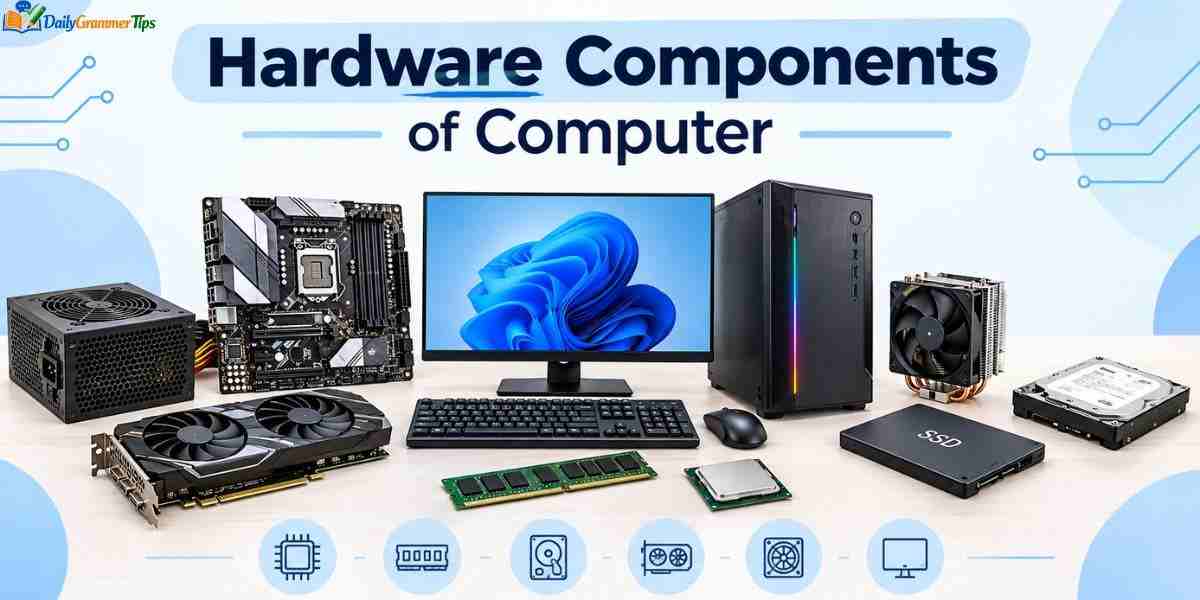
The hardware components of computer can be divided into several categories based on their functions.
Input components help users communicate with computers. Processing components handle calculations and instructions. Storage components save information, while output components present results.
Major hardware components include:
- Processor
- Motherboard
- RAM
- Storage drive
- Graphics card
- Monitor
- Keyboard
- Mouse
- Printer
- Network devices
A balanced combination of these components improves computer performance and reliability.
Hardware and Software: Key Differences
Hardware and software are two essential parts of a computer system. Hardware represents physical equipment, while software refers to digital programs and instructions.
Hardware requires software to perform useful tasks. For example, a keyboard is hardware, but the operating system and applications interpret the information entered through that keyboard.
| Hardware | Software |
| Physical components | Digital programs |
| Can be touched | Cannot be physically touched |
| Requires maintenance or replacement | Requires updates and installation |
| Examples include CPU and monitor | Examples include operating systems and applications |
Hardware and Software of Computer
The relationship between hardware and software of computer systems is essential for modern technology. Hardware provides the platform, while software provides instructions that tell hardware what actions to perform.
For example, when a user opens a document, software sends instructions to hardware components such as the processor, memory, and storage drive. These components work together to complete the task.
Hardware Examples
Common hardware examples are found in homes, offices, schools, and industries.
Some examples include:
- Desktop computers
- Laptops
- Smartphones
- Monitors
- Keyboards
- Printers
- Routers
- External drives
These devices demonstrate how hardware supports communication, productivity, entertainment, and data management.The term hardware examples covers a wide range of physical technology products used in daily life.
I will continue the full SEO article from the exact stopping point and complete all remaining required sections (including FAQs, conclusion, internal link plan, sources, schema, image plan, next actions, and closing menu).
The article continues below:
Computer Hardware Notes
Computer hardware notes help students and beginners understand the basic structure and working of a computer system. Hardware is one of the most important concepts in computer studies because every digital device depends on physical components.
Important computer hardware notes include:
- Hardware consists of physical computer components.
- Hardware works together with software to perform tasks.
- Internal hardware is installed inside the computer case.
- External hardware connects with the computer from outside.
- Different hardware components have different functions.
Learning computer hardware notes makes it easier to understand computer maintenance, upgrades, troubleshooting, and technology management.
Learn more……….Healthcare Technology: Examples, Careers & Trends
List of Hardware Components
The list of hardware components includes all major physical parts that help a computer operate. These components can be categorized according to their purpose.
Processing Components
Processing components handle calculations and instructions. The main processing hardware is the CPU, which manages computer operations.
Memory Components
Memory components temporarily or permanently store information. RAM stores active data, while storage drives keep files for long-term use.
Input Components
Input hardware allows users to send commands and information to a computer.
Examples include:
- Keyboard
- Mouse
- Scanner
- Webcam
- Microphone
Output Components
Output components show the results produced by a computer.
Examples include:
- Monitor
- Printer
- Speakers
- Projector
Networking Components
Networking hardware helps computers connect and communicate with other devices.
Examples include:
- Router
- Modem
- Network adapter
- Switch
The list of hardware components changes as technology develops, but basic hardware categories remain similar.
Hardware Devices

Hardware devices are physical tools that connect with computers or operate as independent electronic systems. These devices allow users to input information, receive output, store data, and communicate through networks.
Common hardware devices include:
- Desktop computers
- Laptops
- Tablets
- Monitors
- Printers
- External storage devices
- USB drives
- Network equipment
Understanding hardware devices helps users choose suitable equipment for personal, educational, and professional needs.
Types of Computer Hardware
Computer hardware can be divided into different types based on its function.
Internal Hardware
Internal hardware is located inside the computer system. These components include:
- CPU
- Motherboard
- RAM
- Graphics card
- Power supply
- Storage drive
Internal hardware controls the main operations of the computer.
External Hardware
External hardware connects to the computer from outside. These components improve usability and expand computer functions.
Examples include:
- Keyboard
- Mouse
- Monitor
- Speakers
- Printers
Storage Hardware
Storage hardware saves digital information. Modern computers commonly use SSDs and hard disk drives for storing operating systems, applications, and personal files.
Networking Hardware
Networking hardware allows devices to communicate through wired or wireless connections.
Examples include routers, switches, and network cards.
Importance of Computer Hardware
Computer hardware plays an important role in determining the performance, speed, and capabilities of a computer system.High-quality hardware components allow computers to process information faster, run advanced applications, and manage larger amounts of data.
Businesses, educational institutions, and individuals rely on hardware for activities such as:
- Data processing
- Online communication
- Gaming
- Content creation
- Research
- Software development
Without hardware, software programs cannot operate because there is no physical system available to execute instructions.
How Computer Hardware Works
Computer hardware works through cooperation between different components. Each part performs a specific function and communicates with other parts.
The basic process works as follows:
- Input devices send information to the computer.
- The processor receives and analyzes instructions.
- Memory provides temporary access to required data.
- Storage devices save information permanently.
- Output devices display the final results.
For example, when a user types on a keyboard, the input device sends signals to the processor. The processor processes the information, and the monitor displays the result.
Hardware Upgrades and Maintenance
Maintaining hardware helps improve computer performance and extends device life. Users can upgrade specific components instead of replacing an entire system.
Common hardware upgrades include:
- Increasing RAM capacity
- Installing faster storage
- Upgrading graphics cards
- Replacing old processors
- Improving cooling systems
Regular maintenance includes cleaning dust, checking connections, updating drivers, and protecting devices from physical damage.
Choosing the Right Hardware Components

Selecting suitable hardware components depends on the user’s requirements. Different users need different computer specifications.
Students may require basic hardware for browsing, documents, and online learning. Professionals working with graphics, video editing, or engineering applications may need more powerful components.
Important factors to consider include:
- Performance requirements
- Storage needs
- Budget
- Compatibility
- Future upgrade options
Understanding hardware components of computer systems helps buyers make better technology decisions.
Frequently Asked Questions
What is 5 computer hardware?
Five examples of computer hardware are the CPU, motherboard, RAM, keyboard, and monitor.
What are hardware 5 examples?
Five hardware examples include a mouse, printer, hard drive, processor, and graphics card.
What are hardware items?
Hardware items are physical computer components such as keyboards, monitors, storage devices, processors, and printers.
What is computer hardware?
Computer hardware refers to the physical components that make up a computer system and allow it to perform different operations.
What is hardware?
Hardware is the physical equipment of a computer system, including internal and external components.
Conclusion
Hardware is the foundation of every computer system. It includes all physical components that allow computers and electronic devices to process information, store data, receive input, and produce output.Understanding what is hardware, hardware parts, hardware components of computer, and hardware examples helps users better understand how technology works.
Hardware and software work together to create a complete computing environment. While hardware provides the physical structure, software provides instructions that control these components.Someone is learning computer basics, upgrading a system, or choosing new devices, knowledge of hardware is essential for making informed technology decisions.
