


Choosing the right computer is one of the most important decisions for engineering students. Unlike regular college work, engineering courses involve advanced applications, technical projects, programming tasks, and design simulations that require better hardware performance.
Understanding tech engineering computer requirements helps students select a laptop that can handle their academic workload without slowing down. A suitable computer should support engineering software such as AutoCAD, SolidWorks, MATLAB, ANSYS, Revit, and other specialized tools used during university projects.
The right tech engineering computer requirements depend on your engineering major, software usage, and future goals. A mechanical engineering student may need stronger graphics for 3D modeling, while a computer engineering student may prioritize processor speed and memory for coding environments.
Laptop Requirements for Engineering Students
Engineering students need computers that can manage both academic and technical workloads. A laptop used for engineering should do more than handle web browsing, documents, and online classes.
The main purpose of tech engineering computer requirements is to ensure students can run demanding applications smoothly throughout their degree. Since most engineering programs take several years, choosing a reliable laptop can prevent performance problems later.
A good engineering laptop should provide a balance between speed, portability, durability, and battery life. Students should focus on hardware that can support current software requirements while also leaving room for future updates.
What Makes an Engineering Laptop Different?
Engineering laptops are different from standard student computers because they are designed to handle resource-heavy tasks. Applications used for design, simulation, and programming often require more power than everyday software.
For example, CAD programs require strong graphics performance, while simulation tools depend heavily on CPU power and RAM. A computer that meets proper tech engineering computer requirements allows students to work efficiently without constant upgrades.
Minimum Computer Specifications for Engineering Students
The minimum tech engineering computer requirements represent the basic hardware level needed to complete engineering coursework. These specifications can support many common applications but may not be ideal for advanced projects.
A modern engineering student should avoid outdated processors and low-memory systems because they can struggle when running multiple applications together.
Processor Requirements
The processor is responsible for handling calculations, software operations, and multitasking. A modern Intel Core i5 or AMD Ryzen 5 processor is usually considered a starting point for engineering students.
Students working with complex simulations, programming environments, or 3D design software should consider higher-performance processors such as Intel Core i7, Intel Core Ultra, or AMD Ryzen 7.
Memory and Storage Needs
RAM plays an important role in keeping engineering applications running smoothly. While 16GB RAM is a practical minimum, students working with advanced engineering software may benefit from 32GB.
Storage is also important because engineering software and project files can become large over time. A 512GB SSD is a good starting point, while a 1TB SSD provides more flexibility for long-term use.
Recommended Computer Specifications for Engineering Programs

While minimum specifications may allow students to complete basic tasks, recommended tech engineering computer requirements provide better performance and a smoother experience.
Engineering students often work with multiple programs at the same time, such as CAD software, research documents, browsers, coding tools, and communication applications. A stronger system helps maintain speed during these workloads.
A recommended engineering laptop generally includes a modern multi-core processor, 16GB to 32GB RAM, SSD storage, and a dedicated graphics card for specialized applications.
Why Recommended Hardware Matters
A laptop purchased for engineering should ideally last throughout the entire degree. Students who choose only minimum hardware may face limitations when courses become more advanced.
Better hardware supports larger projects, faster rendering, smoother simulations, and improved productivity during internships or final-year design work.
Best Processor Requirements for Engineering Students
The processor is one of the most important parts of tech engineering computer requirements because many engineering applications depend on CPU performance.
A powerful processor improves calculation speed, software response time, and multitasking ability. This is especially useful for applications such as MATLAB, ANSYS, programming environments, and simulation tools.
Learn more……….Tech Computer Science Data Lawsuit: Major Cases
Intel vs AMD Processors
Both Intel and AMD offer processors suitable for engineering students. The better choice depends on performance needs, budget, and laptop availability.
| Processor Level | Suitable For |
| Intel Core i5 / AMD Ryzen 5 | Basic engineering tasks, programming, general coursework |
| Intel Core i7 / AMD Ryzen 7 | CAD, simulations, multitasking, advanced projects |
| Intel Core i9 / AMD Ryzen 9 | Heavy simulations, professional-level workloads |
For most engineering students, a modern Core i7 or Ryzen 7 provides a strong balance between performance and cost.
RAM and Storage Requirements for Engineering Laptops
RAM and storage are two important parts of tech engineering computer requirements because engineering students often work with large files, technical applications, and multiple programs at the same time.
A laptop with insufficient memory can slow down when students open CAD software, browsers, programming tools, and documents together. For most engineering programs, 16GB RAM is a practical starting point, while 32GB RAM provides better performance for advanced workloads.
How Much RAM Do Engineering Students Need?
RAM allows a computer to handle multiple tasks without slowing down. Engineering students using applications like SolidWorks, MATLAB, ANSYS, and simulation software should choose a system with enough memory for smooth performance.
A higher RAM capacity is especially useful for students working on complex models, large datasets, or virtual machines. It also helps extend the useful life of the laptop throughout an engineering degree.
SSD Storage Requirements
Modern engineering laptops should use SSD storage instead of traditional hard drives. SSDs improve boot speed, software loading time, and overall system responsiveness.
A 512GB SSD can meet basic student needs, but a 1TB SSD is often a better option because engineering software packages, project files, and research data can quickly consume storage space.
Graphics Card Requirements for Engineering Software

Graphics performance is a major factor in tech engineering computer requirements, especially for students working with design, modeling, and visualization software.
Not every engineering student needs a powerful graphics card, but majors involving 3D modeling, CAD, and simulation benefit greatly from dedicated GPU performance.
Integrated vs Dedicated Graphics
Integrated graphics are built into the processor and can handle basic tasks such as programming, documents, and lighter engineering applications.
Dedicated graphics cards have their own processing power and are better suited for demanding tasks like 3D rendering, CAD assemblies, and engineering simulations.
| Graphics Type | Best For |
| Integrated Graphics | Programming, basic coursework, light applications |
| Entry-Level Dedicated GPU | General CAD work and engineering projects |
| NVIDIA RTX Series GPU | Advanced modeling, simulations, rendering |
Students using applications such as SolidWorks, AutoCAD, Revit, or ANSYS should consider a laptop with dedicated graphics.
Windows vs Mac for Engineering Students
Choosing the right operating system is another important part of tech engineering computer requirements. While both Windows and macOS offer excellent performance, engineering software compatibility can affect the final decision.
Windows laptops are commonly preferred because many engineering applications are developed with Windows support in mind. Programs such as SolidWorks, AutoCAD, and some simulation tools often work best on Windows systems.
Can Engineering Students Use MacBooks?
MacBooks offer excellent build quality, battery life, and performance, especially with Apple Silicon processors. However, students should check software compatibility before choosing a Mac.
Some engineering programs may require Windows-only applications, meaning students may need alternatives such as virtual machines or dual-boot solutions.
| Feature | Windows Laptop | MacBook |
| Engineering Software Support | Excellent compatibility | Depends on software |
| CAD Applications | Widely supported | Limited for some tools |
| Battery Life | Varies by model | Usually excellent |
| Hardware Options | Wide range | Limited models |
For most engineering students, a Windows laptop provides the easiest experience with university software requirements.
Engineering Software and Hardware Compatibility
Understanding software needs is a key part of choosing the right tech engineering computer requirements. Different engineering fields use different applications, and each program has specific hardware demands.
A laptop should be selected based on the tools students will use during their courses and projects.
Common Engineering Applications
Engineering students commonly use software such as:
- AutoCAD for technical drawings
- SolidWorks for 3D modeling
- MATLAB for calculations and simulations
- ANSYS for engineering analysis
- Revit for building information modeling
- Programming environments for computer-related courses
These applications require different levels of processing power, memory, and graphics performance.
Matching Hardware With Software Needs
Students should consider their major before purchasing a laptop. A computer suitable for programming may not provide enough power for advanced mechanical design or simulation work.
The best tech engineering computer requirements approach is choosing hardware that matches both current coursework and future academic projects.
Mechanical Engineering Laptop Requirements
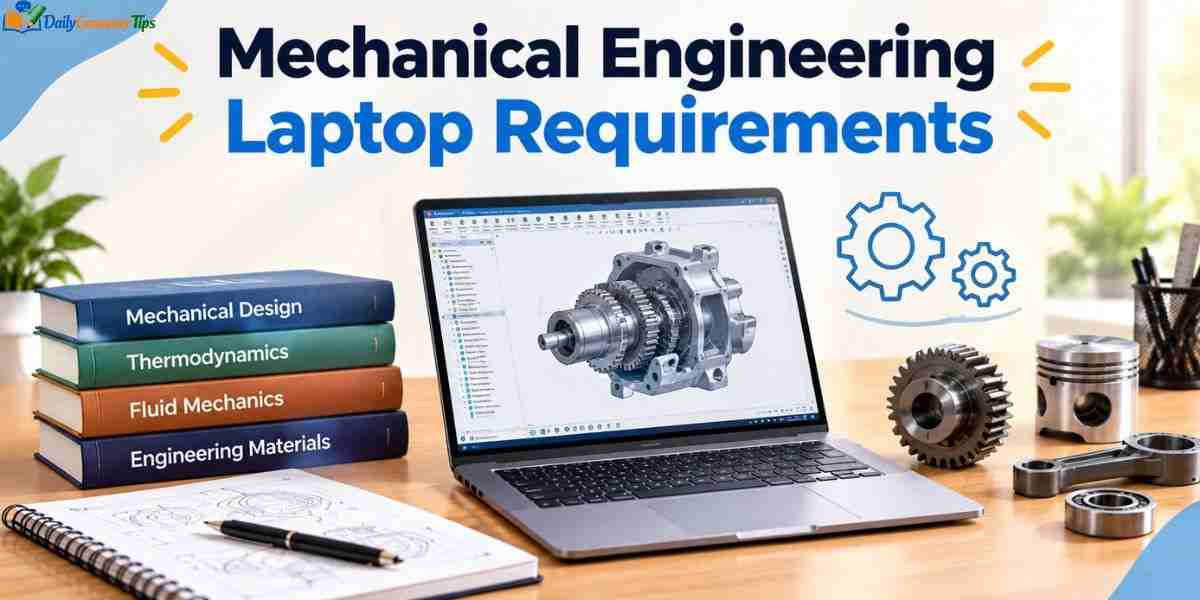
Mechanical engineering students usually work with design, manufacturing, and simulation applications. Therefore, their laptop requirements are often higher compared with basic engineering programs.
A suitable mechanical engineering laptop should provide strong processing power and graphics performance for applications like SolidWorks, Fusion 360, MATLAB, and ANSYS.
Recommended Hardware for Mechanical Engineering
Mechanical engineering students should prioritize:
- Modern Core i7 or Ryzen 7 processor
- 16GB or 32GB RAM
- Dedicated NVIDIA graphics card
- Fast SSD storage
A powerful GPU helps handle complex 3D models, while a strong processor improves simulation and calculation speed.
Civil Engineering Laptop Requirements
Civil engineering students often work with design, construction, modeling, and analysis software, which makes choosing the right computer important. Proper tech engineering computer requirements help civil engineering students handle programs like AutoCAD, Civil 3D, Revit, and other building or infrastructure design tools.
Unlike basic academic tasks, civil engineering projects may involve large drawings, 3D models, and detailed calculations. A laptop with strong processing power, enough RAM, and reliable graphics performance can improve workflow and reduce delays.
Recommended Hardware for Civil Engineering Students
A good civil engineering laptop should include:
- A modern Intel Core i7 or AMD Ryzen 7 processor
- At least 16GB RAM
- 512GB or 1TB SSD storage
- Dedicated graphics for CAD and 3D modeling tasks
Students working with BIM software, rendering tools, or large-scale projects should consider higher specifications to support advanced workloads.
Electrical and Computer Engineering Laptop Requirements
Electrical and computer engineering students have different needs because their coursework combines programming, electronics, hardware design, and technical simulations.
The right tech engineering computer requirements for these fields should support programming environments, circuit simulation software, data analysis tools, and development platforms.
Hardware Needs for Electrical Engineering
Electrical engineering students commonly use applications such as MATLAB, Simulink, circuit simulation software, and programming tools. A fast processor and sufficient RAM help these applications run efficiently.
Hardware Needs for Computer Engineering
Computer engineering students often work with software development tools, virtual machines, and programming environments. A laptop with strong CPU performance and higher memory capacity can improve productivity.
For both fields, a balanced laptop with a modern processor, SSD storage, and at least 16GB RAM is a reliable choice.
UF Engineering Computer Requirements

The University of Florida engineering programs recommend computers that can support technical coursework, engineering applications, and academic projects. Students should consider hardware that can handle software used throughout their engineering education.
When looking at UF Engineering computer requirements, students should focus on performance, compatibility, and long-term usability rather than selecting a device based only on price.
A suitable engineering computer should be capable of running design programs, programming tools, simulation applications, and other resources required during classes.
Choosing a Computer Based on UF Engineering Needs
Students should consider:
- Modern processor performance
- Adequate RAM for multitasking
- SSD storage for faster access
- Graphics capability for engineering applications
Meeting these requirements allows students to work smoothly across different engineering courses.
UF Engineering Laptop Requirements
The UF Engineering laptop requirements focus on ensuring students have a reliable computer for their academic responsibilities. Engineering students often use specialized software that requires better hardware than a standard classroom laptop.
A laptop chosen for UF engineering studies should provide enough power for software installations, technical assignments, and project-based learning.
Important Features for UF Engineering Students
A strong engineering laptop should offer:
- Good processing speed for calculations
- Enough memory for multiple applications
- Quality display for design work
- Reliable battery life for campus use
Students should also consider upgrade options and warranty support because the laptop may be used throughout their entire degree program.
UF Computer Requirements
The UF computer requirements highlight the importance of selecting a system that can support modern academic workloads. Engineering students need computers that can manage both everyday university tasks and specialized technical applications.
A suitable computer should provide flexibility for different courses because engineering programs often include programming, design, analysis, and research assignments.
Choosing hardware that meets or exceeds recommended requirements can help students avoid performance limitations during advanced coursework.
CU Boulder Engineering Computer Requirements
CU Boulder engineering students need computers that support engineering software, technical assignments, and project-based learning. The right CU Boulder engineering computer requirements depend on the student’s major and the applications they will use.
Engineering fields such as mechanical, civil, electrical, and computer engineering may require different levels of performance depending on software usage.
Factors Students Should Consider
When selecting a computer, students should evaluate:
- Processor performance for calculations
- RAM capacity for multitasking
- GPU capability for design software
- Storage space for engineering files
A well-balanced laptop helps students complete coursework efficiently while preparing them for professional engineering environments.
Best Laptop for Engineering Students on a Budget
Finding the best laptop for engineering students on a budget requires balancing performance and cost. A cheaper laptop may save money initially, but it can create problems if it cannot run required engineering software.
The best budget choice is usually a laptop that meets essential tech engineering computer requirements without adding unnecessary premium features.
What Budget Engineering Students Should Prioritize
Students should focus their budget on:
- A modern processor
- Minimum 16GB RAM
- SSD storage
- Dedicated graphics if required by their major
A mid-range laptop with strong internal components is often a better investment than an expensive device focused mainly on appearance.
Features to Look for in an Engineering Laptop
Beyond basic tech engineering computer requirements, students should consider additional features that improve daily usability.
A good engineering laptop should be comfortable for long study sessions and reliable for academic projects.
Battery Life and Portability
Engineering students often move between classrooms, libraries, and labs. A laptop with good battery performance and a manageable weight can make campus life easier.
Build Quality and Durability
A durable laptop can handle years of transportation and regular use. Students should look for quality keyboards, strong hinges, and reliable cooling systems.
Upgrade Options
A laptop with upgradeable RAM or storage can provide more flexibility in the future. This is especially useful as engineering projects become more demanding.
Common Mistakes When Buying an Engineering Computer

Many students make mistakes when choosing a laptop because they focus only on brand names or appearance instead of actual performance.
Understanding tech engineering computer requirements helps avoid buying a system that becomes outdated quickly.
Mistakes Students Should Avoid
Buying a laptop with only 8GB RAM can create performance issues with engineering software. Similarly, choosing a Chromebook or low-power device may limit access to important applications.
Students should also avoid selecting a laptop without checking software compatibility. A computer should support the programs required by their engineering department.
Frequently Asked Questions
Does BTech require a laptop?
Yes, a laptop is highly recommended for BTech students because engineering courses require software, programming, assignments, and project work.
What is harder, CS or CE?
CS focuses more on software and algorithms, while CE combines computer science with hardware and electronics, making both challenging in different ways.
Is i5 or i7 better for engineering students?
An i7 generally offers better performance for demanding engineering tasks, but a modern i5 can work well for many students with enough RAM and storage.
What are the minimum computer requirements for engineering students?
Most engineering students need at least 16GB RAM, a modern processor, 512GB SSD storage, and compatibility with required engineering software.
Which is best, IT or CS?
IT focuses on managing technology systems, while CS focuses more on programming, algorithms, and software development.
Conclusion
Choosing the right computer is an important step for every engineering student. The correct tech engineering computer requirements depend on the engineering major, software needs, and level of technical work involved.
Instead of choosing the cheapest option, students should select a computer that provides long-term value and can handle future engineering challenges. A well-chosen engineering laptop becomes an essential tool for learning, designing, programming, and completing successful projects.
